In short
Sweater gauge, written GG, is the number of needles per inch on the knitting machine: 3 to 5GG gives a chunky knit, 7GG a classic mid-weight sweater and 10 to 16GG finer, lighter knitwear. Gauge sets the structure while yarn sets price and feel. Our minimum is 500 pieces per style and colour.
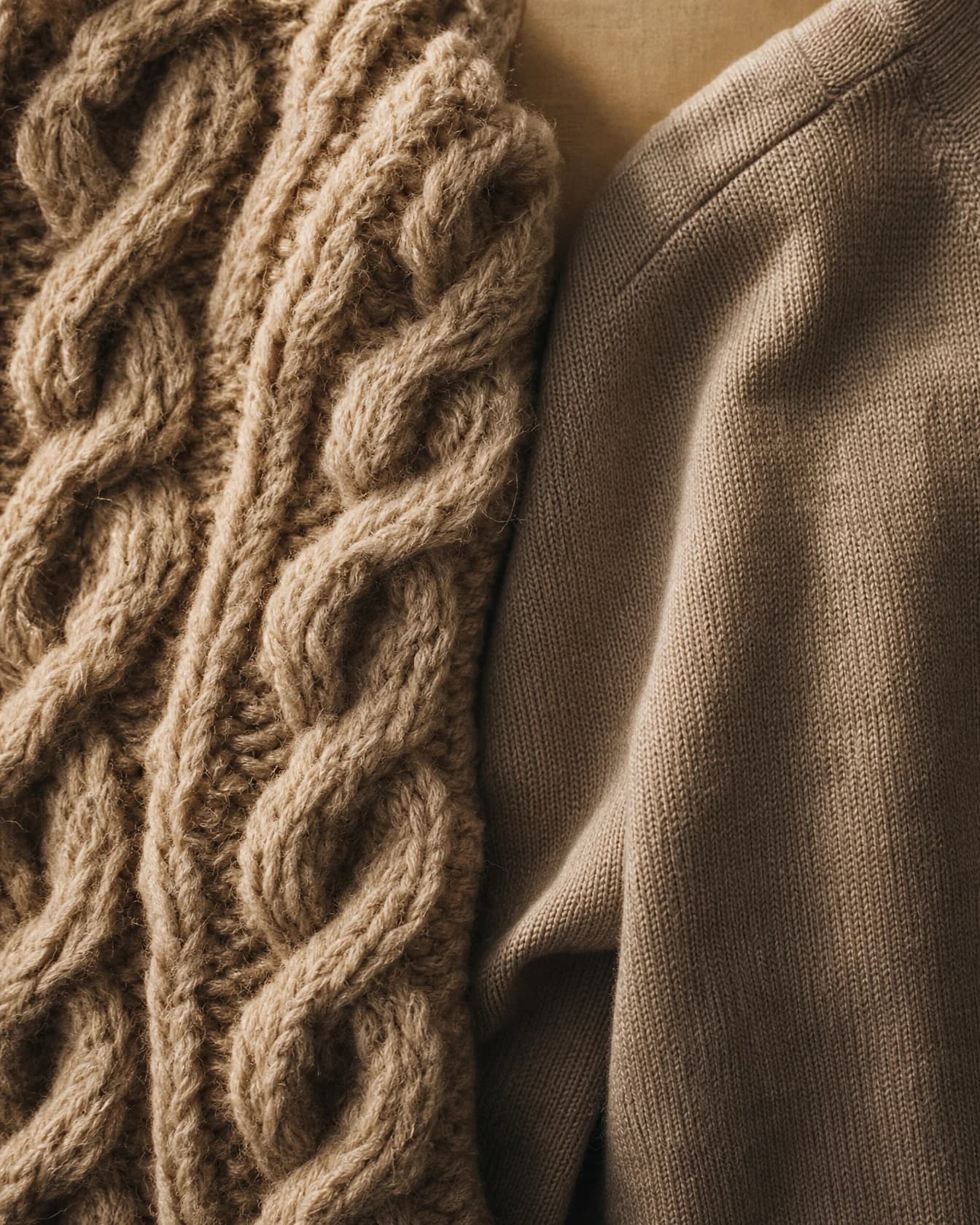
Ask about fabric weight for a t-shirt and most buyers know to check the GSM. Ask about a sweater and the equivalent spec — gauge — gets skipped far more often, even though it decides more: how the knit looks, how it drapes, how warm it is, and a meaningful share of the unit cost. Here's what it actually means and how to spec it properly.
What "gauge" actually means
Gauge (written GG, for "gauge") refers to the number of needles per inch on the knitting machine that produced the fabric. A lower number means fewer, larger needles making bigger stitches — a thicker, chunkier knit. A higher number means more, finer needles making smaller stitches — a lighter, smoother knit. Flat-knit sweaters in export manufacturing typically run from around 3GG (heavy, cable-knit chunky) up to 14GG or finer (fine-gauge, almost woven-looking knitwear).
| Gauge | Look & feel | Typical yarn | Best for |
|---|---|---|---|
| 3–5GG | Heavy, chunky, visible stitch definition | Bulky acrylic, chunky wool blends | Statement cardigans, cold-weather outerwear-adjacent knits |
| 7GG | Classic mid-weight, the most common commercial gauge | Acrylic, cotton-acrylic, lambswool blends | Crew necks, cardigans, everyday sweaters |
| 10–12GG | Finer, lighter, smoother surface | Merino, fine cotton, cotton-cashmere blends | Layering pieces, smart-casual knitwear |
| 14–16GG | Extra-fine, near-woven appearance | Fine merino, silk blends, high-twist cotton | Dressy or fashion-forward knitwear |
Yarn choices that decide price and hand-feel
Gauge sets the structure; yarn sets the price and the feel. Acrylic is the budget workhorse — durable, colourfast, and warm for its weight, but without the natural drape of wool. Wool and merino carry a premium that scales with micron count (finer micron, softer feel, higher price); cotton is breathable and casual but has less natural elasticity and recovery than wool. Cotton-acrylic blends are the most common value play for commercial ranges — most of wool's visual warmth, much of acrylic's cost control. Ply count (2-ply vs 4-ply, for example) adds another variable: more plies twisted together generally means a denser, more durable — and more expensive — yarn.
Two construction methods, two different economics
Fully-fashioned knitting
Panels are knitted directly to their finished shape — including armhole and neckline curves — then linked together, with no cutting involved. This produces cleaner edges, less waste, and a better drape, but it's slower to programme and typically costs more per style, which is why it's more common on mid-to-premium sweater programmes than on basics.
Cut-and-sew knitwear
Fabric is knitted in large panels or rolls, then cut and sewn like a woven garment. It's faster to set up and cheaper for simple shapes, but it generates more fabric waste and the cut edges need proper finishing to avoid unravelling — worth checking specifically during sampling.
Quality checks specific to sweaters
- Pilling resistance — test to a named method, either the pilling box (ISO 12945-1) or the modified Martindale (ISO 12945-2), and agree the pass grade in writing, particularly on acrylic and acrylic-blend yarns.
- Dye-lot consistency — yarn-dyed knitwear can show visible shade variation between batches; check panels from the same lot are used across a single garment.
- Tension consistency — uneven knitting tension shows up as a wavy or puckered surface, especially around rib sections at cuffs and hems.
- Wash and block shrinkage — wool and cotton-blend knits can shrink meaningfully on first wash; confirm aftercare instructions match tested shrinkage, not assumed shrinkage.
- Seam and linking strength — pulled or popped seams at the underarm are the most common sweater return; check linking density during PP sample approval.
“A sweater's gauge and yarn are decided in the first costing conversation — get them wrong there and no amount of quality control downstream will fix the hand-feel your customer expected.”
Frequently asked questions
What does sweater gauge mean?
Gauge, written GG, is the number of needles per inch on the knitting machine that produces the fabric — and it's the single spec that decides more about a sweater than almost anything else in the brief. A lower gauge number means fewer, larger needles making bigger stitches, which is why 3 to 5GG knits come out thick, chunky and visibly textured, the look you'd associate with a statement cable-knit cardigan. A higher gauge number means more, finer needles making smaller stitches, so 12 to 16GG knits come out fine, lightweight and almost woven-looking. Most commercial sweaters land around 7GG, the practical middle ground between chunky cold-weather knits and fine dress knitwear. Specifying gauge upfront, rather than describing a sweater as "medium weight" and hoping the factory guesses right, is what actually gets you the hand-feel you pictured.
What is the minimum order quantity for sweaters?
Our standard minimum for sweaters is 500 pieces per style and colour, and the constraint driving that number is usually yarn, not the knitting machine itself. Yarn gets dyed and delivered in batch minimums set by the spinning mill, and a custom colour or blend often needs its own dye lot regardless of how few pieces you're ordering — so the sweater MOQ tends to track the yarn MOQ more closely than it tracks machine capacity or labour. Sticking to a mill's existing stock colours rather than commissioning a custom shade is one practical way to push the achievable minimum lower, since it skips the dye-lot requirement entirely. Ply count and yarn composition can shift the number too — a simple 7GG acrylic crew neck in a stock colour will generally clear a lower minimum than a fine-gauge merino-cashmere blend in a bespoke shade.
What is the difference between fully-fashioned and cut-and-sew sweaters?
The difference comes down to whether the garment panels are knitted to their finished shape or cut from larger fabric afterward. Fully-fashioned construction knits each panel — including the armhole and neckline curves — directly to its final shape, then links the pieces together with no cutting involved at all, which produces cleaner edges, noticeably less fabric waste, and generally a better drape. It's also slower to programme and typically costs more per style, which is why it shows up more often on mid-to-premium sweater ranges than on basics. Cut-and-sew knitwear takes the opposite approach: fabric is knitted in large panels or rolls first, then cut and sewn much like a woven garment. It's faster to set up and cheaper for simple shapes, but it generates more waste and leaves cut edges that need proper finishing to stop them unravelling — worth checking specifically during sample approval.
Is wool or acrylic better for sweaters?
Neither is universally "better" — they're solving different problems at different price points. Wool and merino offer genuinely superior natural warmth-to-weight ratio and drape, the quality that makes a knit fall and move the way people expect from a premium sweater, but the cost scales directly with micron fineness: finer micron means softer feel and a meaningfully higher price. Acrylic is the budget workhorse of the sweater world — durable, colourfast, and warm for its actual weight — but it doesn't have wool's natural elasticity or drape, so it can feel flatter and less alive on the body. Cotton-acrylic blends exist specifically to split the difference, keeping much of wool's visual warmth while holding acrylic's cost control, which is why they're the most common value play across commercial sweater ranges rather than either pure fibre alone.
What gauge is a standard commercial sweater?
7GG is the gauge you'll see most often across commercial sweater ranges, and it earns that position by being a genuinely practical middle ground rather than a compromise nobody's happy with. It's fine enough to avoid the bulk and cost premium of chunky 3 to 5GG cable knits, but substantial enough to still read as a proper sweater rather than the near-woven lightness of a 12 to 16GG fine-gauge piece. Everyday crew necks, cardigans and the bulk of a typical seasonal sweater collection sit at 7GG for exactly that reason — it works across acrylic, cotton-acrylic and lambswool blends without forcing a trade-off, and it's the gauge most factories have the deepest machine capacity and yarn stock for, which usually means faster sampling and more competitive costing than a gauge sitting outside the commercial mainstream.
Sources
Belle Vouz manufactures flat-knit sweaters from 3GG through 14GG, in both fully-fashioned and cut-and-sew construction. Tell us the hand-feel you're after and we'll recommend the gauge and yarn that gets there at your target price.
Where to next

Homaira Jashim
Director, Belle Vouz Ltd
Homaira Jashim is a director of Belle Vouz Ltd and a co-founder of Collective Studio Ltd, its group company in Narayanganj. She works with brands from first enquiry to repeat orders.
More about the teamFree tools for clothing brands
MOQ, pricing and AQL calculators, a GSM ⇄ oz converter, a fillable tech pack template and a manufacturing glossary — built by our group company, Collective Studio, free to use.