Sweater and knitwear manufacturer in Bangladesh
Belle Vouz makes private-label 3 to 14 gauge flat-knit sweaters in Bangladesh in acrylic, cotton, wool blends and merino, from 500 pieces per style and colour. We publish the cost breakdown rather than a price, because yarn and gauge move it too far.
Overview
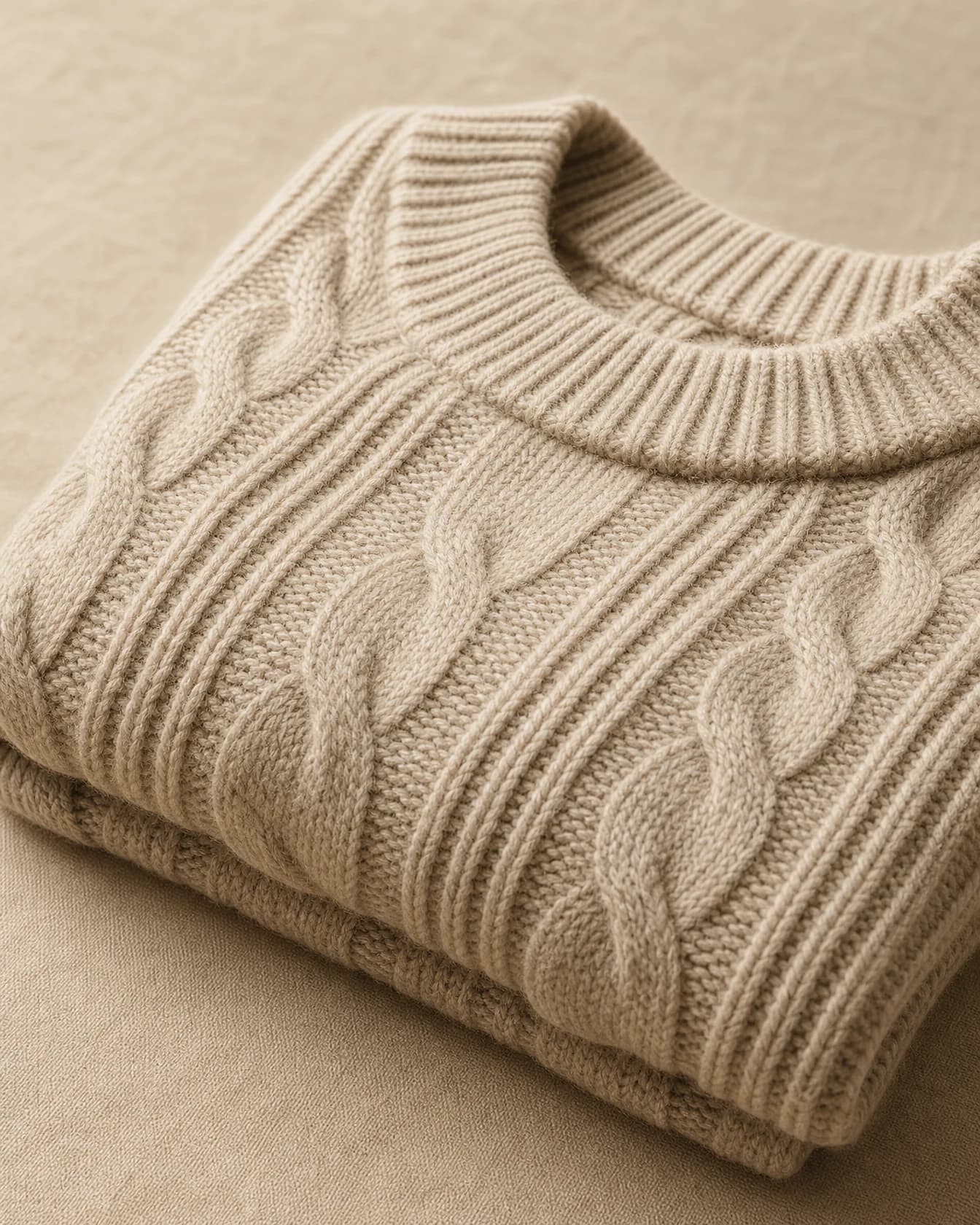
3 to 14 gauge flat-knit sweaters in both fully-fashioned and cut-and-sew construction. Gauge — the number of needles per inch on the knitting machine — is the single spec that decides more about a sweater than almost anything else in the brief: 3 to 5gg produces thick, chunky, visibly textured knits; 7gg is the practical middle ground most commercial crewnecks and cardigans use; 12 to 16gg produces fine, lightweight, near-woven-looking knitwear. Gauge sets the structure, yarn sets the price and the feel — wool and merino carry a premium that scales with micron count, acrylic is the durable, colourfast budget workhorse, and cotton-acrylic blends split the difference for most commercial ranges. Fully-fashioned construction knits panels directly to shape with no cutting, giving cleaner edges and less waste at a higher cost; cut-and-sew knits fabric in bulk then cuts and sews it, faster and cheaper but with more waste to manage.
What's actually in the spec.
| Gauge | Look | Typical use |
|---|---|---|
| 3–5gg | Chunky, heavy | Statement outerwear-adjacent sweaters |
| 7–9gg | Standard weight | Everyday crewnecks and cardigans |
| 12–14gg | Fine, lightweight | Layering pieces, fine-gauge knits |
There's no honest single number to publish here.
Sweaters pricing varies too much by leather grade, hardware and volume for a general range to mean anything. Here's what actually makes up the FOB price, so you can read a quote line by line instead of taking a number on faith.
| Cost component | Share of FOB | What it covers |
|---|---|---|
| Fabric | 38–52% | Yarn, knitting or weaving, dyeing, finishing |
| Trims & accessories | 5–12% | Labels, zips, buttons, thread, elastic, packaging |
| CM (cut & make) | 15–25% | Cutting, sewing, finishing, factory overhead |
| Wash / print / embroidery | 0–15% | Optional decoration — adds up fast |
| Factory margin & compliance | 8–12% | Audits, certifications, testing |
500 pieces per style/colour
12–18 weeks — yarn dyeing and knitting add time versus cut-and-sew knits
What buyers ask about sweaters.
Is wool or acrylic better for sweaters?
Neither is universally better — they're solving different problems at different price points. Wool and merino offer genuinely superior natural warmth-to-weight ratio and drape, the quality that makes a knit fall and move the way people expect from a premium sweater, but the cost scales directly with micron fineness: finer micron means softer feel and a meaningfully higher price. Acrylic is the budget workhorse of the sweater world — durable, colourfast and warm for its actual weight — but it doesn't have wool's natural elasticity or drape, so it can feel flatter on the body. Cotton-acrylic blends exist specifically to split the difference, keeping much of wool's visual warmth while holding acrylic's cost control, which is why they're the most common value play across commercial sweater ranges.
What's the difference between fully-fashioned and cut-and-sew sweaters?
Fully-fashioned construction knits each panel — including the armhole and neckline curves — directly to its final shape, then links the pieces together with no cutting involved at all, which produces cleaner edges, noticeably less fabric waste, and generally a better drape. It's slower to programme and typically costs more per style, which is why it shows up more often on mid-to-premium sweater ranges than on basics. Cut-and-sew knitwear takes the opposite approach: fabric is knitted in large panels or rolls first, then cut and sewn much like a woven garment. It's faster to set up and cheaper for simple shapes, but it generates more waste and leaves cut edges that need proper finishing to stop them unravelling — worth checking specifically during sample approval.
What gauge is standard for an everyday sweater?
7gg is the gauge you'll see most often across commercial sweater ranges, and it earns that position by being a genuinely practical middle ground rather than a compromise nobody's happy with. It's fine enough to avoid the bulk and cost premium of chunky 3 to 5gg cable knits, but substantial enough to still read as a proper sweater rather than the near-woven lightness of a 12 to 16gg fine-gauge piece. Everyday crew necks, cardigans and the bulk of a typical seasonal sweater collection sit at 7gg for exactly that reason — it works across acrylic, cotton-acrylic and lambswool blends without forcing a trade-off, and it's the gauge most factories have the deepest machine capacity and yarn stock for, which usually means faster sampling and more competitive costing than a gauge sitting outside the commercial mainstream.
Why do sweaters take longer than tees to produce?
Yarn has to be dyed and then knitted directly into the garment shape — or knitted flat and linked together — rather than simply cutting pieces from pre-dyed, pre-finished fabric the way a tee is made. That's a genuinely different production sequence, not just a slower version of the same one: dye lots have to be set up per colour before knitting even starts, and a custom shade can carry its own minimum regardless of how many finished pieces you're ordering. Fully-fashioned construction adds further time on top of that, since panels are knitted directly to their finished shape rather than cut afterward, which is slower to programme even though it produces a cleaner result. All of this is why sweater lead times commonly run 12 to 18 weeks against 10 to 16 for cut-and-sew knitwear — the extra weeks are upstream, in yarn and knitting, not in construction.
Ready to cost your sweater programme?
Send a reference and a target quantity — we'll come back with construction options, costing and lead-time, usually the same business day.