Woven shirt and trouser manufacturer in Bangladesh
Belle Vouz makes private-label woven shirts, trousers and dresses in Bangladesh in poplin, oxford, twill, denim and chambray, from 500 pieces per style and colour. Indicative FOB prices run from $5.50 to $16.00 a piece.
Overview
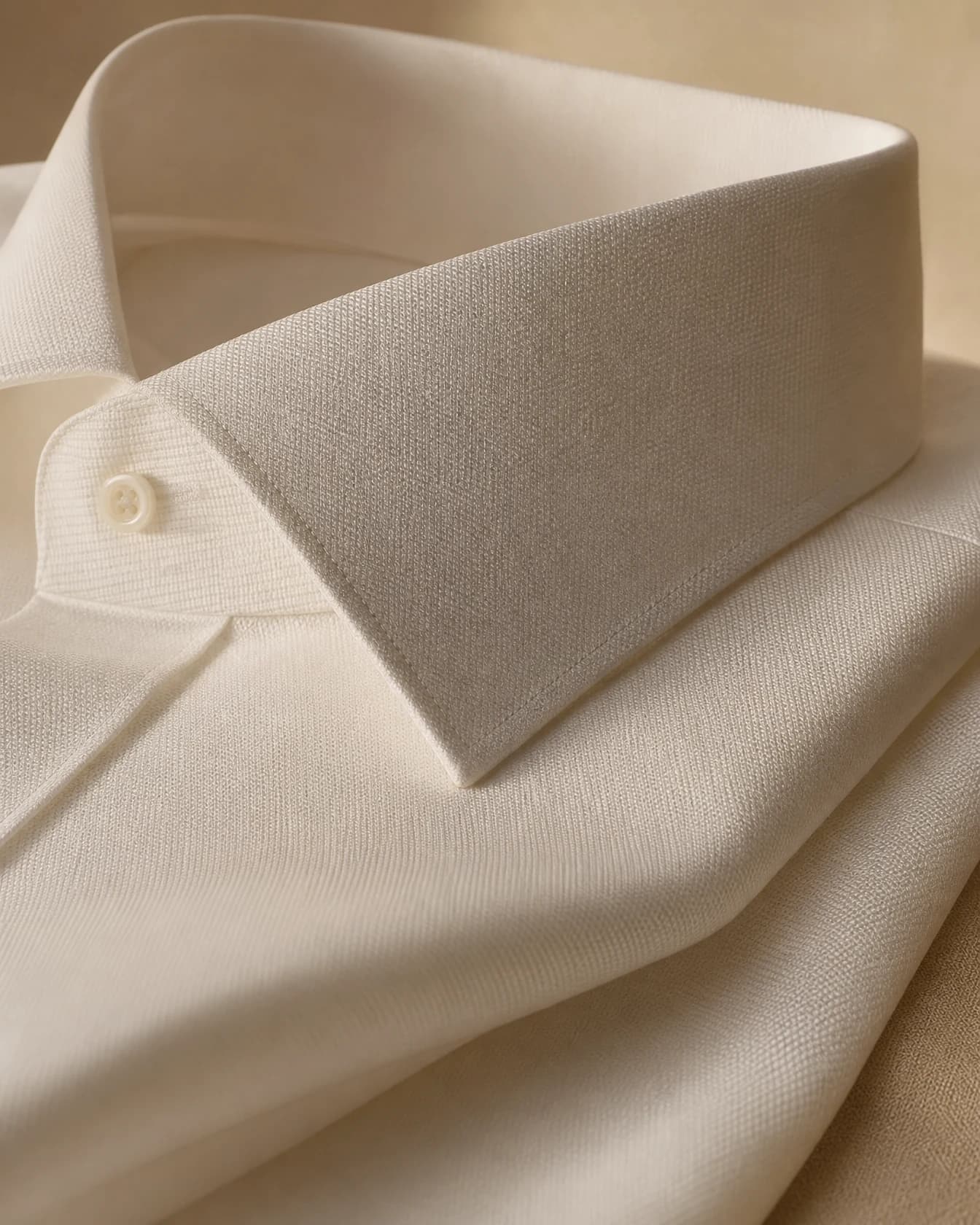
Shirts, trousers and dresses across poplin, oxford, twill, denim and chambray — fabric that doesn't stretch to forgive a fitting error the way knit does, which is exactly why pattern precision and construction detail matter more here than in almost any other category. Poplin is a fine, tightly-spun plain weave with a crisp, smooth handle suited to dress shirting; oxford is a coarser basketweave with a soft, textured, casual feel suited to button-downs. Fabric weight tracks use directly: 100 to 150gsm lightweight shirting for dress and warm-weather shirts, 150 to 220gsm medium weight for casual shirts and lighter trousers, 220gsm and up for structured trousers and denim. Construction detail — French seams, sewn interlining rather than fusible, keyhole buttonholes — is where good and cheap visibly separate, and it's largely invisible until you're looking for it.
What's actually in the spec.
| GSM range | Typical use |
|---|---|
| 100–150gsm | Lightweight shirting — dress shirts, warm-weather shirts |
| 150–220gsm | Medium weight — casual shirts, chinos, lighter trousers |
| 220–350gsm+ | Heavyweight — structured trousers, denim, outerwear-adjacent wovens |
Poplin woven shirt at $5.50–$10.00; non-stretch denim jeans at $8.00–$16.00. Fabric count, interlining and wash recipe are the main swing factors.
Treat this as a sanity check, not a quotation — the real number depends on your exact fabric, decoration and volume. Send your tech pack for an itemised costing.
500 pieces per style/colour
10–16 weeks from approved tech pack to ex-factory: sampling and approvals, fabric booking, then 45–75 days of bulk production
What buyers ask about woven.
What GSM should a pair of trousers be?
It depends heavily on the end use, but 220gsm and up is where most structured trousers and denim sit, since anything lighter tends to lack the body to hold a crease or resist wrinkling through a day of wear. Lighter trousers and chinos can work in the 150 to 220gsm medium-weight range if the design calls for a softer, more relaxed drape rather than a structured silhouette. The same logic that applies to shirting applies here: weight sets the starting point, but yarn quality and weave density decide whether a given GSM actually performs the way you expect. Specify both the GSM and the fabric type — twill, denim, chino cloth — in your tech pack, since two fabrics at the same weight can behave very differently depending on construction.
What's the difference between poplin and oxford?
Weave is the whole story here. Poplin is a fine plain weave — tightly spun yarns packed close together — which gives it that crisp, smooth handle and slight sheen you associate with dress shirting; it's a fairly formal fabric even in a casual cut. Oxford is a coarser basketweave, where pairs of yarns interlace rather than single yarns, producing a softer, more textured, distinctly casual surface — it's the fabric behind the classic button-down shirt, not the dress shirt. The two aren't interchangeable for the same brief: a poplin shirt reads smart even styled down, while an oxford shirt reads casual even styled up. Specifying the weave, not just "cotton shirting," is what actually gets you the hand-feel and formality level you're picturing rather than whatever a factory defaults to.
Does woven cost more than knitwear?
Usually yes, per piece, and the reason is structural rather than about the fabric itself. Woven fabric has no stretch to compensate for a small error in cutting or pattern-making, so the pattern has to be right the first time — a knit garment can tolerate minor pattern imprecision because the fabric gives; a woven shirt or trouser can't. That precision requirement shows up as more careful cutting, more exacting sewing tolerances, and construction details — interlining, French seams, proper buttonholes — that a knit garment simply doesn't need. Fabric cost adds to the gap too: a poplin shirt commonly runs $5.50 to $10.00 FOB and non-stretch denim jeans $8.00 to $16.00, with fabric weight, interlining choice and wash recipe as the main swing factors within those ranges.
Ready to cost your woven shirt and trouser programme?
Send a reference and a target quantity — we'll come back with construction options, costing and lead-time, usually the same business day.