Underwear and intimates manufacturer in Bangladesh
Belle Vouz makes private-label briefs, boxers and bralettes in Bangladesh in combed ring-spun cotton, modal and micro-polyamide, from 500 pieces per style and colour. We publish the cost breakdown rather than a price, because fabric, trims and volume move it too far.
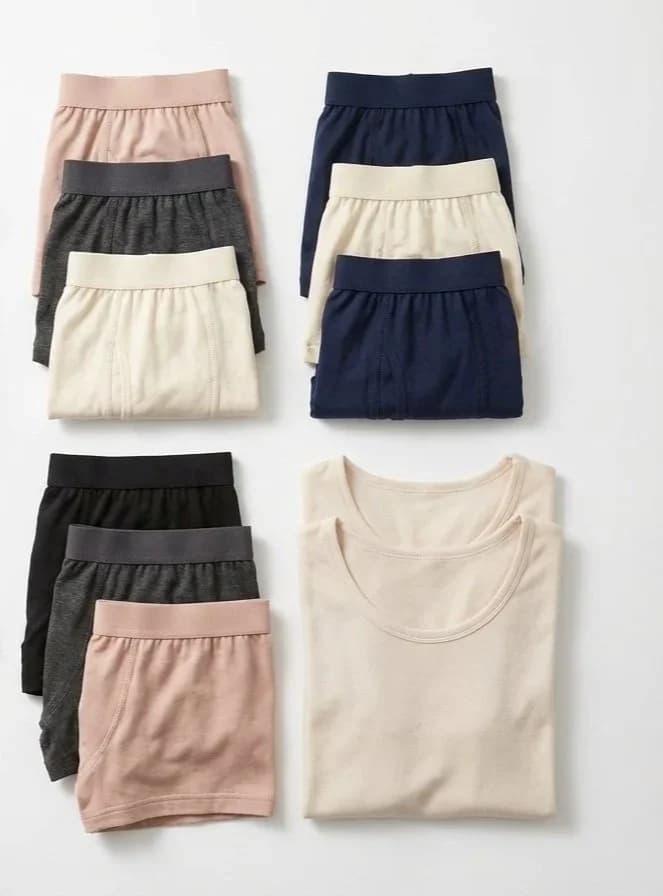
Overview
Combed ring-spun cotton jersey with elastane is the everyday standard; modal and micro-polyamide options trade cost for a softer hand or a performance finish respectively. Elastane content of 5 to 10% is what provides recovery in a fabric that has to move with the body constantly, and MOQ logic here differs from most categories: underwear is a multi-size, often multi-pack product, so 1,000 pieces spread across five sizes and a pack assortment is a genuinely modest production run for a factory, not a large one. The real minimum is frequently set by the elastic waistband and leg trims — sourced from a specialist elastic mill with its own dye-lot minimums — rather than by the fabric itself. Colourfastness and shrinkage testing are worth treating as standard for this category specifically, given how directly the fabric sits against skin.
What's actually in the spec.
| Fabric | GSM | Feel |
|---|---|---|
| Combed ring-spun cotton + elastane | 160–200gsm | Everyday standard |
| Modal / micro-modal blend | 150–190gsm | Softer drape, better wick |
| Micro-polyamide (nylon) + elastane | 130–170gsm | Smooth, quick-dry, performance |
There's no honest single number to publish here.
Underwear pricing varies too much by leather grade, hardware and volume for a general range to mean anything. Here's what actually makes up the FOB price, so you can read a quote line by line instead of taking a number on faith.
| Cost component | Share of FOB | What it covers |
|---|---|---|
| Fabric | 38–52% | Yarn, knitting or weaving, dyeing, finishing |
| Trims & accessories | 5–12% | Labels, zips, buttons, thread, elastic, packaging |
| CM (cut & make) | 15–25% | Cutting, sewing, finishing, factory overhead |
| Wash / print / embroidery | 0–15% | Optional decoration — adds up fast |
| Factory margin & compliance | 8–12% | Audits, certifications, testing |
500 pieces per style/colour
10–14 weeks — elastic/trim sourcing is usually the binding constraint
What buyers ask about underwear.
What elastane percentage should underwear fabric have?
5 to 10% elastane blended with combed ring-spun cotton is the standard range for everyday underwear, and it's what provides the recovery a fabric sitting directly against skin and moving constantly with the body actually needs. Too little elastane and the fabric loses shape and sags after repeated wear and washing; too much pushes cost up without a proportional comfort gain for most styles. Within that range, the specific percentage is a design choice more than a fixed rule — briefs generally sit toward the higher end for a snugger recovery, while looser-cut styles can run lower. Modal and micro-polyamide blends follow the same elastane logic but trade some of cotton's breathability for a softer drape or a smoother, quick-dry performance finish respectively, which is why the base fibre choice matters as much as the elastane percentage itself.
Why does underwear have a different MOQ logic than tees?
The elastic waistband and leg trims are often the real constraint, sourced from a specialist elastic mill with its own dye-lot minimums that run independently of whatever the fabric MOQ happens to be. That's compounded by underwear being a multi-size, often multi-pack category by nature — 1,000 pieces spread across five sizes and a three-pack assortment works out to a genuinely modest production run for a factory, closer to a small order than a large one, even though the raw piece count looks substantial on paper. A brand quoting underwear against a tee's MOQ logic is comparing two different constraints: for a tee, fabric and cutting capacity set the floor; for underwear, it's frequently the elastic trim supplier's own minimum that actually determines how small an order can realistically go.
Ready to cost your underwear programme?
Send a reference and a target quantity — we'll come back with construction options, costing and lead-time, usually the same business day.