In short
Activewear fabric is chosen on performance: moisture-wicking polyester-spandex jersey (88 to 92% polyester, 8 to 12% spandex) suits training tops and tights, while nylon-spandex with 15 to 22% spandex gives the higher recovery compression leggings need. Leggings and fitted training wear need 4-way stretch, which stretches and recovers in both length and width.
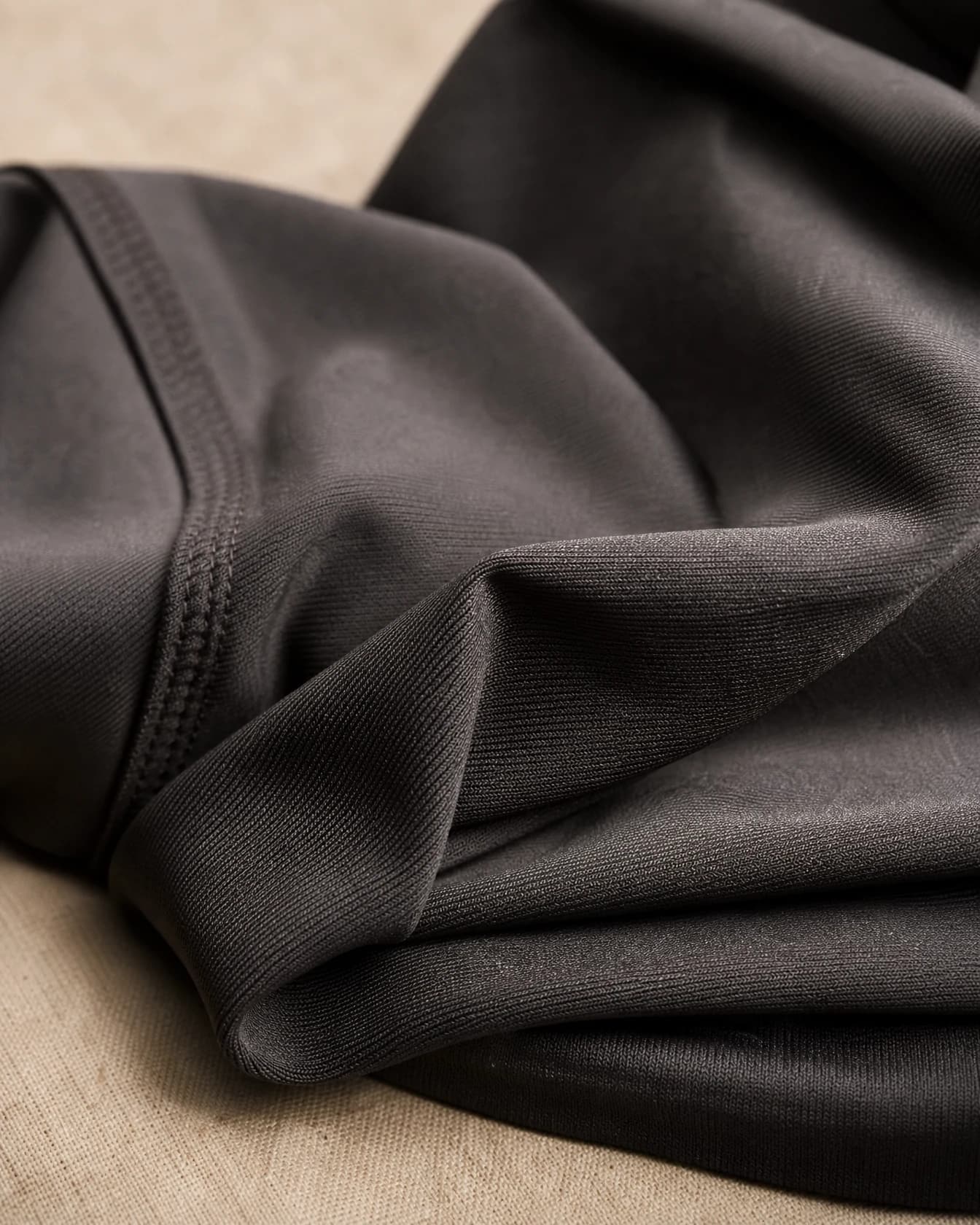
A basic tee succeeds on hand-feel and price. Activewear succeeds — or fails — on performance specs most buyers have never had to define precisely: how it moves moisture, how far it stretches and recovers, how it breathes under load. Get the fabric brief wrong and no amount of pattern-making saves the product.
The performance properties that actually matter
- Moisture-wicking — fabric engineered to pull sweat away from the skin to the outer surface for faster evaporation, typically through fibre cross-section shape or a hydrophobic-inside, hydrophilic-outside construction.
- Stretch and recovery — measured as 2-way (stretches in one direction, usually width) or 4-way (stretches and recovers in both length and width) — 4-way stretch is standard for leggings and fitted training wear.
- Compression — controlled, engineered tension in the fabric and pattern that applies graduated pressure, distinct from simply using a very tight-stretch fabric.
- Breathability — usually engineered through mesh panelling, open-knit construction, or fabric with a more porous structure at zones with higher heat output.
- Quick-dry — a function of fibre type (synthetics generally dry faster than natural fibres) and fabric structure that limits water retention within the yarn itself.
- Anti-odour finishes — typically silver-ion or other antimicrobial treatments applied to slow the bacterial growth that causes odour in synthetic performance fabric.
- UPF (UV protection factor) — a rated measure of how much UV radiation a fabric blocks, relevant for outdoor-focused activewear.
| Fabric | Typical composition | Stretch | Best for |
|---|---|---|---|
| Polyester-spandex jersey | 88–92% polyester / 8–12% spandex | 4-way | T-shirts, general training tops, tights |
| Nylon-spandex (nylon/lycra) | 78–85% nylon / 15–22% spandex | 4-way, higher recovery | Compression leggings, swim-adjacent styles |
| Poly microfibre interlock | 100% polyester, tightly knit | 2-way | Base layers, lightweight running tops |
| Recycled polyester (rPET) | Recycled PET blended with spandex | 4-way | Sustainability-positioned activewear ranges |
| Viscose (from bamboo) and modal blends | Viscose made from bamboo / modal with elastane | 4-way, softer hand | Studio wear, activewear-loungewear crossover |
Construction choices that affect performance as much as fabric
- Flatlock seams — sit flat against the skin rather than raised, reducing chafing on high-friction areas like inner thighs and underarms during movement.
- Four-way pattern engineering — panels cut and placed so stretch direction aligns with the body's actual range of motion, not just the fabric's default grain.
- Bonded vs sewn seams — bonded (glued or welded) seams reduce bulk and can be fully waterproof, but cost more and require specialised equipment; sewn seams are more common and more repairable.
- Mesh ventilation placement — placed at the body's highest heat-output zones (upper back, underarms) rather than decoratively, when genuinely performance-driven.
“The difference between activewear that performs and activewear that just looks like it is almost entirely decided before a single seam is sewn — in the fabric brief.”
Certifications worth asking about
OEKO-TEX Standard 100 matters more for activewear than for most categories, because stretch fabrics sit directly against skin during heavy sweating — exactly the condition under which residual chemical treatments are most likely to cause irritation. If sustainability is part of your brand story, ask specifically about recycled-content verification (not just a general "eco" claim) for any rPET fabric in your range. Label and advertise bamboo-derived stretch fabric as viscose (or rayon) made from bamboo; the US Federal Trade Commission allows a plain "bamboo" fibre claim only for fabric made directly from bamboo fibre.
Frequently asked questions
What is the difference between 2-way and 4-way stretch fabric?
The difference is about how many directions the fabric actually moves and recovers in, and it matters far more for activewear than for almost any other garment category. 2-way stretch fabric stretches in one direction only, usually across the width, which is fine for a relaxed training top that doesn't need to move with the body through a full range of motion. 4-way stretch fabric stretches and recovers in both length and width simultaneously, tracking genuine body movement rather than just giving in one axis — which is exactly why it's the standard for leggings and fitted training wear, where the fabric needs to move with a squat or a stride and snap back to shape afterward rather than sagging. Specifying 4-way stretch when a product genuinely needs it, rather than defaulting to whatever a factory has in stock, is often the difference between activewear that performs and activewear that just looks like it should.
What fabric is best for moisture-wicking activewear?
Polyester and nylon-spandex blends dominate this category, and it's not just industry habit — synthetic fibres can be engineered specifically for the job in a way natural fibres generally can't match. Moisture-wicking works either through the fibre's own cross-section shape or through a construction with a hydrophobic inside face and hydrophilic outside face, which together actively pull sweat away from the skin toward the fabric's outer surface where it can evaporate faster. Polyester-spandex jersey, commonly around 88 to 92% polyester with 8 to 12% spandex, is the workhorse choice for general training tops and tights. Nylon-spandex blends, typically higher in spandex content, add better recovery and are common in compression leggings. Natural fibres like cotton absorb moisture rather than moving it away from the skin, which is exactly why they're comfortable for everyday wear but genuinely underperform engineered synthetics once heavy sweating is actually involved.
What is compression fabric?
Compression fabric is fabric and pattern engineered together to apply controlled, graduated pressure across specific areas of the body — and the key word there is "engineered," because it's genuinely distinct from simply using a very tight stretch fabric and calling it compression. A tight 4-way stretch legging squeezes uniformly and can actually restrict movement without providing targeted support anywhere in particular. True compression construction varies the tension deliberately through the pattern itself — tighter at certain points, calibrated elsewhere — to support specific muscle groups or improve circulation during and after activity, which is the whole premise behind compression sportswear as a category rather than just tight-fitting activewear. If a brief calls for compression, that needs to be specified as its own construction requirement in the tech pack, not assumed to follow automatically from choosing a high-stretch fabric.
Is recycled polyester as good as virgin polyester for activewear?
Performance-wise, largely comparable when it's properly manufactured — recycled polyester, or rPET, can deliver essentially the same stretch, durability and moisture-management properties as virgin polyester once it's spun and knitted correctly, so a sustainability-positioned activewear range doesn't have to sacrifice actual performance to make that claim. Where the real differences show up are cost, which typically runs somewhat higher than virgin polyester, and verification, which matters more than most brands initially expect. "Recycled content" is an easy claim to make and a genuinely easy one to fake with an unverified "eco" label, so it's worth asking specifically for recycled-content verification or a transaction certificate on any rPET fabric in your range rather than accepting the claim at face value. The fibre performance itself isn't the risk here — the unverifiable sustainability claim sitting on top of it is.
Sources
We manufacture activewear across polyester-spandex, nylon-spandex and recycled-content fabrics, with flatlock construction as standard. Tell us the performance properties your product actually needs and we'll spec the fabric to match.

Homaira Jashim
Director, Belle Vouz Ltd
Homaira Jashim is a director of Belle Vouz Ltd and a co-founder of Collective Studio Ltd, its group company in Narayanganj. She works with brands from first enquiry to repeat orders.
More about the teamFree tools for clothing brands
MOQ, pricing and AQL calculators, a GSM ⇄ oz converter, a fillable tech pack template and a manufacturing glossary — built by our group company, Collective Studio, free to use.