In short
Full-grain leather keeps the hide's natural surface intact, so it is the strongest grade and develops a patina; top-grain is the same upper cut lightly sanded and finished, slightly less durable but more uniform and cheaper. Suede is buffed split leather, nubuck is buffed top-grain, and 'genuine leather' only means real leather, not a grade.
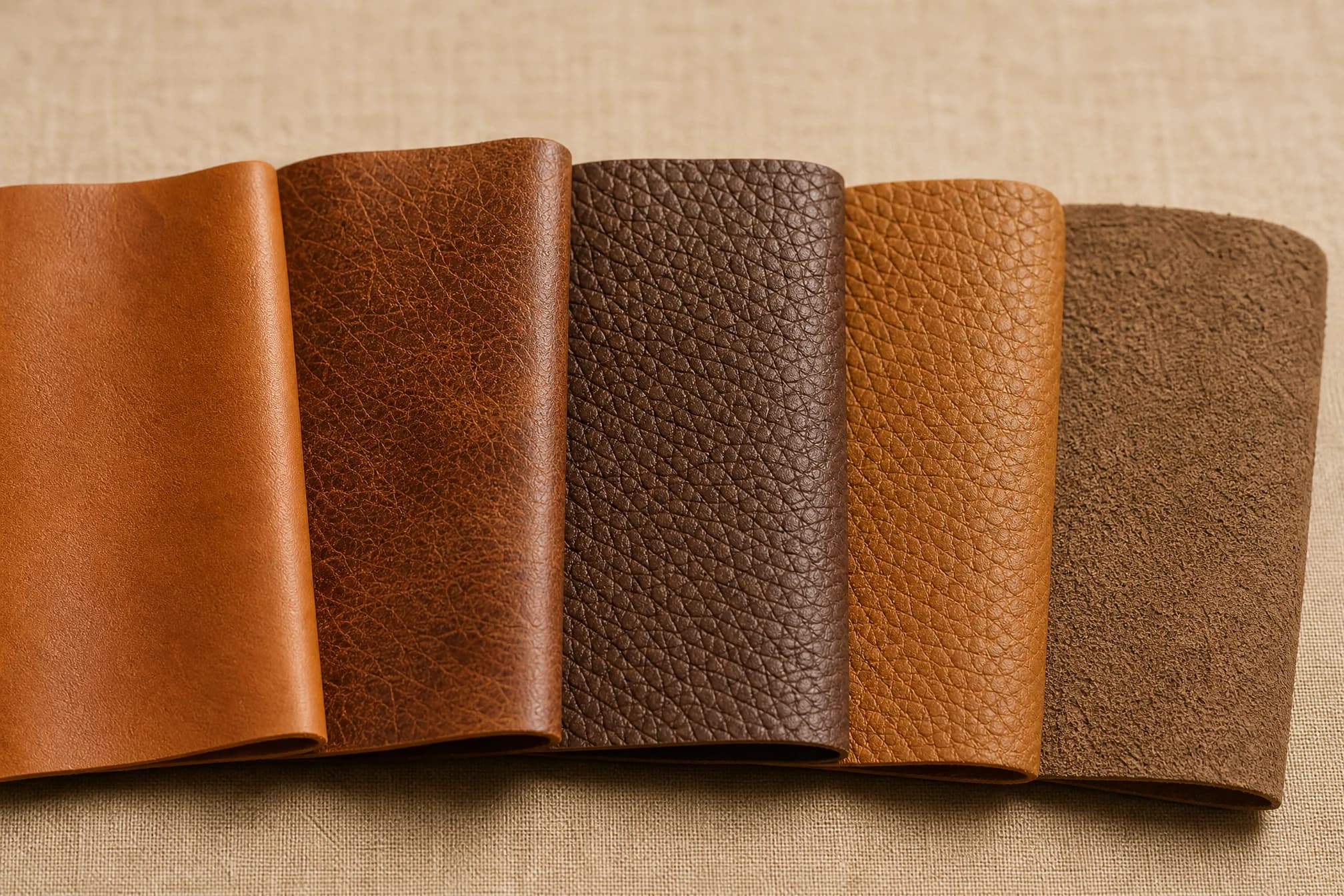
Two products described as 'leather' can be worlds apart. The grade decides durability, feel, price and how it ages — so it is worth knowing what the terms mean before you approve a material, because several of the most common ones are designed to sound better than they are.
The grades, from top of the hide down
Full-grain
The top layer of the hide with its natural surface intact — nothing sanded away. It is the strongest and most breathable grade, shows natural markings and scars, and develops a patina over years of use rather than wearing out. Premium, and priced accordingly. If a product is built to last a decade, this is what it is built from.
Top-grain
The same upper cut, lightly sanded and finished to remove surface imperfections, usually with a pigmented or semi-aniline coat. More uniform than full-grain, slightly less durable, meaningfully cheaper, and easier to keep consistent across a production run — which is exactly why most branded leather goods use it. For colour-critical programmes, top-grain is often the honest recommendation.
'Genuine leather' — the term that means less than it sounds
'Genuine leather' is not a grade. It only says the material is real leather rather than a synthetic, so it tells you nothing about which layer of the hide you are getting. In our experience the stamp tends to appear on split leather with an embossed, pigmented surface, because a maker using full-grain or top-grain would say so. Split leather scuffs faster, breathes less, and does not develop a patina. Fine for price-point goods; ask for the cut in writing.
Suede and nubuck
Suede is split leather buffed on the flesh side for a nap; nubuck is top-grain buffed on the grain side — finer, stronger and costlier than suede. Both are tactile and handsome, both are vulnerable to water and staining without protective treatment, and both demand clean handling in production because they cannot be wiped clean afterwards.
Bonded leather
Shredded leather fibres and offcuts bonded together with a binder, usually synthetic, pressed into sheets and embossed. How much of it is leather varies widely, so get the figure in writing: the European terminology standard EN 15987 reserves 'bonded leather fibre' for material with at least 50% leather fibre by dry weight, and the US FTC Leather Guides say it should not be sold as leather and that the term 'bonded leather' should come with its percentage of leather fibre. It cracks and peels with use, and in our view has no place in a product carrying a brand you care about. If a quote seems impossibly cheap for 'leather', this is usually why.
| Grade | Durability | Ages how | Relative cost | Best use |
|---|---|---|---|---|
| Full-grain | Highest | Patinas, improves | 100 (index) | Heirloom bags, belts, jackets |
| Top-grain | High | Stays uniform | 60–80 | Branded bags, jackets, small goods |
| Split (often sold as 'genuine') | Moderate | Scuffs, wears | 30–50 | Price-point goods |
| Suede / nubuck | Moderate | Softens; stains | 40–70 | Casual jackets, footwear, trim |
| Bonded | Low | Cracks, peels | 10–20 | Avoid for branded product |
Tanning: chrome or vegetable
Grade describes where in the hide the leather comes from; tanning describes how it was turned from skin into leather. Chrome tanning — between 75% and 90% of world production, depending on the source — takes days, yields soft, supple, colour-flexible leather, and done responsibly is tightly controlled for chemistry and effluent. Vegetable tanning uses plant tannins over weeks, yielding firmer leather with unmatched patina, in a narrower, earthier palette; it is the choice for belts, structured bags and tooling. Neither is automatically 'better' or 'greener' — a modern audited chrome tannery can outperform a poorly run veg operation on environmental measures. What matters is the tannery's practices, which is why Leather Working Group (LWG) audited sourcing is the credential to ask for.
Finishes, and reading a swatch
Aniline finishes are transparent dye only — the most natural look, the least protection. Semi-aniline adds a light protective coat; pigmented finishes add opaque colour and the most uniformity and stain resistance. When you approve a leather swatch, check thickness in millimetres (1.2–1.4 mm is typical for bags, 0.9–1.1 mm for garments), scratch it discreetly to see how it marks, flex it to check the finish does not crack, and confirm the tannery source. Then keep the approved swatch — leather disputes are settled against physical references, not adjectives.
Frequently asked questions
What is the best type of leather?
Full-grain is the strongest and most durable grade and ages the best of any of them — because nothing is sanded away from the natural surface, it develops a patina rather than wearing out, and a product built from it is genuinely built to last a decade. But that same natural surface carries visible markings and scars and varies more from hide to hide, which makes it harder to keep uniform across a production run. Top-grain — the same upper cut, lightly sanded and given a pigmented or semi-aniline finish — is slightly less durable but far more consistent and meaningfully cheaper, which is why most branded leather goods actually use it rather than full-grain. So 'best' genuinely depends on the brief: full-grain for longevity and character, top-grain when colour consistency across a production run matters more than maximum lifespan.
Is genuine leather good quality?
It can be, but the words alone do not tell you. 'Genuine leather' is not a grade: the leather industry uses it to mean real leather rather than a synthetic, and it says nothing about which layer of the hide was used. In our experience a product stamped only 'genuine leather' is often split leather — the lower layers left after the top cut is taken — finished with an embossed, pigmented surface to imitate grain, because a maker using full-grain or top-grain would normally say so. Split leather scuffs faster than full- or top-grain, breathes less, and never develops the patina that makes higher grades improve with age. That doesn't make it worthless — it's a legitimate, functional material for price-point products where cost matters more than longevity — but buyers should ask for the cut in writing rather than assuming the name implies quality.
Chrome or vegetable tanned — which should I choose?
Chrome tanning — used for between 75% and 90% of world leather production, depending on the source — takes days rather than weeks, and produces soft, supple leather that takes bright or fashion colours well, which makes it the right choice for garment leathers and anything that needs to drape or move with the body. Vegetable tanning uses plant tannins over several weeks instead, producing firmer leather with an unmatched natural patina, but in a narrower, earthier colour palette — the standard choice for belts, structured bags and tooled leather goods rather than jackets. Neither method is automatically better or greener than the other: a modern, well-audited chrome tannery can outperform a poorly run vegetable-tanning operation on environmental measures like chemistry and effluent control. What actually matters is the individual tannery's practices, which is why Leather Working Group (LWG) audited sourcing, not the tanning method's name, is the credential worth asking for.
What thickness of leather do I need?
Roughly 1.2–1.4 mm for bags, where the leather needs to hold shape and structure without a lining doing all the work; 0.9–1.1 mm for jackets and garments, thin enough to move with the body while still being durable; and 3–4 mm for belts, where rigidity and edge strength matter more than drape. Thickness should be specified in the tech pack like any other measurement, not left to a general description like 'medium weight' — leather suppliers work in precise millimetre ranges and will cut to spec if you give them one. When you approve a physical swatch, check the thickness against your specified range, flex it to confirm the finish doesn't crack, and keep that exact swatch as the production reference, since leather disputes are settled against a physical sample, not against adjectives in an email.
What is bonded leather?
Bonded leather is shredded leather fibres glued onto a backing material and then embossed with a grain pattern to look like a genuine hide. How much of it is leather varies widely, so ask for the leather-fibre percentage in writing: the European standard EN 15987 sets a 50% minimum by dry weight for the term 'bonded leather fibre', and the US FTC Leather Guides expect the percentage to be disclosed. It's the cheapest material on the market described as 'leather,' and it behaves like it: the surface cracks and peels with normal use rather than ageing gracefully, and there's no repairing it once that starts. If a quote comes back for a leather product at a price that seems impossibly low, bonded leather is usually the explanation, even if the supplier doesn't volunteer the term. We recommend avoiding it entirely for any product carrying a brand you care about, since the failure is visible to the end customer within months rather than years.
How can I verify leather claims from a supplier?
Ask for the grade in writing rather than accepting a verbal description — full-grain, top-grain, split and bonded are genuinely different materials with different prices and performance, and the terms are close enough to each other that a supplier can be technically honest while still misleading you. Get the tannery name and, where relevant, its Leather Working Group audit status, since the tannery's practices matter more to durability and environmental impact than whether the tanning method was chrome or vegetable. Most importantly, request a physical swatch: check its thickness against your spec, scratch it discreetly to see how easily it marks, and flex it to confirm the finish doesn't crack. Approve that specific swatch and keep it — it becomes the production reference against which the bulk order is judged, because leather disputes are settled against a physical sample, not against words on a spec sheet.
Sources
- 1.Leather Naturally — fact sheets: Leather Terminology; Different Types of Tanning (March 2026)
- 2.European Commission JRC — Best Available Techniques Reference Document for the Tanning of Hides and Skins (2013)
- 3.US Federal Trade Commission — Leather Guides, 16 CFR Part 24
- 4.Leather Working Group — certification and ratings
We source finished leathers across all grades for jackets, bags and small goods. Tell us the product and the price point, and we will send graded swatch options with straight answers about what each will look like after a year of use.

Homaira Jashim
Director, Belle Vouz Ltd
Homaira Jashim is a director of Belle Vouz Ltd and a co-founder of Collective Studio Ltd, its group company in Narayanganj. She works with brands from first enquiry to repeat orders.
More about the teamFree tools for clothing brands
MOQ, pricing and AQL calculators, a GSM ⇄ oz converter, a fillable tech pack template and a manufacturing glossary — built by our group company, Collective Studio, free to use.