In short
GSM is fabric weight in grams per square metre, and the right figure depends on the garment: about 180 GSM for an everyday t-shirt, 280 to 350 for a hoodie and 400 to 440 for standard denim. Specify the finished weight with a tolerance of plus or minus 5%, alongside construction, yarn count and fibre.
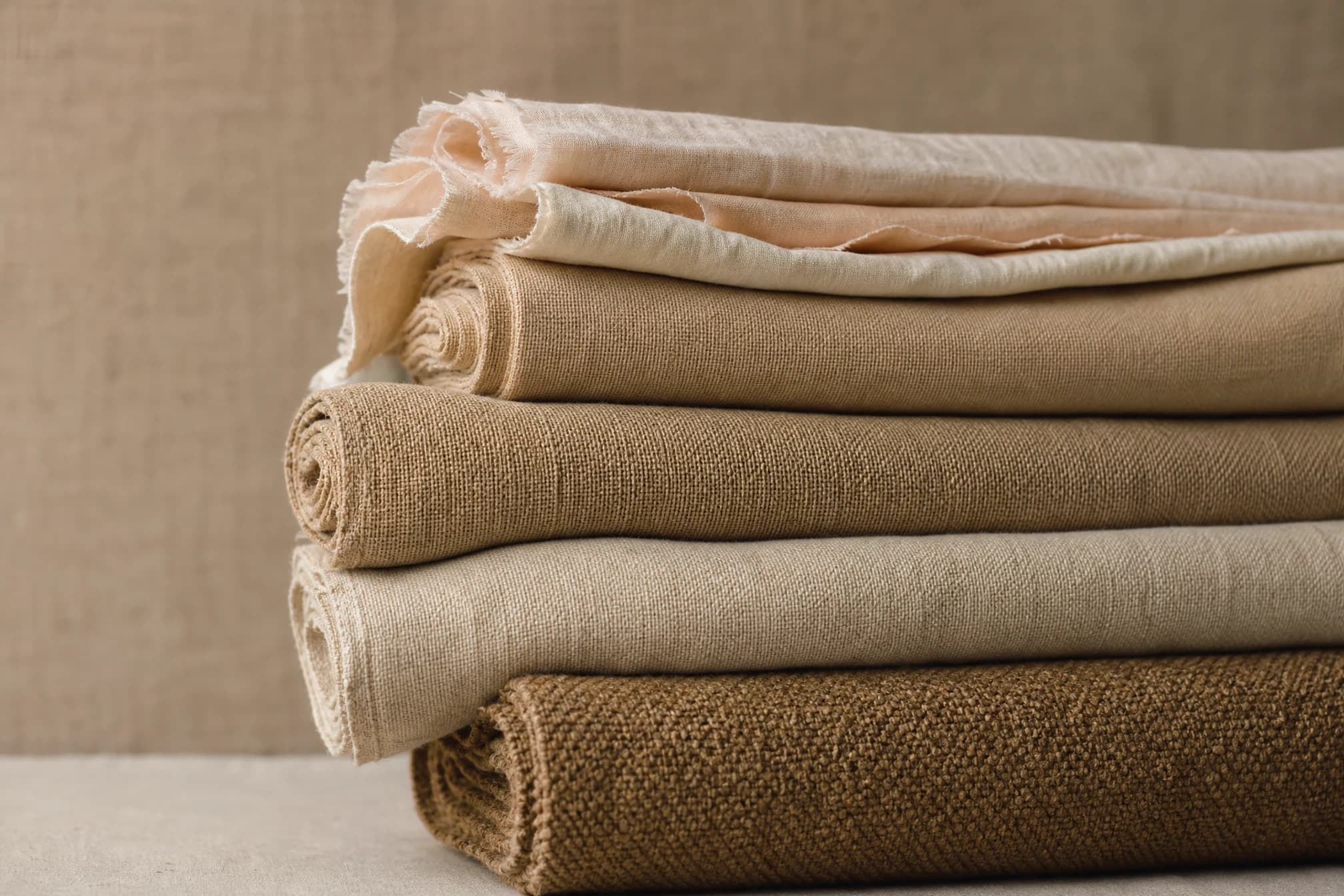
Two t-shirts, same cotton, same factory, same price band. One feels like something you would pay $40 for. The other feels like a conference giveaway.
The difference is usually one number on the spec sheet, and most people ordering their first production run either skip it or copy it from a competitor's website. That number is GSM.
Get it right and your sample arrives roughly as you imagined. Get it wrong and you have 2,000 pieces that are technically correct and commercially useless — too sheer, too stiff, too hot for the market you sell to. Here is what GSM measures, the practical ranges per garment, how it behaves differently in knits and wovens, and the trap that catches nearly everyone.
What GSM means
GSM stands for grams per square metre. Cut one square metre of fabric, weigh it, and that is the GSM. Its usefulness comes from being independent of fibre, construction and finish — you can compare a cotton jersey to a polyester fleece on the same scale.
You may also see fabric weight in oz/yd², especially from American mills and in denim. One oz/yd² is roughly 33.9 GSM, so a 12 oz denim is about 407 GSM and a 6 oz tee about 203 GSM.
What GSM does not tell you
GSM measures weight, not quality. A coarse 220 GSM jersey made from cheap open-end yarn will feel worse than a 160 GSM jersey made from long-staple combed cotton. Weight is a starting point, not a verdict.
- Yarn count — 20s, 30s, 40s. Higher numbers mean finer yarn and generally a smoother hand.
- Fibre and staple length — combed vs carded, ring-spun vs open-end. This is where premium feel actually lives.
- Construction — single jersey, interlock, French terry, piqué. Same weight, completely different behaviour.
- Finish — enzyme wash, peached, mercerised. Changes hand feel dramatically at identical GSM.
“Never write GSM in a tech pack alone. Write GSM plus construction plus yarn count plus fibre. That is a specification a mill can actually match.”
Weight ranges that work
| Weight class | GSM range | Feels like | Typical uses |
|---|---|---|---|
| Very light | 80–130 | Sheer, drapey, cool | Summer blouses, linings, athletic mesh |
| Light | 130–180 | Soft, breathable, some transparency | Warm-climate tees, vests, light shirting |
| Mid | 180–250 | Structured but not stiff; opaque | Everyday tees, polos, dresses, light sweats |
| Heavy | 250–350 | Substantial, holds shape | Hoodies, sweatshirts, heavy tees, jackets |
| Very heavy | 350+ | Rigid, durable, protective | Denim, canvas, outerwear, workwear |
Garment-by-garment defaults
- T-shirt — 180 GSM is the industry sweet spot: breathable enough for warm weather, opaque enough to wear alone. 140–160 for hot climates, 200–240 for a premium heavyweight.
- Polo shirt — 200–240 GSM piqué. Lower and the collar loses structure after a few washes.
- Sweatshirt or hoodie — 280–350 GSM French terry or brushed fleece; 320 is a reliable default.
- Woven shirt — 110–140 GSM poplin for a crisp dress shirt, 150–200 GSM twill or oxford for something more casual.
- Denim jeans — 320–370 GSM for a light summer jean, 400–440 GSM standard, 470+ GSM for raw and selvedge.
- Leggings and activewear — 220–280 GSM. Below about 200 GSM, squat opacity becomes a problem you hear about in reviews.
Knits and wovens behave differently
A knit is made of interlocking loops. It stretches, it drapes, and at a given weight it feels softer and more open, because loose knits carry more air between the yarns. A woven has yarns crossing at right angles in a fixed grid — denser at equal weight, and barely stretching unless elastane is added.
The practical consequence: 180 GSM is a normal t-shirt and a fairly heavy shirting fabric. Never carry a GSM number across from one construction to another without checking it against that category's own range. Wovens also introduce thread count and weave type as variables GSM cannot capture — a 130 GSM poplin and a 130 GSM voile are different products.
Heavier is not better
The most common mistake in first orders. "Premium" gets translated into "heavy," a 250 GSM tee gets specified, and then the reviews say it is hot, slow to dry and boxy. Weight should follow the use case.
- Climate — if you sell into a hot, humid market, a heavy tee is a returns problem. 140–180 GSM suits most warm-climate markets.
- Drape — flowing silhouettes need low GSM. A 240 GSM jersey will not drape, no matter how good the pattern is.
- Print method — heavy screen prints sit better on mid to heavy fabrics; fine DTG detail needs a smooth, high-yarn-count surface more than it needs weight.
- Cost — GSM is close to linear with fabric cost, and fabric is the largest single line in an FOB price. Going from 180 to 240 GSM is a third more fabric by weight and can add up to a third to your fabric bill.
Specifying GSM so it survives production
Three things to write into your tech pack. First, give a tolerance — ±5% is standard and reasonable. If you write "180 GSM" with no tolerance, you have not made a decision, you have made an argument for later.
Second, state whether the figure is pre- or post-finishing. Washing, brushing, compacting and dyeing all move the number; a fabric knitted at 170 GSM can finish at 185. Specify the finished GSM, because that is the fabric your customer touches.
Third, approve a physical swatch, not a number. Ask for lab swatches at your target weight, handle them, then approve one and reference it in the tech pack by code. Numbers do not communicate hand feel; the swatch does. On a first order, also request a shrinkage test — lighter knits generally shrink more, and shrinkage is a sizing problem disguised as a fabric problem.
Frequently asked questions
What GSM is best for a t-shirt?
180 GSM is the number every t-shirt GSM guide lands on, and for good reason — it sits in the mid-weight band of the fabric weight chart, heavy enough to be opaque and hold its shape, light enough to wear alone without overheating. Drop to 140–160 GSM for hot, humid markets or a lighter fashion fit, where anything heavier turns into returns. Go up to 200–240 GSM if you're after a heavyweight premium tee that drapes less and feels substantial in the hand. Whatever number you land on, write it into the tech pack next to construction, yarn count and fibre — GSM alone tells a mill almost nothing.
Is higher GSM better quality?
No, and this is the trap that catches nearly every first-time buyer. GSM measures weight, full stop — it says nothing about yarn count, fibre quality, spinning method or finishing, which are the things that actually decide how a fabric feels and wears. A cheap, coarse 220 GSM jersey knitted from open-end yarn can feel rougher than a 160 GSM fabric spun from long-staple combed cotton. Construction changes everything too: single jersey, interlock and French terry behave completely differently at identical weight. Treat GSM as one line on the spec, not the whole spec, and you'll stop overpaying for heavy fabric that doesn't actually feel premium.
How do I convert GSM to oz/yd²?
Divide by 33.9. A 400 GSM fabric works out to roughly 11.8 oz — a standard mid-weight denim. Run it the other way and a 12 oz denim lands around 407 GSM, a 6 oz tee around 203 GSM. You'll need this most often when an American mill or denim supplier quotes in ounces while your tech pack is written in GSM, or when you're squaring a US-sourced spec sheet against your own fabric weight chart. Keep both numbers on hand — it saves the awkward moment of realising halfway through a call that you and the mill have been discussing two different fabrics.
What GSM is a good hoodie?
280–350 GSM, solidly in the heavy weight class where a hoodie stops feeling flimsy. 320 GSM in brushed French terry or fleece is the default that keeps coming up for a reason — enough substance to justify the price tag without turning the garment into a sauna for three-season wear. The construction matters as much as the number: French terry, brushed fleece and plain jersey all behave differently at the same GSM, so specify both together, not just the weight. Only push toward 350 GSM if you're deliberately building for cold weather — every extra gram adds cost roughly in proportion.
Does GSM affect price much?
Yes, more than most people expect. Fabric is the largest single line in a garment's FOB price, and weight tracks fabric consumption almost linearly — heavier cloth simply means more yarn per square metre. Jump from 180 to 240 GSM and you are buying a third more fabric by weight, which can add up to a third to the fabric bill alone, before touching construction or finish. That's the trap in equating "premium" with "heavy": a well-chosen mid-weight fabric in a better yarn count often reads as higher quality on the rack for a fraction of what a heavier, coarser cloth would cost you.
Will my fabric come out at exactly the GSM I specify?
Rarely — and that's normal, not a defect. Washing, brushing, compacting and dyeing all shift the weight during finishing, so a fabric knitted at 170 GSM can easily finish at 185. Build in a ±5% tolerance rather than pretending the number is fixed, and nail down whether you and the mill are both talking about pre- or post-finishing weight — always spec the finished GSM, because that's the fabric your customer will actually touch. Better yet, stop trusting the number alone: get a physical lab swatch at your target weight, handle it yourself, approve it, and reference that swatch by code in the tech pack. A number can't tell you what a fabric feels like.
Does GSM change after washing?
Yes — compacting alone will do it, and washing, brushing and dyeing all move the number further from what it read straight off the knitting machine. Always spec and approve the finished, post-wash GSM, since that's the weight your customer's hand actually meets. On a first order, pair it with a shrinkage test too. Lighter knits tend to shrink more than heavy ones, and shrinkage that goes unchecked at the fabric stage almost always resurfaces later disguised as a sizing complaint, which is a much more annoying place to trace it back from.
Fabric GSM is the fastest way to communicate how a garment will feel, but it is a starting point rather than a specification on its own. Pair it with construction, yarn count and fibre, give a ±5% tolerance, and approve a physical swatch before bulk fabric is booked. Choose weight for your climate and silhouette, not for a vague idea of premium.
Send us your target hand feel — or a garment you like — and we will match swatches at the right weight before anything is costed. Working from a US spec sheet in ounces instead of GSM? Our group company Collective Studio built a free GSM ⇄ oz converter that also shows what each weight is typically used for.
Sources
- 1.Beverly Knits — What Is GSM? Fabric Weight Guide
- 2.Lone Creek Apparel — What Does 180 GSM Mean?
- 3.Core Classic — The Ultimate Guide to Fabric GSM
- 4.Fabriculture — Fabric Weight Chart: The Complete GSM Guide
- 5.Rajib et al. (2023) — Complete Garment Costing with Major Cost Breakdown, Journal of Textile Science and Technology 9, 115–126
- 6.Collective Studio — free GSM ⇄ oz converter for clothing brands

Homaira Jashim
Director, Belle Vouz Ltd
Homaira Jashim is a director of Belle Vouz Ltd and a co-founder of Collective Studio Ltd, its group company in Narayanganj. She works with brands from first enquiry to repeat orders.
More about the teamFree tools for clothing brands
MOQ, pricing and AQL calculators, a GSM ⇄ oz converter, a fillable tech pack template and a manufacturing glossary — built by our group company, Collective Studio, free to use.