In short
Denim is specified by weight, weave, dye method and wash: 12 to 14 oz per square yard suits most everyday jeans, lighter cloth suits shirting and summer styles, and 14 oz and above is raw and selvedge territory. Indigo sits in the outer layers of the yarn around an undyed core, which is why denim fades with wear and washing.
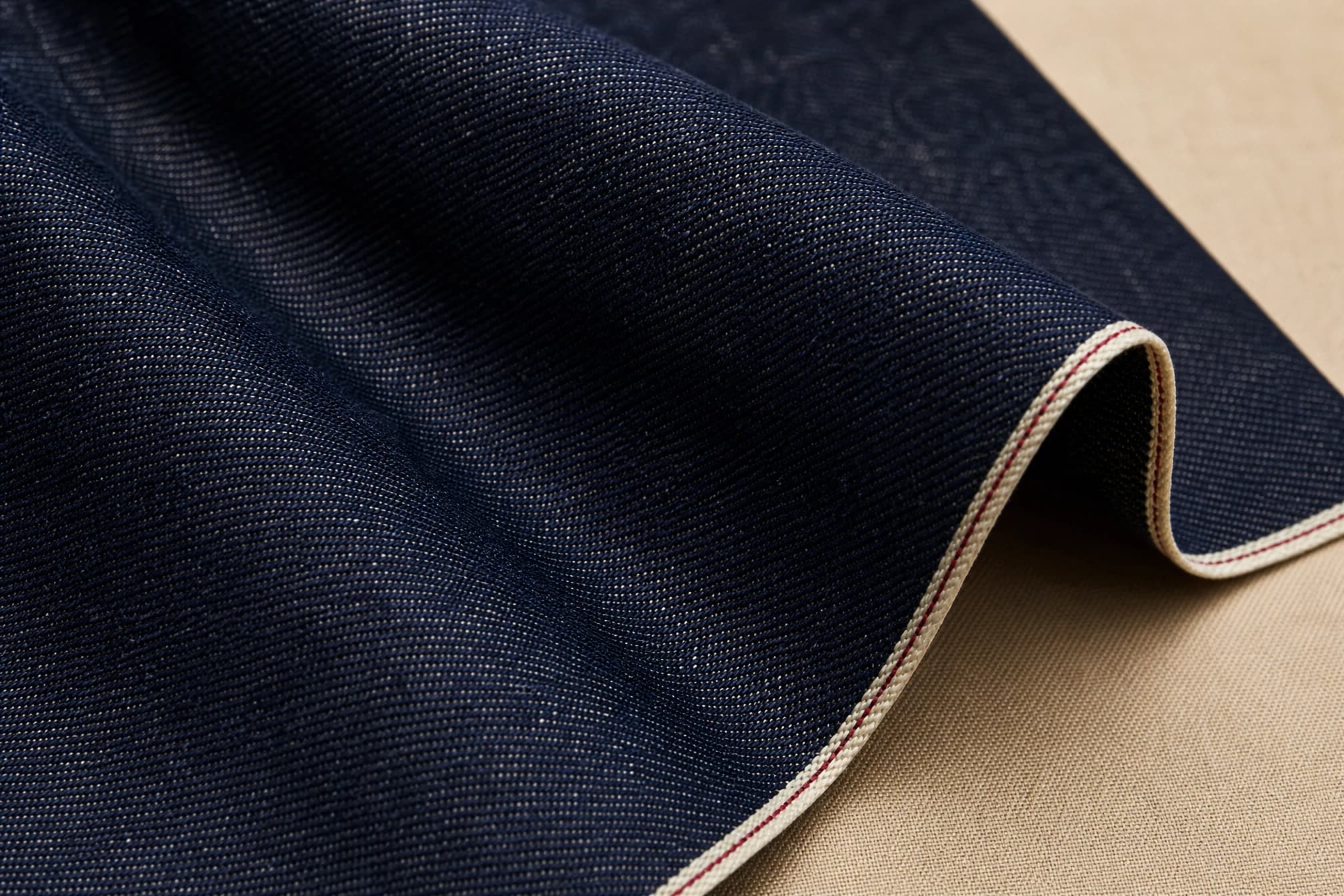
Denim is a twill-weave cotton fabric defined as much by how it's dyed and finished as by the weave itself. Two jeans at the same weight can wear, fade and age completely differently depending on decisions made long before cutting — the dye method, the loom, and the wash. Getting these right is what separates denim that develops character over years from denim that just looks tired after a few washes.
Weight — measured in ounces per square yard
| Weight range | Feel | Best for |
|---|---|---|
| Under 12oz | Lightweight, soft, less structure | Summer-weight jeans, denim shirting, skirts |
| 12–14oz | Mid-weight, balances structure and comfort | Everyday jeans, denim jackets |
| 14oz and above | Heavy, rugged, holds sharp creases | Raw/selvedge denim, workwear-style jeans |
Lighter denim has less structural body to begin with — fine for a deliberately soft, casual product, but a real risk if the brief calls for a jean that holds its shape. Heavier weights carry more indigo through the yarn, which is exactly why they produce more dramatic, higher-contrast fades over time.
Selvedge vs regular denim
Selvedge denim is woven on narrower, vintage-style shuttle looms that produce a tightly finished, self-edge that won't unravel — a visibly denser, more substantial fabric than wide-loom denim at the same nominal weight, and priced accordingly. Regular (wide-loom) denim is woven faster on modern looms, at lower cost, and is the standard choice for most commercial private-label runs where the selvedge detail isn't part of the product story.
How indigo dyeing actually works
Warp yarns are dyed with a reduced indigo solution — typically built up through multiple passes ("dips") rather than one saturating soak, since indigo bonds to cotton in thin surface layers rather than penetrating fully through the fibre. This is exactly why denim fades: the outer layers of indigo wear away with abrasion and washing, exposing the undyed core of the yarn beneath. Mills use rope-dyeing (yarn bundled into ropes, dipped and oxidised in stages, typically three to twelve dips) or slasher-dyeing (yarn run flat as a sheet through the dye baths) — rope-dyeing is the classic route to deep indigo shades, while slasher-dyeing suits lightweight denims, smaller runs and quicker turnarounds at lower machinery cost, and reaches only light and medium shades where the range does not allow enough dips.
“A jean doesn't fade because indigo washes out evenly — it fades because indigo was never fully inside the yarn to begin with. Understanding that is the difference between briefing a wash effect and just hoping for one.”
Common wash finishes
| Wash | Effect | Notes |
|---|---|---|
| Raw / unwashed | Deep, stiff, no fading yet — develops entirely through wear | Lowest processing cost; the fade becomes the customer's own |
| Stone wash | Softened hand, light overall fading, subtle texture | Standard commercial wash for everyday denim |
| Enzyme wash | Softer, more even fade than stone wash, less mechanical wear on fabric | Common where fabric longevity matters alongside softness |
| Acid wash | High-contrast, mottled fading pattern | A specific aesthetic, not a default — brief it explicitly |
| Laser fading | Precisely placed fade patterns without abrasive blasting | The modern, more worker-safe replacement for manual sandblasting |
One note on compliance: sandblasting — manually blasting sand at fabric to create a distressed, faded look — has been phased out across responsible manufacturing due to serious respiratory health risks (silicosis) for workers performing it. Laser fading achieves a comparable distressed effect without that risk, and it's worth explicitly confirming with any factory which method they use rather than assuming.
Frequently asked questions
What denim weight is best for jeans?
12–14oz covers most everyday jeans — enough structure to hold shape, without feeling like armour. Drop below 12oz and denim has less structural body; fine if you actually want something soft and casual, a real problem if the brief calls for a jean that holds its form over time. Go to 14oz and up and you're in raw and selvedge territory, along with workwear-style jeans built to take a sharp crease and wear in hard. Heavier weight also means more indigo carried through the yarn, and more indigo is what produces those dramatic, high-contrast fades that raw denim fans chase — a lighter-weight jean simply doesn't carry the dye load to fade the same way.
What is the difference between selvedge and regular denim?
Selvedge is woven on narrower, vintage-style shuttle looms that finish their own tightly closed edge — no unravelling, no need for an overlocked seam on that edge — and the fabric comes out denser and more substantial than wide-loom denim at the same nominal weight. That's also why it's priced higher. Regular denim runs through modern wide looms, faster and cheaper to produce, which is exactly why it's the standard for most commercial private-label denim runs where nobody's paying extra for a visible selvedge edge on a cuffed hem. The price gap isn't really about branding or hype — narrower shuttle looms are inherently slower and more labour-intensive to run, and that cost shows up directly in what a selvedge denim supplier has to charge.
Why does denim fade unevenly?
Indigo dye sits in thin layers on the outside of the yarn — it never fully penetrates through the fibre, which is why warp yarns get built up through multiple dips into a reduced indigo bath rather than one long soak. Wash and wear abrade those outer layers away first, exposing the undyed core of the yarn underneath, and that's why knees, thighs and pocket edges — the high-contact zones — fade faster and more visibly than the rest of the jean. The dyeing method matters too: rope-dyeing, where yarn gets bundled into ropes and dipped in stages, is the classic route to deep indigo shades, while slasher-dyeing runs the yarn flat as a sheet through the bath, which suits lightweight denims and smaller runs but reaches only light and medium shades where the range doesn't allow enough dips.
Is sandblasting still used for distressed denim?
Not among responsible manufacturers, no. Blasting sand directly at fabric to fake a distressed, worn-in look causes silicosis — a serious, well-documented respiratory disease — in the workers doing it, and that's pushed it out of any manufacturing operation that takes worker safety seriously. Laser fading has taken its place: it can place a fade pattern precisely, achieving a comparable distressed effect, without anyone breathing in abrasive dust to get there. Because the two can look similar on a finished jean, don't assume — ask any factory directly which method they're actually using. A distressed-denim brief that doesn't specify the method risks landing with a supplier still running the older process, and that's not a detail you want to discover after the fact.
Sources
We manufacture denim across standard and heavyweight qualities, with stone, enzyme and laser-fade finishing. If your spec sheet mixes GSM and ounces, our subsidiary Collective Studio's free converter tool will save you the mental arithmetic. Send your reference and target weight and we'll return costing and lead-time, usually the same business day.
Where to next

Homaira Jashim
Director, Belle Vouz Ltd
Homaira Jashim is a director of Belle Vouz Ltd and a co-founder of Collective Studio Ltd, its group company in Narayanganj. She works with brands from first enquiry to repeat orders.
More about the teamFree tools for clothing brands
MOQ, pricing and AQL calculators, a GSM ⇄ oz converter, a fillable tech pack template and a manufacturing glossary — built by our group company, Collective Studio, free to use.