In short
Woven shirts and trousers are specified by weave and weight: dress shirting such as poplin at 100 to 150gsm, casual shirts and twill chinos at 150 to 220gsm, and structured trousers or denim from 220gsm. Because woven fabric barely stretches, ease allowance must be stated in the tech pack and grading checked on a full size set.
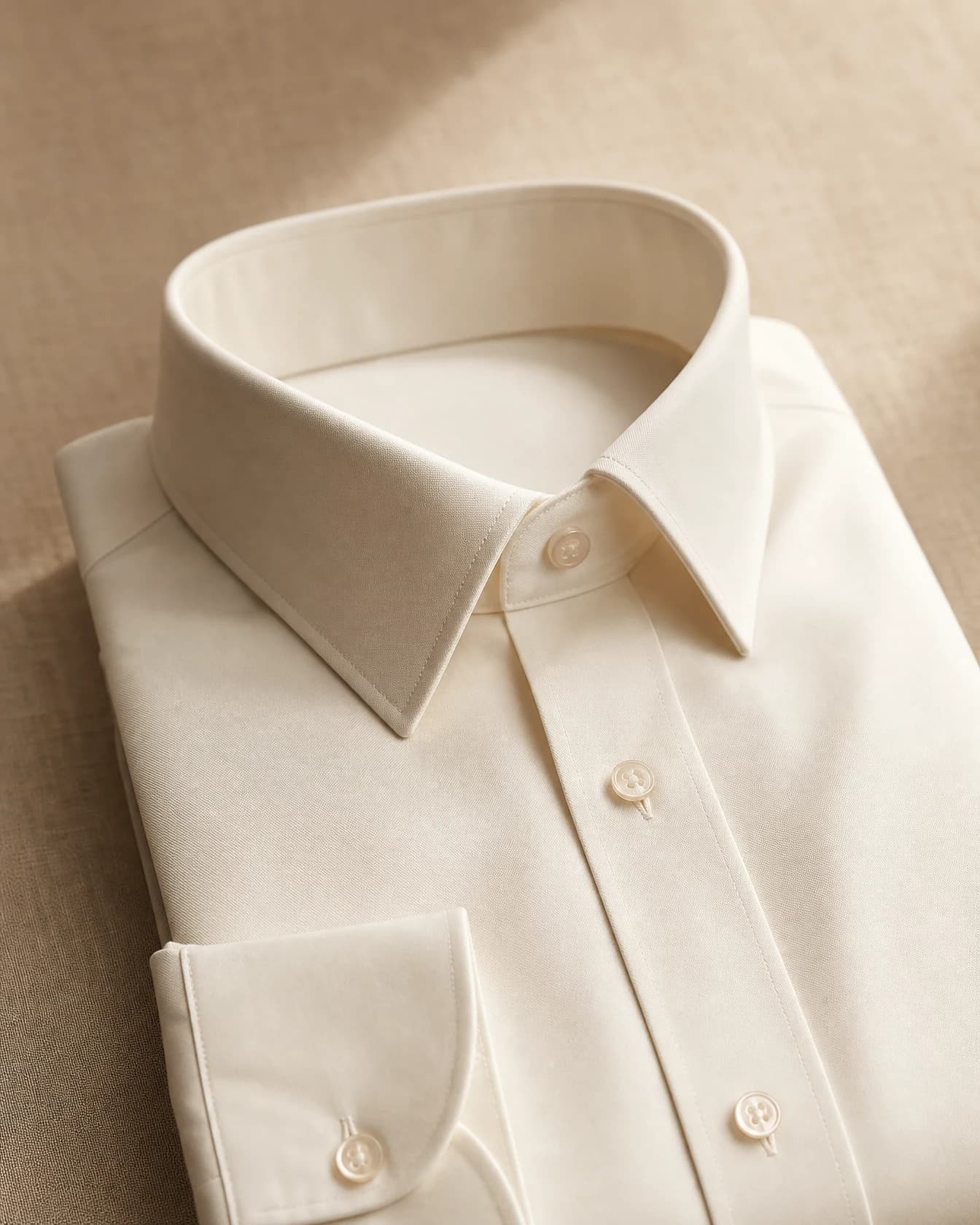
Knitwear stretches, which forgives a certain amount of imprecision in pattern and cutting. Woven fabric doesn't — a shirt or trouser pattern has to be right the first time, because the fabric itself won't compensate for a fitting error the way a knit will. That makes woven manufacturing a different discipline, with its own fabric vocabulary and its own places where quality quietly gets cut.
Common woven fabrics for shirts and trousers
| Fabric | Weave | Feel | Best for |
|---|---|---|---|
| Poplin | Plain weave, fine yarns | Crisp, smooth, slight sheen | Dress shirts, formal-casual shirting |
| Oxford | Basketweave (two yarns woven as one) | Soft, textured, casual | Button-down casual shirts |
| Twill | Diagonal weave | Durable, slight sheen, drapes well | Chinos, casual trousers, workwear |
| Denim | Twill weave, dyed warp yarns | Sturdy, structured, ages with wear | Jeans, denim jackets |
| Chambray | Plain weave, dyed warp/undyed weft | Lightweight, denim-look but softer | Casual shirts, warm-weather wovens |
| Ripstop | Reinforced grid weave | Tear-resistant, structured | Workwear, outdoor-oriented trousers |
GSM ranges for wovens
| GSM range | Typical use |
|---|---|
| 100–150gsm | Lightweight shirting — dress shirts, warm-weather shirts |
| 150–220gsm | Medium weight — casual shirts, chinos, lighter trousers |
| 220–350gsm+ | Heavyweight — structured trousers, denim, outerwear-adjacent wovens |
Construction points that separate good from cheap
- Collar and cuff interlining — fusible interlining is faster and cheaper but can bubble or delaminate after repeated washing if the adhesive or fabric match is poor; sewn (non-fusible) interlining costs more but holds shape more reliably over the garment's life.
- Seam type — French seams (fully enclosed, no raw edge visible) cost more but resist fraying far better than a simple overlocked seam, particularly on lighter shirting fabrics.
- Buttonhole quality — keyhole buttonholes (with a small round eyelet at one end) resist tearing at the stress point better than a straight buttonhole, especially on cuffs and waistbands under regular strain.
- Yoke construction — a proper back yoke, cut and sewn as a separate panel, allows better shoulder shaping than a shirt with no yoke seam at all.
- Waistband construction — a curved, contoured waistband sits better on the body than a straight strip of fabric, and bartacked belt loops resist the specific stress of a worn belt far longer than simple straight-stitched loops.
- Fly and zip quality — a reinforced fly shield and a name-brand zipper (YKK or equivalent) meaningfully outlast unbranded hardware under repeated use.
“A knit forgives a pattern that's slightly off. A woven shirt or trouser does not — which is why the tech pack and the first fit sample matter more here than in almost any other product category.”
Fit and grading
Because woven fabric has little to no stretch, ease allowance — the deliberate extra room built into a pattern beyond the body's actual measurements — does more work than it does in knitwear, where the fabric itself can compensate. Specify ease explicitly in your tech pack rather than assuming a factory's default block matches your intended fit, and always confirm grading consistency across a full size set before bulk, since a small grading error compounds visibly across a woven silhouette in a way it often doesn't in a stretch knit.
Frequently asked questions
What is the difference between poplin and oxford fabric?
Weave is the whole story here. Poplin is a fine plain weave — tightly spun yarns packed close together — which gives it that crisp, smooth handle and slight sheen you associate with dress shirting; it usually falls in the lightweight 100–150gsm range this guide flags for dress shirts. Oxford is a basketweave, built from two yarns woven as one, so the surface is coarser and more textured by construction, not by finishing. That's what gives oxford its soft, casual hand and makes it the default for button-down shirts rather than formal ones. If you're specifying either for a private label shirt manufacturing run, put the weave and GSM in the tech pack rather than just writing "poplin" or "oxford" and trusting a factory's interpretation — mills vary more than buyers expect on exactly how fine or coarse either weave turns out.
What GSM is best for trousers?
150–220gsm covers most standard casual trousers and chinos — heavy enough to hold a crease, light enough not to feel stiff by mid-afternoon. Go above that, into the 220–350gsm-plus range, for trousers that need real structure: heavier chinos, workwear-style pants, denim. Below 150gsm you're really talking shirting weight, not trouser weight, so that range only makes sense if the brief specifically wants something soft and unstructured rather than a standard bottom. Twill dominates at these mid-to-heavy weights for a reason — its diagonal weave drapes better than a plain weave at the same GSM while still holding up to regular wear, which is why it's the default fabric for chino trouser manufacturing. Put the GSM range in your spec sheet explicitly; factories will run their own default block if you don't, and it won't necessarily match what you had in mind.
Why does my woven fabric fray at the seams?
Nine times out of ten it's a seam-finishing choice, not a fabric fault. A plain overlocked edge leaves raw yarn exposed, and on lightweight shirting — where the yarns are already fine — that edge starts fraying fast under normal washing. A French seam encloses the raw edge completely inside the seam itself, which takes longer to sew and costs more, but holds up far better over the garment's life; a flat-felled seam does similar work. Factories default to the cheaper overlocked finish unless your tech pack says otherwise, because it's quicker to run on the line. So if bulk comes back frayed, the first thing to check isn't the fabric supplier — it's whether the seam type you actually specified made it into production, or whether the factory quietly substituted its standard finish.
What is ease allowance in trouser fitting?
It's the extra room built into a pattern on top of the body's actual measurements — the difference between a garment that fits and one that fits like a second skin. Woven fabric barely stretches, so ease is doing all the work a knit's own give would otherwise cover; get it wrong on a woven trouser and there's no fabric stretch to bail you out, unlike a knit pattern that's slightly tight but still wearable. That's why ease needs to be a stated number in the tech pack rather than left to whatever block a factory happens to run by default — their default fit intent may look nothing like yours. Worth pairing with a grading check across the full size set before bulk, too: a small grading error is far more visible on a structured woven silhouette than it ever is on a stretch knit.
We manufacture woven shirts and trousers across poplin, oxford, twill and chambray, with construction detail specified to your tech pack. Send us your reference and we'll return costing, MOQ and lead-time, usually the same business day. Mixing GSM and ounce specs across suppliers? Our group company Collective Studio's free converter handles the conversion.

Homaira Jashim
Director, Belle Vouz Ltd
Homaira Jashim is a director of Belle Vouz Ltd and a co-founder of Collective Studio Ltd, its group company in Narayanganj. She works with brands from first enquiry to repeat orders.
More about the teamFree tools for clothing brands
MOQ, pricing and AQL calculators, a GSM ⇄ oz converter, a fillable tech pack template and a manufacturing glossary — built by our group company, Collective Studio, free to use.