Leather jacket manufacturer in Bangladesh
Belle Vouz makes private-label leather jackets in Bangladesh — biker, bomber and field styles in full-grain, top-grain and suede, from 300 to 500 pieces per style. We publish the cost breakdown rather than a price, because leather grade and hardware move it too far.
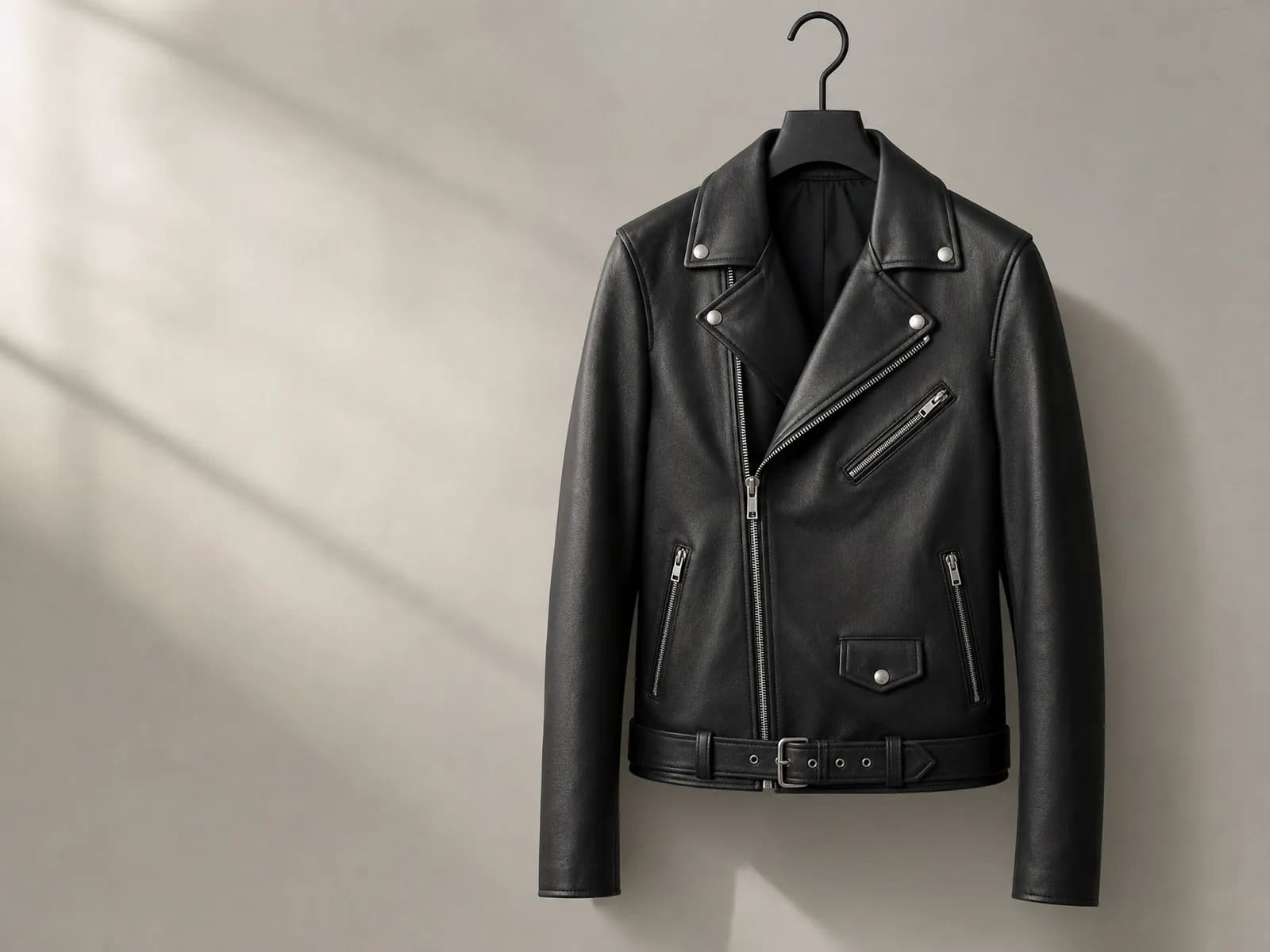
Overview
Full-grain, top-grain and suede leather, each carrying a genuinely different durability and cost profile that most buyers only learn about after their first order. Full-grain uses the outermost hide layer entirely unaltered — the most durable option, and one that develops visible character with wear rather than degrading. Top-grain is lightly sanded or corrected for a more uniform, slightly less durable finish at a meaningfully lower cost, which is why it's the more common commercial choice outside premium price points. Construction detail is where quality is visible and where corners get quietly cut: topstitching consistency, hardware weight and lining quality separate a jacket that lasts from one that doesn't, and leather sourcing itself adds real time to lead times — tanning and grading happen well before cutting ever starts.
What's actually in the spec.
There's no honest single number to publish here.
Leather Jackets pricing varies too much by leather grade, hardware and volume for a general range to mean anything. Here's what actually makes up the FOB price, so you can read a quote line by line instead of taking a number on faith.
| Cost component | Share of FOB | What it covers |
|---|---|---|
| Leather | 55–70% | Hide grade and size, tanning, dyeing, finishing |
| Hardware & trims | 5–10% | Zippers, buckles, snaps, thread, lining |
| Construction | 15–25% | Cutting, stitching, finishing, factory overhead |
| Factory margin & compliance | 8–12% | Audits, certifications, testing |
300–500 pieces per style — confirm against current hide availability
14–20 weeks — leather sourcing and tanning add real time versus fabric
What buyers ask about leather jackets.
How long does a leather jacket take to produce compared to fabric outerwear?
Leather jackets typically run 14 to 20 weeks from approved tech pack to ex-factory, meaningfully longer than most fabric-based categories, and the extra time sits almost entirely upstream in leather sourcing rather than in construction. Hides have to be graded, tanned and finished to the required specification before a single panel is cut, and that sourcing and tanning stage adds real weeks that a woven or knit programme simply doesn't have to account for — fabric arrives pre-finished and ready to cut, whereas leather's finishing is part of what determines its grade in the first place. Buyers planning a leather programme against a normal fabric-garment calendar should build in that extra lead time explicitly rather than assuming leather moves at the same pace as a cotton jacket.
What's the difference between full-grain and top-grain leather?
Full-grain uses the outermost layer of the hide, left unaltered — it's the most durable option available, and rather than wearing out it develops a visible patina and character over years of use, which is exactly why it's the premium choice for jackets meant to last. Top-grain leather is lightly sanded or corrected to remove natural blemishes and produce a more uniform surface, which makes it easier to work with and more consistent across a production run, but it's slightly less durable than full-grain and won't develop the same character with age. The trade-off is cost: top-grain runs meaningfully cheaper than full-grain, which is why it's the more common commercial choice for mid-tier jackets, while full-grain is reserved for programmes where durability and patina are genuinely part of the product story rather than a marketing line.
Why is Collective Studio's low-MOQ not available for leather?
Collective Studio's 150-piece low-MOQ programme is specifically built around knitwear — it exists because knit fabric can be pooled and sourced in small batches from stock-available qualities, which genuinely brings the minimum down. Leather sourcing economics don't work the same way: hides are graded and purchased by the skin, not by the metre from a continuous roll, and a small leather order still requires the same grading, cutting-plan and tanning-relationship overhead as a larger one, without the volume to make that overhead worthwhile at a small scale. That's why leather jacket MOQ sits at 300 to 500 pieces per style rather than the 150-piece floor available on knitwear — it reflects a genuinely different supply chain, not an arbitrary policy difference between product lines.
Ready to cost your leather jacket programme?
Send a reference and a target quantity — we'll come back with construction options, costing and lead-time, usually the same business day.