Leather goods manufacturer in Bangladesh
Belle Vouz makes private-label leather belts, wallets and card holders in Bangladesh in full-grain and top-grain leather, from 500 to 1,000 pieces per style. We publish the cost breakdown rather than a price, because leather grade and hardware move it too far.
Overview
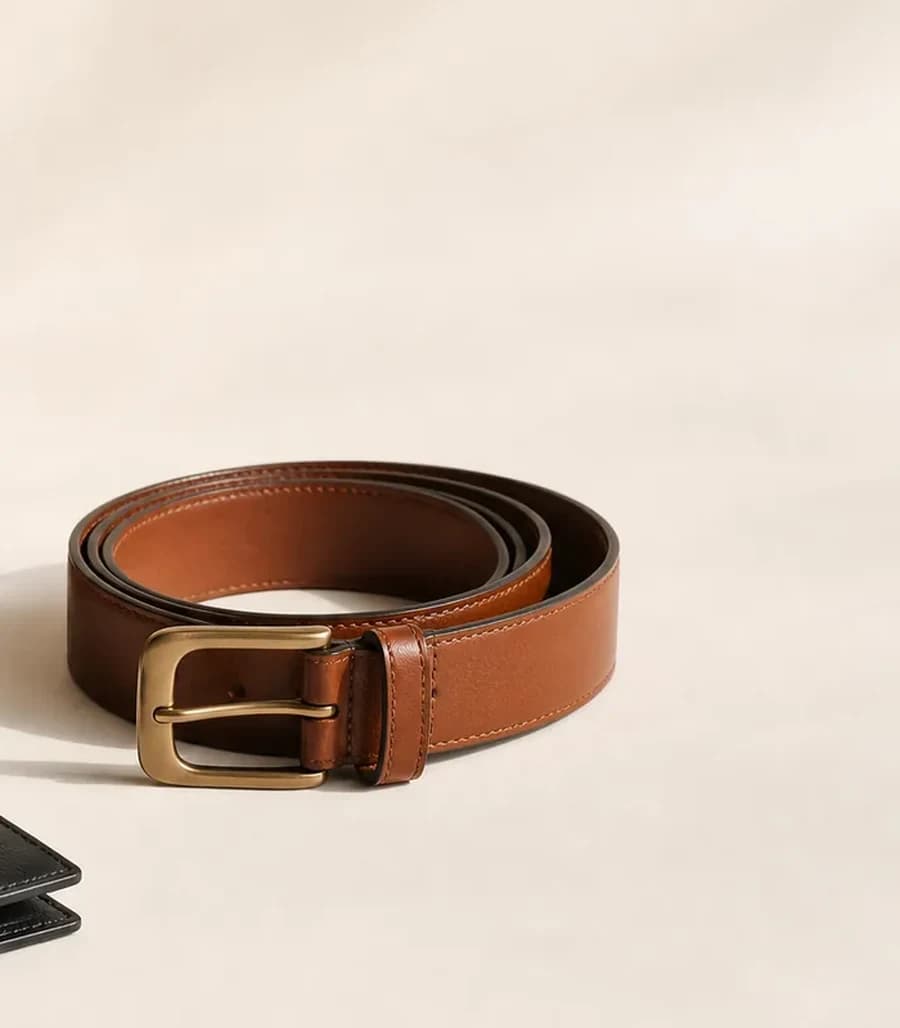
Belts, wallets and card holders built on the same leather-grade logic as jackets — full-grain or top-grain — but at a smaller pattern scale, where stitching precision and hardware finish carry a much larger share of the visible quality signal per square inch. Buckles, snaps and embossed or debossed branding are where a small-format leather good actually reads as premium or cheap, since there's no large surface area to hide a construction shortcut the way a jacket's overall silhouette can. Saddle stitching (hand or machine-replicated) holds up better under the flexing a wallet or belt endures daily than a simple straight machine stitch, and it's a detail worth specifying rather than assuming.
What's actually in the spec.
There's no honest single number to publish here.
Leather Accessories pricing varies too much by leather grade, hardware and volume for a general range to mean anything. Here's what actually makes up the FOB price, so you can read a quote line by line instead of taking a number on faith.
| Cost component | Share of FOB | What it covers |
|---|---|---|
| Leather | 55–70% | Hide grade and size, tanning, dyeing, finishing |
| Hardware & trims | 5–10% | Zippers, buckles, snaps, thread, lining |
| Construction | 15–25% | Cutting, stitching, finishing, factory overhead |
| Factory margin & compliance | 8–12% | Audits, certifications, testing |
500–1,000 pieces per style
10–14 weeks from approved tech pack to ex-factory
What buyers ask about leather accessories.
What makes a wallet or belt feel premium versus cheap?
At this small a pattern scale, the details that would be minor on a jacket become the whole story. Stitch consistency is the first thing anyone notices when they handle a wallet — saddle stitching, whether genuinely hand-done or machine-replicated to the same look, holds up better under the constant flexing a wallet endures in daily use than a simple straight machine stitch, and it's visibly different up close. Hardware weight matters more than hardware quantity: a substantial, well-finished buckle on a belt reads as premium even on a modest leather grade, while a flimsy buckle undermines even good leather. Edge finishing — burnished, painted or raw — is the third tell, since a raw, unfinished edge on a small leather good looks unintentional rather than deliberately rustic the way it might on a larger piece.
Can leather accessories carry embossed branding?
Yes — embossing, which raises the design above the surface, or debossing, which presses it in as a recessed mark, is a standard finishing option across belts, wallets and card holders, priced by die size and the total coverage area of the branding. Debossing tends to read as more subtle and premium, since it doesn't rely on ink or foil to stay visible over time, while embossing paired with foil stamping can produce a bolder, more visible brand mark for programmes that want that. Either option requires a custom die made to your logo's exact specification, which is a one-time tooling cost rather than a per-unit charge, so it amortises down quickly across any meaningful production run. Specify which technique you want at the sampling stage, since the two require different die types and can't be swapped after tooling is cut.
Ready to cost your leather goods programme?
Send a reference and a target quantity — we'll come back with construction options, costing and lead-time, usually the same business day.