T-shirt and polo shirt manufacturer in Bangladesh
Belle Vouz makes private-label T-shirts, tanks and polo shirts in Bangladesh in single jersey, piqué, interlock and rib, from 500 pieces per style and colour. Indicative FOB prices run from $2.40 to $8.00 a piece.
Overview
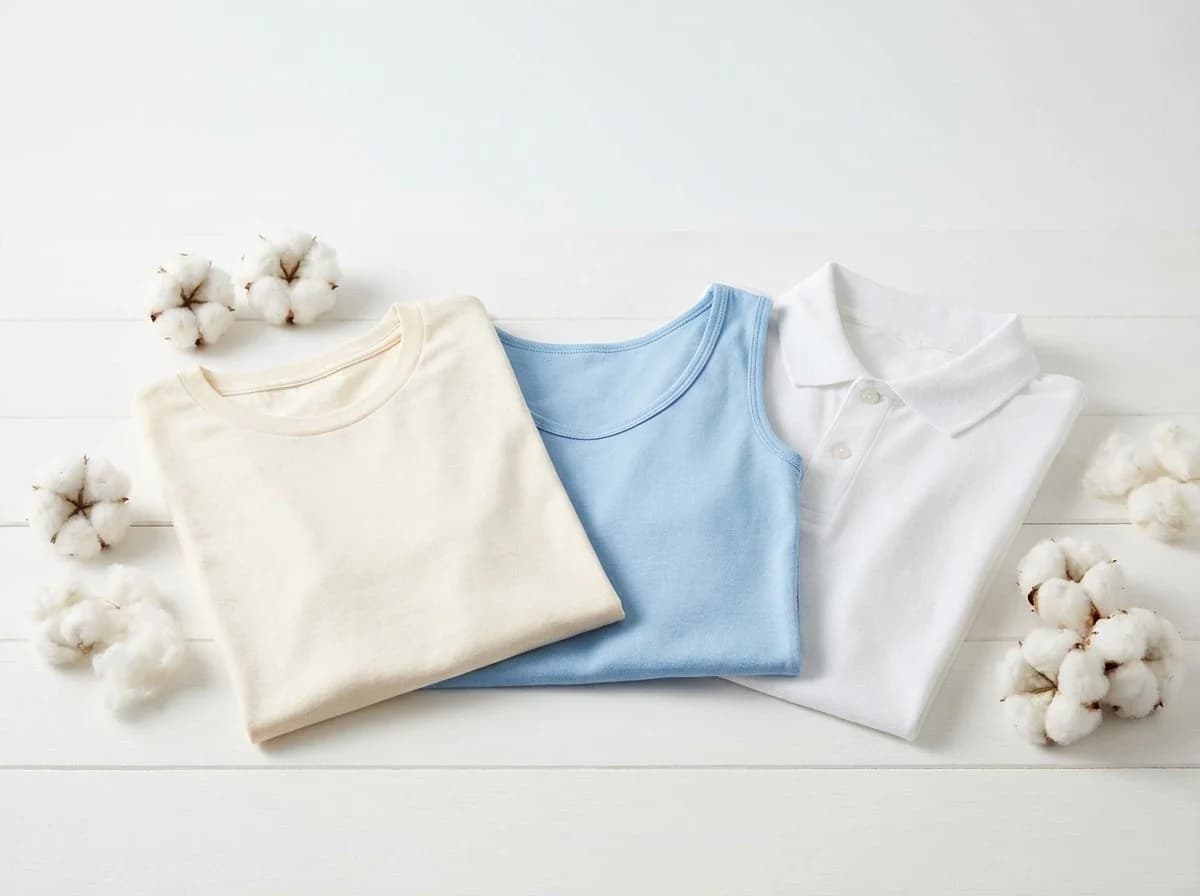
Tees, tanks and polos built on single jersey, pique and interlock knits — the volume core of most private-label ranges, and the category where GSM, yarn quality and construction detail matter more than anything decorative. A 180 to 200gsm single jersey tee is the everyday-wear standard; drop under 160gsm and the fabric trades structure for drape, push past 220gsm and it reads as premium and boxier. GSM measures weight, not quality on its own — a coarse 220gsm jersey knitted from cheap open-end yarn will feel worse in the hand than a 160gsm jersey knitted from long-staple combed cotton, so weight is a starting point for a tech pack, not the whole spec. Get the base fabric right and the fit, trim and decoration choices that follow are far easier to get right too.
What's actually in the spec.
| GSM range | Feel | Typical use |
|---|---|---|
| 140–160gsm | Light, drapey | Summer tees, tanks |
| 180–200gsm | Standard weight | Everyday tees, polos |
| 220gsm+ | Heavier, structured | Premium tees, boxier fits |
Basic 180 GSM cotton tee at $2.40–$4.20; piqué polo at $4.50–$8.00. Moderate volume (1,000–5,000/style), standard fabric, no heavy embellishment.
Treat this as a sanity check, not a quotation — the real number depends on your exact fabric, decoration and volume. Send your tech pack for an itemised costing.
500 pieces per style/colour
150 pieces via Collective Studio (organic cotton on request)
10–16 weeks from approved tech pack to ex-factory: sampling and approvals, fabric booking, then 45–75 days of bulk production
What buyers ask about everyday knits.
Can I mix GSM in oz/yd² if that's what my brand is used to?
Yes — the conversion is straightforward and worth having on hand if your team thinks in ounces rather than grams. One oz/yd² is roughly 33.9 GSM, so a lightweight 6oz tee lands around 203gsm, comfortably inside the standard everyday-wear range. Denim is where oz/yd² shows up most often in practice: a 12oz denim comes out to about 407gsm, which is why denim tech packs quoted in ounces and knit tech packs quoted in grams can both be correct at the same time. Give us either unit in a tech pack and we'll spec to it — just be consistent within one document, since mixing units on the same spec sheet is a common source of factory confusion.
What's the actual difference between single jersey, pique and interlock?
The knit structure changes the hand-feel and the end use, not just the name on the label. Single jersey is the lightest and most common — a plain knit with a smooth face and a slightly textured back, the default for basic tees and tanks. Pique has a small, visibly textured surface from a more complex loop structure, which is why it's the standard fabric for polos rather than tees — it holds its shape at the collar and cuffs better than plain jersey would. Interlock is knitted from two sets of needles locked together, producing a thicker, more stable fabric with no visible right or wrong side, which is why it resists curling at the edges better than single jersey and suits heavier basics.
What GSM should I choose for a basic tee?
180 to 200gsm is the standard everyday-wear range for a single jersey tee, and it's the weight most buyers should default to unless they have a specific reason not to. Drop below 160gsm and the fabric trades structure for drape — fine for a relaxed summer tee, but it can feel insubstantial if that wasn't the intent. Push past 220gsm and the tee reads as premium and noticeably boxier, closer to a heavyweight streetwear cut than an everyday basic. What GSM doesn't tell you is quality: a coarse 220gsm jersey knitted from cheap open-end yarn can feel worse in the hand than a well-spun 160gsm jersey, so weight should be one line in the tech pack alongside yarn quality, not the only spec you give a factory.
Can I get organic cotton knits below 500 MOQ?
Yes — our group company Collective Studio runs knitwear from 150 pieces per style, with organic cotton on request. Ask for the GOTS licence number of the facility and check it in the GOTS public database before you make an organic claim.
Ready to cost your t-shirt and polo programme?
Send a reference and a target quantity — we'll come back with construction options, costing and lead-time, usually the same business day.