Hoodie and sweatshirt manufacturer in Bangladesh
Belle Vouz makes private-label hoodies and sweatshirts in Bangladesh in loopback, brushed-back and French terry fleece, from 500 pieces per style and colour. Indicative FOB prices run from $7.50 to $13.00 a piece.
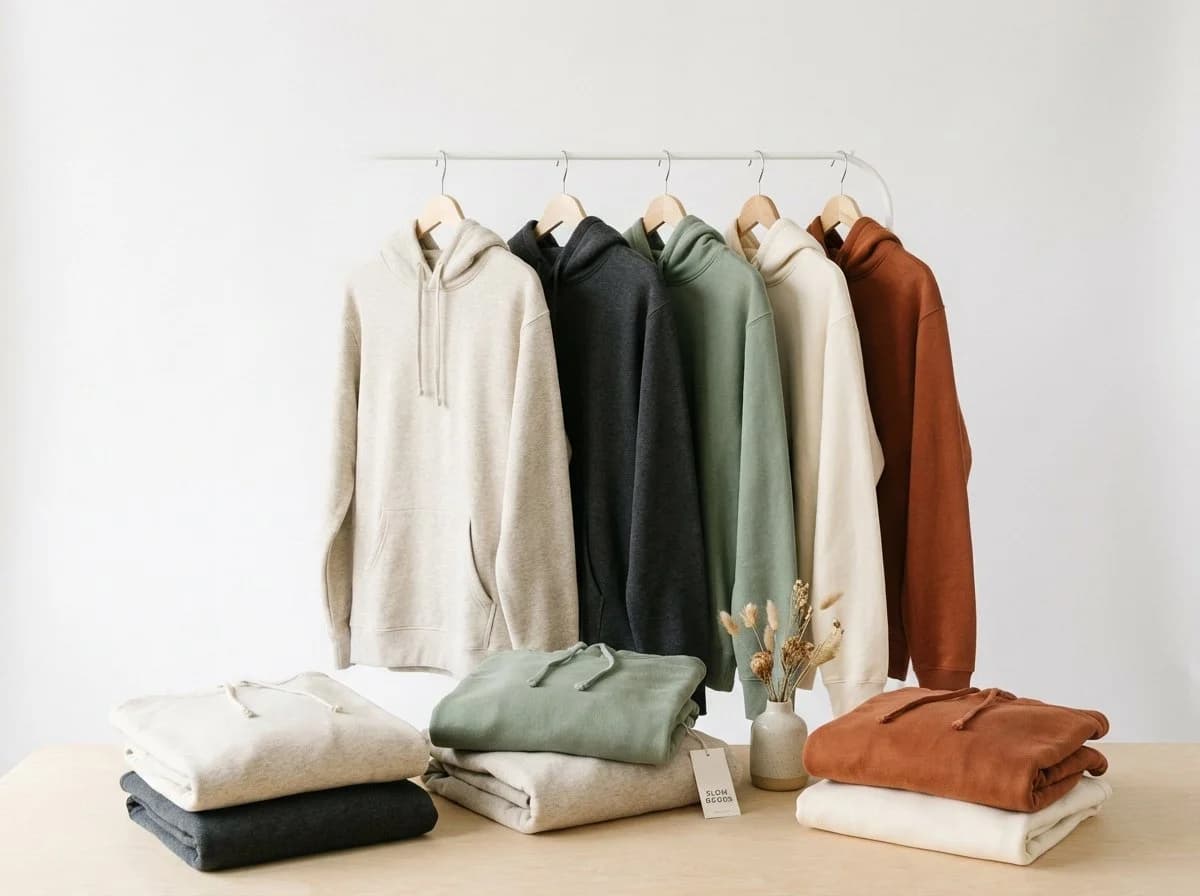
Overview
Loopback, brushed-back and French terry fleece across the weight range that spans lightweight crewnecks to heavyweight pullover hoodies. Fleece weight decides almost everything about how a hoodie feels: 200 to 260gsm reads light and breathable, suited to warm-climate athleisure layering; 280 to 320gsm is the classic mid-weight hoodie feel most buyers picture when they spec the category; 340gsm and up moves into heavy, substantial streetwear territory. Construction detail is where cheap and good actually separate — 2x2 rib at the cuffs and waistband recovers its shape better than 1x1 over repeated wear, a flat drawcord with a reinforced tip outlasts round cord with a plain plastic tip, and bartack reinforcement at the kangaroo pocket's stress points prevents the most common hoodie failure: a torn pocket seam.
What's actually in the spec.
| GSM range | Feel | Typical use |
|---|---|---|
| 200–260gsm | Lightweight | Crewnecks, warm-weather layering |
| 280–320gsm | Standard weight | Everyday hoodies and sweatshirts |
| 350–400gsm+ | Heavyweight | Premium, structured pullover hoodies |
320 GSM fleece hoodie at moderate volume (1,000–5,000/style). Weight, drawcord and metal trims are the main swing factors.
Treat this as a sanity check, not a quotation — the real number depends on your exact fabric, decoration and volume. Send your tech pack for an itemised costing.
500 pieces per style/colour
150 pieces via Collective Studio (organic cotton on request)
10–16 weeks from approved tech pack to ex-factory: sampling and approvals, fabric booking, then 45–75 days of bulk production
What buyers ask about comfort classics.
What GSM should I choose for a hoodie?
280 to 320gsm is the range most commercial hoodies land in, and it's the sweet spot for a reason: substantial enough to feel like a proper hoodie rather than a heavy tee, without the cost and bulk of a premium streetwear weight. Below roughly 250gsm the fleece starts feeling light and noticeably less durable over repeated wear — fine for warm-climate athleisure layering, but not what most customers picture when they think "hoodie." Above 340gsm you're into genuinely heavy, premium territory, the kind of substantial fleece streetwear brands charge a real premium for, with correspondingly higher fabric cost. Specify the exact GSM in your tech pack rather than a vague "medium weight" description if you want the hand-feel you're picturing instead of a hoodie that reads either flimsy or unexpectedly heavy once it lands.
Is 100% cotton or a cotton-poly blend better for a hoodie?
It depends on whether you're prioritising hand-feel or consistency, but for most commercial production the blend wins. 100% cotton fleece has the softest, most natural hand-feel of any option, but it shrinks the most on first wash — commonly 5 to 8% if it hasn't been pre-shrunk — and loses its shape faster under the repeated stretching a hoodie goes through over its life. Cotton-polyester blends, typically 80/20 or 60/40 cotton-to-poly, trade away a small amount of that softness for meaningfully better dimensional stability and shrink control, which is exactly why blends are the standard commercial choice rather than 100% cotton. Pushing the poly ratio higher cuts cost further but starts eroding the natural cotton feel customers associate with a premium hoodie, so the right blend depends on where your product sits on the price ladder.
What's the difference between loopback and brushed fleece?
The difference comes down to what happens to the inside face of the fabric after knitting. Loopback, also called terry fleece, leaves the knit loops exposed and unbrushed on the inside — a slightly textured, more fashion-forward feel often associated with premium streetwear rather than an everyday hoodie. Brushed fleece takes the same base construction and mechanically brushes the inside loops into a soft, fuzzy nap, which traps more air and makes the fabric feel noticeably warmer at an identical weight — this is the fabric most people picture when they think "hoodie," and it's the standard commercial choice for that reason. French terry is another name for loopback: the loops are left unbrushed, with a flatter, more breathable inside face than brushed fleece, common for warm-weather sweats. Brushed is the default for most hoodie programmes; loopback, or French terry, is the deliberate style choice.
Why do metal drawcord eyelets cost more?
Metal eyelets outlast moulded plastic ones under the repeated pulling and washing a hoodie drawcord actually goes through, and they read as a more premium construction detail even before anyone touches the fabric. The cost difference is small per unit but it compounds across a few other trims worth specifying the same way: a flat drawcord with a metal or reinforced tip threads through the eyelet more easily and lasts longer than round cord with a plain plastic tip, which tends to fracture and fray with wear. The same logic applies to cuff and waistband rib — 2x2 rib recovers its shape better than 1x1 over repeated stretching, particularly at the cuffs, where the stretching is constant. None of these are expensive upgrades individually, but a hoodie that skips all of them is exactly the one that looks tired after ten washes.
Ready to cost your hoodie and sweatshirt programme?
Send a reference and a target quantity — we'll come back with construction options, costing and lead-time, usually the same business day.