In short
A buying house is a sourcing team that selects factories, manages costing and sampling, inspects production and coordinates shipping documents on a brand's behalf, usually for a commission of 5 to 10% of FOB value. It suits small, new or multi-category brands; large repeat orders in one category are usually cheaper placed factory direct.
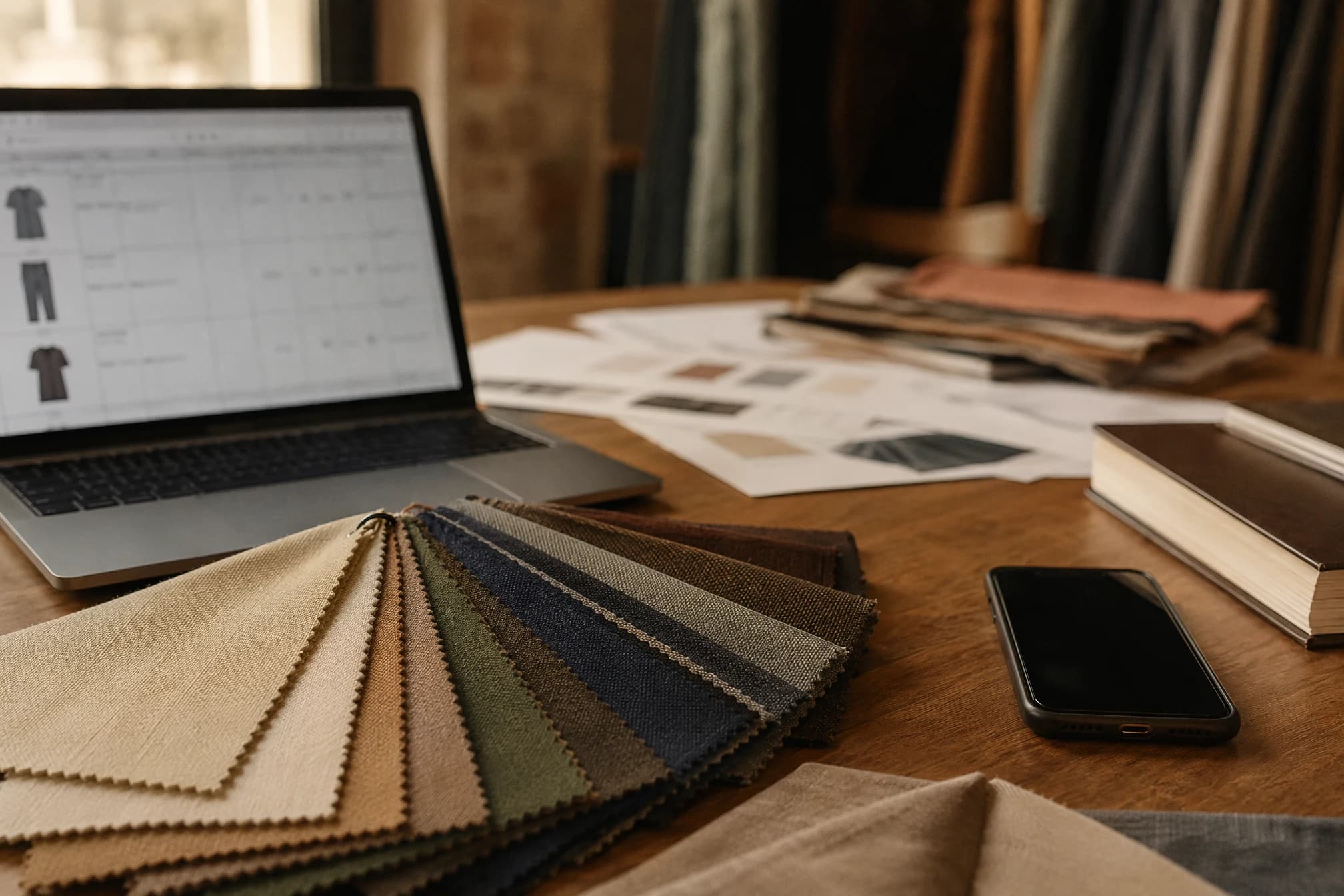
You have found a factory. The price looks fine. Then the questions start arriving: who checks the fabric before cutting, who sits in the factory when the line runs, who calls you when the shipment is going to slip by ten days, and who fixes it when 400 pieces come out with the wrong shade of navy?
If the answer to all four is "you, over email, from another time zone," that is where sourcing gets expensive.
A buying house is the answer a lot of brands land on. It sits between you and the factories, handling supplier selection, sampling, costing, production follow-up and quality control — usually for a percentage of order value. It is not the same thing as a sourcing agent, and it is a genuinely different model from going factory direct. Here is what it does, what it costs, and when you do not need one.
What a buying house does
Strip away the jargon and a buying house is a merchandising and quality team you rent instead of hire.
- Supplier matching — knowing which factory is genuinely good at knitwear versus outerwear versus denim wash, and which has capacity in your window.
- Costing and negotiation — reading a cost sheet by component and pushing back on the lines that are out of band.
- Sampling management — chasing proto, fit and pre-production samples, and translating your comments into instructions a pattern master will act on.
- Fabric and trim approval — approving lab dips and checking GSM and shrinkage before bulk fabric is cut.
- Inline and final inspection — being physically present during production and before shipment.
- Shipping documentation — coordinating the paperwork that makes customs clearance uneventful.
The part that is hardest to appreciate from a distance is the fifth one. Most garment problems are cheap to fix in the first hour of a production run and expensive to fix in the last. Presence is the product.
Buying house vs sourcing agent
A sourcing agent is typically a smaller operation — sometimes an individual — who introduces you to factories and takes a commission. Their strength is the relationship and the introduction; depth of technical service varies enormously. A buying house is usually a structured team with merchandisers, a QC department and technical staff running a defined process across many orders. You are buying a system rather than a contact list.
Neither is inherently better. A well-connected agent with twenty years in one product category can outperform a mediocre buying house. But when something goes wrong at scale, the buying house has more people to throw at it.
The three models compared
| Factory direct | Sourcing agent | Buying house | |
|---|---|---|---|
| Typical cost | No intermediary fee | 5–10% commission | 5–10% commission |
| Who does QC | You, or a hired third party | Usually you | Included, in-house team |
| Best order size | Large, repeat, single-category | Small to mid | Small to mid, multi-category |
| Control over price | Highest — you see real cost | Medium | Medium; ask for open costing |
| Risk if things go wrong | Entirely yours | Shared, informally | Contractually shared |
| Ramp-up time | Slow — you build the network | Fast | Fast |
Commission rates across sourcing intermediaries most commonly sit at 5–10% of order value, for agents and buying houses alike; a 2023 study of Bangladeshi factory cost sheets shows a buying-house commission of 7% of total cost built into each FOB price. FOB is the transparent basis to insist on, because it is a number you can independently verify against other quotes.
Why buyers use one
You do not have a team on the ground
The blunt reason. Flying a merchandiser to Dhaka four times a year costs more than most commissions, and they are still not there on the day the fabric arrives short.
You are sourcing across categories
Very few factories are excellent at knits, wovens, outerwear and accessories. If your range spans categories, you are managing four supplier relationships in four different technical languages. A buying house consolidates that into one point of contact.
Your orders are too small to command attention
Factories prioritise by volume. A 600-piece order from an unknown brand sits behind a 60,000-piece order from a repeat customer. A buying house that places consistent volume with a factory brings you its attention as a side effect of its own relationship. This is arguably the single most underrated benefit.
Compliance is not optional in your market
If you sell to retailers, you will be asked for audit reports, testing certificates and traceability. Someone has to assemble that, keep it current, and know which factories will pass. That work does not disappear if you ignore it — it just surfaces later, worse.
When you should skip it
Honest advice: a buying house is not always the right answer.
- You are running large, repeat orders in one category. Past roughly 50,000 pieces a season of the same product, going direct and hiring your own QC is cheaper and gives more control.
- You already have a factory relationship that works. Do not insert a middle layer into something functioning.
- Your margins genuinely cannot absorb 5–8%. Then the honest conversation is about your pricing, not your sourcing model.
- You need absolute cost transparency for investor reporting — direct gives the cleanest line of sight, if you have capacity to manage it.
A middle path exists and is underused: go factory direct, and hire a third-party inspection firm for pre-shipment checks at roughly $250–$400 per man-day. You keep the direct relationship and buy back the independent set of eyes.
What to ask before you sign
There is no universal "best clothing buying house" — only the one whose commission structure, transparency and factory access actually match what your order needs. Treat this as due diligence. A good buying house will answer all of it without hesitating.
- Is your commission on FOB or on landed cost? FOB is standard and easier to verify.
- Do you show open costing — can I see the factory's cost sheet, or only a marked-up total?
- Do you own factories, or are you independent? If they own the factory, "supplier selection" means selecting themselves.
- Who performs inspections, and to what AQL standard?
- What happens when a shipment fails inspection? Get the remedy in writing before the first order.
- Can I speak to two current clients — not prepared references?
- Which factories will you use, and can I audit them?
That last one matters more than it sounds. Unauthorised subcontracting is the root cause of most compliance failures in the industry, and the only defence is knowing where your product is physically made.
Frequently asked questions
What is a buying house in simple terms?
It's an organisation that sources, manages and quality-checks garment production for you, running its own factory network, in exchange for a commission on order value. Strip out the jargon and a garment buying house is really a merchandising and QC team you rent instead of hire: supplier matching, negotiating cost sheets line by line, chasing samples through proto, fit and pre-production, approving fabric and trims before bulk cutting starts, and standing on the factory floor for inline and final inspection. That last piece is the one people underrate until they've been burned once — most production problems are cheap to fix in the first hour of a run and expensive to fix in the last, so paying someone to be physically present is really what you're buying.
How much does a buying house charge?
Commonly 5–10% of FOB value as the buying house commission, sometimes folded into the quoted price instead of billed as its own line. Sourcing agents quote much the same band, so the difference is what the fee buys: a buying house runs a bigger team — merchandisers, a QC department, technical staff, not one person and a contacts list. Insist the commission is calculated on FOB, not landed cost; FOB is a number you can check against other quotes, while landed cost gives more room to pad the base before the percentage gets applied. Ask straight out whether it's itemised or built in, because that changes how you compare two quotes side by side.
Is a buying house the same as a sourcing agent?
No, and mixing them up costs people money. A sourcing agent is often one person, or a small operation, whose real value is the introduction and the relationship — technical depth varies wildly from agent to agent. A buying house runs a structured team: merchandisers, an in-house QC department, technical staff following the same process on every order, for a commission in the same 5–10% band an agent usually quotes. Neither wins by default. A sharp agent who's spent twenty years in one product category will beat a mediocre buying house every time — but when a shipment goes wrong at scale, the buying house has more hands to throw at the problem.
Can I get factory prices through a buying house?
Sometimes, yes. Buying houses stack up volume across many clients, so the price they negotiate with a factory can beat what a small brand gets on its own — enough, in some cases, to wipe out most of the commission. It comes down to how factories prioritise: an unknown brand's 600-piece order sits behind a repeat customer's 60,000-piece order, but a buying house placing steady volume with that factory drags your order along with its own leverage. Push for open costing so you can actually see the factory's number underneath the markup, rather than taking it on faith that the commission is fair.
Do I still need a tech pack if I use a buying house?
Yes, and don't let anyone tell you otherwise. A buying house can help you build one — sampling management is part of the service, chasing proto, fit and pre-production rounds and translating your comments into instructions a pattern master can actually execute. But the tech pack is the thing everything else checks against: fabric and trim approval, costing, quality control, all of it references that document as the standard. No tech pack means nothing to hold the factory or the buying house accountable to, and no way to catch a problem before it's sitting in a container.
Does a buying house handle shipping?
Most will coordinate export documentation and freight booking as a normal part of the service — it sits alongside supplier matching, costing and inspection as one of the jobs you're paying for, and the whole point of using a buying house is one accountable contact instead of separate calls for production and logistics. Whether that's wrapped into the commission or billed separately depends entirely on the provider, so ask before you sign. If it's billed on top, weigh that against a factory direct sourcing setup, where you'd be arranging freight yourself anyway and paying a forwarder directly.
Is factory direct always cheaper?
On paper, yes — no commission line on the invoice. Add up what factory direct sourcing actually costs you, though: flying someone to the factory repeatedly, staff hours spent chasing updates across time zones, third-party inspection running $250–$400 a man-day, and the defects that slip through because nobody was on the floor to catch them early. Below a few thousand pieces per style, those costs rarely spread thin enough to beat a commission. There's a middle option worth knowing: stay factory direct and just hire independent inspection for pre-shipment checks — you keep the relationship and buy back an outside set of eyes.
A buying house buys you a sourcing team, a factory network and someone physically present when it matters, for roughly 5–10% of FOB. Going direct saves the commission and hands you the work. If you are large, single-category and experienced, go direct. If you are small, multi-category or new, the commission is usually cheaper than the mistakes it prevents.
Belle Vouz runs as a manufacturer with a buying house's discipline — one accountable team from costing through final inspection. Tell us what you are making and roughly how much, and we will tell you honestly which model fits.
Sources
- 1.Market Union — Sourcing Agent Fees: Commission-Based vs Fixed Rate
- 2.Epsilon Global Sourcing — Choosing an Apparel Sourcing Agent
- 3.Epsilon Global Sourcing — The True Cost of Apparel Sourcing
- 4.Sourcing Allies — Sourcing agent fees explained
- 5.Rajib et al. (2023) — Complete Garment Costing with Major Cost Breakdown, Journal of Textile Science and Technology 9, 115–126
Where to next
- Choosing a clothing manufacturer in Bangladesh — the full guide
- Five ways to manufacture with us — FOB, CMT, private label, OEM, low-MOQ
- What we manufacture — knit, woven, sweater and leather
- Sourcing by destination market — duty, labelling and lead times
- Get costing, MOQ and a lead-time — usually the same business day

Homaira Jashim
Director, Belle Vouz Ltd
Homaira Jashim is a director of Belle Vouz Ltd and a co-founder of Collective Studio Ltd, its group company in Narayanganj. She works with brands from first enquiry to repeat orders.
More about the teamFree tools for clothing brands
MOQ, pricing and AQL calculators, a GSM ⇄ oz converter, a fillable tech pack template and a manufacturing glossary — built by our group company, Collective Studio, free to use.