In short
Trademark rights are territorial, so a brand should register its marks in the country where its goods are made, before sharing designs, as well as where it sells. The Madrid System reaches 133 countries through one application, but Bangladesh is not a member, so protection there needs a direct filing with its trademark office.
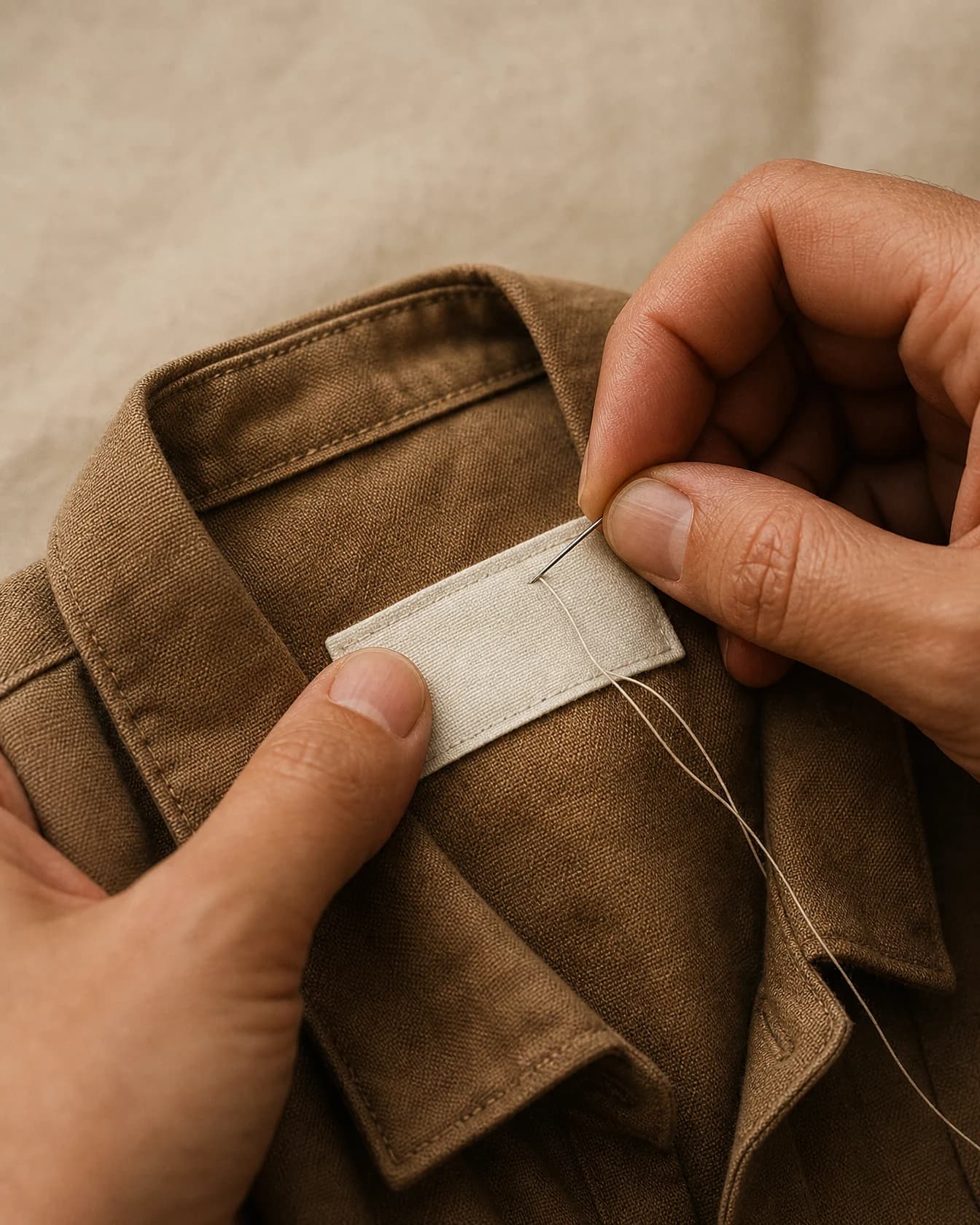
Most first-time brand owners assume their home-country trademark protects them everywhere. It doesn't. Trademark and design rights are territorial — registering in your own country gives you no enforceable protection in the country where your factory actually operates, and most manufacturing hubs run on a first-to-file system, meaning whoever registers first in that jurisdiction holds the right there, regardless of who used it first elsewhere.
Register where you manufacture, not just where you sell
File your key trademarks in your manufacturing country before sharing designs or samples with any factory — not after. Under a first-to-file system, a bad-faith registration by an unrelated party in that country can be genuinely difficult and expensive to unwind after the fact, even if you can prove you used the mark first elsewhere.
- The Madrid System lets a single trademark application extend coverage across its 117 members, covering 133 countries, rather than filing separately in each. China, Vietnam, India, Pakistan, Cambodia, Türkiye and Indonesia are members; Bangladesh is not, so protection there needs a direct application to its national trademark office, the DPDT.
- Apply for registration in every country where your product is sold, marketed, and manufactured — sale and manufacturing jurisdictions carry separate legal exposure.
- Design patents (for a genuinely original construction or silhouette) are a separate protection from a brand-name trademark — assess whether your product needs both.
What's actually protectable in apparel
Brand names, logos and distinctive marks are the strongest, most practically enforceable IP assets a fashion brand holds — they're clearly defined and relatively straightforward to register and defend. Proprietary construction details, technical documents and original packaging design are also protectable, though generally harder to enforce than a straightforward name-and-logo trademark.
NNN agreements — a sharper tool than a generic NDA
A standard Non-Disclosure Agreement, written under your home country's law, is frequently unenforceable in the country where your factory actually operates. An NNN agreement — Non-Disclosure, Non-Use, Non-Circumvention — is specifically drafted under the manufacturing country's own law and structured to be enforceable there, and additionally prohibits the factory from using your design for its own production or bypassing you to sell directly to your customers or retailers. Enforceability differs by country, so have the agreement drafted or reviewed by a lawyer qualified where the factory is.
“The most common real-world IP failure isn't outright counterfeiting — it's a design showing up under a different brand's name, sold by a factory that quietly kept producing after the relationship ended. An NNN agreement, not a generic NDA, is what actually addresses that specific risk.”
Practical limits on exposure
- Limit how much of your full design and construction detail any single supplier sees, where practical — particularly for a signature construction detail central to your brand's identity.
- Keep signed, dated records of design development, ahead of any factory involvement, as evidence of first use if a dispute ever arises.
- Reassess registrations if you add a new manufacturing country — protection doesn't automatically transfer between jurisdictions.
Frequently asked questions
Does my US trademark protect me when manufacturing in another country?
No. Trademark and design rights are territorial, so a US registration provides no enforceable protection in the country where your factory actually operates. Most manufacturing hubs run on a first-to-file system, meaning whoever registers the mark there first holds the right, regardless of who used it first elsewhere — which means a bad-faith registration by an unrelated party can be genuinely difficult and expensive to unwind after the fact. Register directly in your manufacturing country, ideally before sharing any designs or samples with a factory, not after. If you sell in multiple countries too, register there as well, since sale and manufacturing jurisdictions carry separate legal exposure. The Madrid System can simplify this: a single application extends coverage across 117 members covering 133 countries. Bangladesh is not one of them, so a mark has to be filed there directly with its national trademark office, the DPDT.
What is an NNN agreement and how is it different from an NDA?
An NNN (Non-Disclosure, Non-Use, Non-Circumvention) agreement is drafted under the manufacturing country's own law, specifically so it's enforceable there — unlike a standard NDA written under your home country's law, which is frequently unenforceable in the country where your factory actually operates. Beyond confidentiality, an NNN also prohibits the factory from using your design for its own production, or bypassing you to sell directly to your customers or retailers. That matters because the most common real-world IP failure isn't outright counterfeiting — it's a design resurfacing under a different brand's name, produced by a factory that quietly kept manufacturing it after the relationship ended. A generic NDA typically doesn't address either risk, and may offer no enforceable protection at all in your manufacturing country.
What is the Madrid Protocol?
An international system, run by WIPO, allowing a single trademark application to extend registration coverage across 117 members covering 133 countries, rather than requiring a separate filing in each one — a materially more efficient route for a brand selling and manufacturing across multiple countries. It doesn't replace the underlying territorial principle of trademark law, though: you still need to identify every country where your product is sold, marketed or manufactured, since sale and manufacturing jurisdictions carry separate legal exposure, and Madrid Protocol coverage only extends to member countries you actually designate. It also only covers trademarks — a genuinely original construction or silhouette needs a separate design patent, which the Madrid system doesn't address. For a brand adding new manufacturing countries over time, registrations and designations need reassessing rather than assumed to carry over automatically. Bangladesh has not joined, so it cannot be designated and needs its own national filing.
Sources
We will sign a non-disclosure and non-use agreement before you share a single sketch — ask for it — and can discuss your specific IP concerns first.
Where to next
- Choosing a clothing manufacturer in Bangladesh — the full guide
- Five ways to manufacture with us — FOB, CMT, private label, OEM, low-MOQ
- What we manufacture — knit, woven, sweater and leather
- Sourcing by destination market — duty, labelling and lead times
- Get costing, MOQ and a lead-time — usually the same business day
Homaira Jashim
Director, Belle Vouz Ltd
Homaira Jashim is a director of Belle Vouz Ltd and a co-founder of Collective Studio Ltd, its group company in Narayanganj. She works with brands from first enquiry to repeat orders.
More about the teamFree tools for clothing brands
MOQ, pricing and AQL calculators, a GSM ⇄ oz converter, a fillable tech pack template and a manufacturing glossary — built by our group company, Collective Studio, free to use.