In short
Duty on Bangladesh-made clothing depends on the product's HS code and the destination. The EU, UK and Canada admit qualifying garments at 0% under their schemes for least developed countries, while the US charges its normal rate plus an extra 10% Section 301 tariff since 24 July 2026, which makes a cotton knit T-shirt 26.5%.
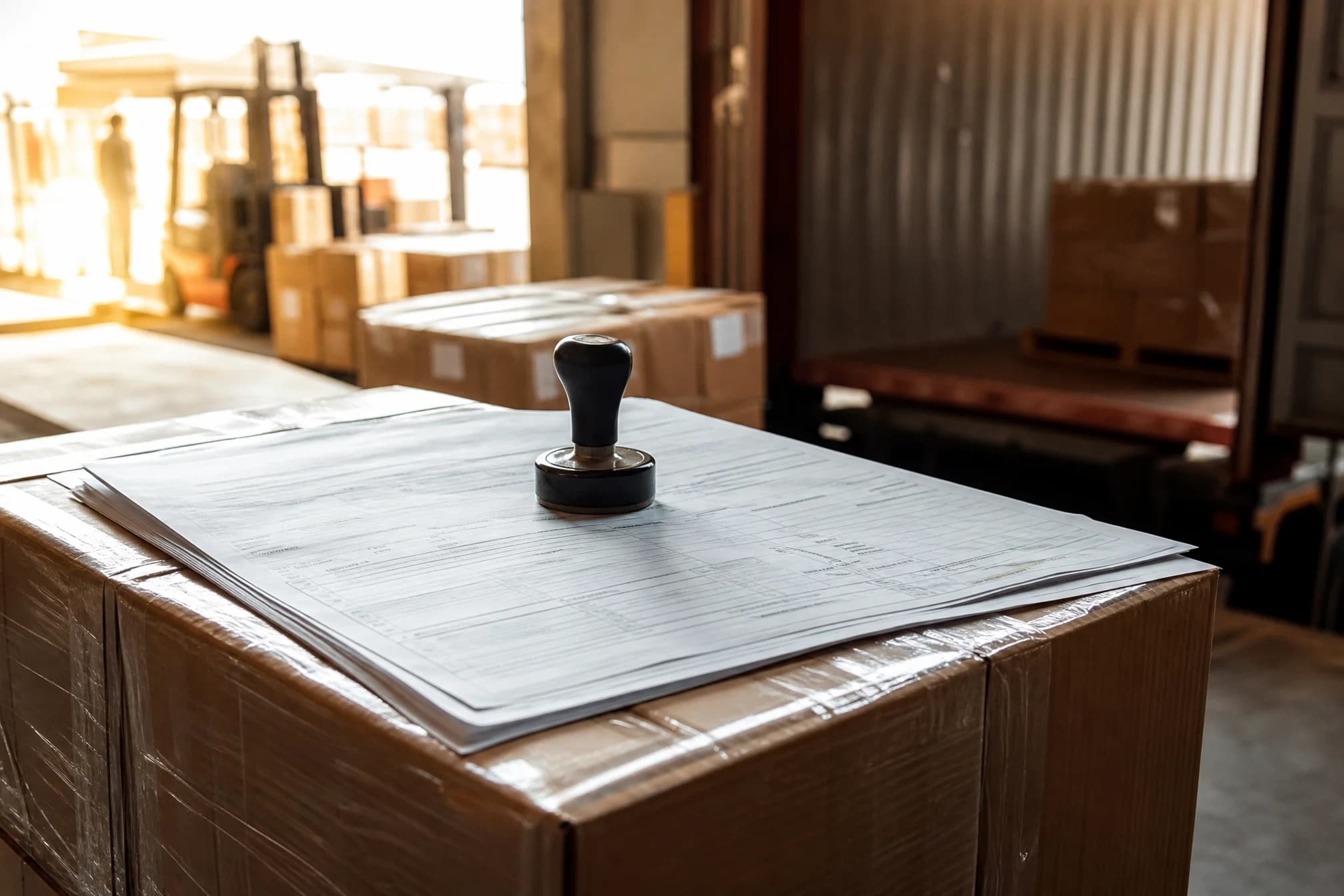
A factory's FOB quote covers the product. It does not cover what your destination country's customs authority charges to let it in — and that gap is where a lot of first-time importers get an unpleasant surprise on landed cost. The rules differ meaningfully by destination, and within a destination, by the exact product classification — so treat everything here as the framework to check against your specific product and HS code, not a number to plug straight into a spreadsheet.
It starts with the HS code, not the country
Every product entering customs is classified under a Harmonized System (HS) code — an internationally standardised product category — and the duty rate attaches to that code, not to "clothing" as a general category. A basic cotton T-shirt and a technical outerwear jacket can carry meaningfully different duty rates despite both being "apparel." Ask your factory or freight forwarder to confirm the exact HS code for your product before estimating landed cost — this single number determines more of your final cost than almost anything else in the shipping process.
United States
Standard US import duties on apparel (the Most-Favored-Nation base rate, before any additional tariff) commonly range from roughly 16% to 32% depending on the exact HS classification — for example, a cotton knit T-shirt under HTS 6109.10.00 is 16.5% and the same T-shirt in man-made fibre under 6109.90.10 is 32%, plus a small Merchandise Processing Fee (MPF). On top of this, goods of Bangladesh have paid an additional 10% under Section 301 of the US Trade Act of 1974 since 24 July 2026 (HTS heading 9903.05.26). It is charged on top of the normal rate, so that cotton T-shirt carries 26.5% in total. It followed the 2025 'reciprocal' tariffs, which the US Supreme Court struck down on 20 February 2026, and a temporary 10% surcharge that ran from 24 February to 23 July 2026. Duty-free de minimis entry has also been suspended for every country since 29 August 2025, so parcels worth $800 or less no longer enter duty-free. US tariff policy has changed several times in two years — have a licensed customs broker confirm the total for your HTS code on the day you price.
- You (or your business) must be the correct Importer of Record, which requires an importer number (an IRS number such as an EIN, or one assigned by US Customs to a business without one) and typically a customs bond.
- The FTC requires fibre content, country of origin and manufacturer identity on the label; the CPSC enforces safety standards including flammability.
- Standard documentation: commercial invoice, packing list, bill of lading, and certificate of origin.
European Union
The EU's TARIC database is the authoritative source for current duty rates, HS codes and any anti-dumping duties by product and origin — check it directly for your specific classification rather than relying on a general apparel rate. Bangladesh's Least Developed Country status grants Everything But Arms (EBA) access — duty-free entry to the EU for qualifying goods, against a standard 12% on a cotton T-shirt. Bangladesh is scheduled to leave the LDC category on 24 November 2026 and has asked the UN for more time; as of 1 October 2026 the General Assembly had not decided. Either way, EU rules keep EBA in place for three years after graduation. One change already applies to small parcels: since 1 July 2026 the EU no longer waives customs duty on consignments worth up to €150, and charges a flat €3 per item on low-value e-commerce and postal parcels until 1 July 2028. From 1 November 2026 a €2 handling fee per item is added on goods sold direct to EU consumers. EU buyers will also expect REACH and OEKO-TEX documentation as standard practice, separate from customs duty itself.
United Kingdom
The UK runs its own tariff, separate from the EU's. Bangladesh-made clothing enters at 0% under the Comprehensive Preferences tier of the Developing Countries Trading Scheme (DCTS), against a standard 12% on a cotton T-shirt, provided the goods meet the scheme's origin rules; a country that graduates from LDC status keeps that tier for three years. Import VAT is charged separately. Labelling law is also the UK's own — fibre content in English is the legal minimum, with the producer's name and address under product safety rules — so don't assume EU documentation automatically satisfies UK customs.
Preferential access isn't universal
Duty treatment for the same Bangladesh-made garment varies significantly by destination market: Canada's Least Developed Country Tariff (LDCT) brings qualifying Bangladesh apparel in duty-free — its General Preferential Tariff excludes most apparel, so the LDCT is the one that matters, and Canada intends to keep it for three years after a country graduates — while a US buyer faces the tariff structure above. This is exactly why sourcing decisions should factor in destination-market duty treatment, not just factory cost — the same product can have a meaningfully different landed cost depending purely on where it's shipped.
| Destination | General posture | Key requirement |
|---|---|---|
| United States | MFN base duty (~16–32% by HS code) + 10% Section 301 tariff since 24 July 2026 | Importer of Record with importer number + customs bond; FTC/CPSC labelling |
| European Union | Duty-free for Bangladesh under EBA; continues for three years after LDC graduation, scheduled for 24 November 2026 | Check TARIC for the specific HS code; REACH/OEKO-TEX documentation expected |
| United Kingdom | Duty-free for Bangladesh under DCTS Comprehensive Preferences | Proof of origin under DCTS rules; import VAT; fibre content labelled in English |
| Canada | Duty-free under the LDCT for qualifying goods | Confirm product qualifies under the preferential scheme |
“The factory quote and the landed cost are two different numbers. Get a customs broker or freight forwarder to confirm the second one for your specific product before you commit to pricing your first collection.”
Frequently asked questions
Do I pay customs duty on clothing from Bangladesh if I'm in the EU?
Generally no. Bangladesh currently gets duty-free access to the EU under Everything But Arms, tied directly to its Least Developed Country status — a genuinely different position from countries paying the EU's standard MFN tariff. Graduation from that status is scheduled for 24 November 2026, with an extension request still before the UN General Assembly on 1 October 2026, and EU rules keep the duty-free access for three years after graduation. But "generally" is carrying weight in that sentence: duty treatment attaches to the specific HS code your product falls under, not to "clothing" as a blanket category, so check the current classification for your exact product on the EU's TARIC database rather than assuming EBA covers it automatically. And duty-free isn't the whole compliance picture anyway — EU buyers will still expect REACH and OEKO-TEX documentation as standard practice, which has nothing to do with customs duty and everything to do with clearing their own compliance checks.
What documents do I need to import clothing into the US?
Commercial invoice, packing list, bill of lading, certificate of origin — that's the standard paperwork customs uses to confirm what's arriving and where it came from. But the documents alone don't get you through the door: you or your business has to be registered as the correct Importer of Record, which means an importer number (an EIN, or one assigned by US Customs to a business without one) and typically a customs bond. Labelling sits on top of all that as its own requirement — the FTC wants fibre content, country of origin and manufacturer identity on the garment label, while the CPSC enforces safety standards like flammability, entirely separate from the shipping paperwork. Miss any one piece — the bond, correct Importer of Record status, or compliant labelling — and a shipment can sit at customs even after the duty itself has been calculated and paid correctly.
Why does my product's HS code matter more than the country of origin for duty rates?
Because duty rates attach to the specific HS code your product is classified under, not to "clothing" as a general bucket. A basic cotton T-shirt and a technical outerwear jacket can land under completely different HS headings with meaningfully different duty rates — in the US alone that range commonly runs somewhere between 16% and 32%, wide enough that guessing at classification can throw your landed-cost math off significantly. Country of origin still matters, since it determines whether a preference removes the duty or an additional tariff, such as the 10% US Section 301 duty on goods of Bangladesh, is added on top of that base rate — but it applies to whichever HS code you're already sitting under, it doesn't change the code itself. Confirm the exact HS classification with your factory or freight forwarder before you price anything; it moves the number more than almost any other variable in the shipment.
Sources
- 1.US International Trade Commission — Harmonized Tariff Schedule (see 6109.10.00 and 9903.05.26)
- 2.Federal Register — Section 301 action: 10% on products of Bangladesh from 24 July 2026
- 3.Federal Register — Executive Order 14324, suspending duty-free de minimis treatment for all countries
- 4.European Commission — TARIC duty lookup
- 5.EUR-Lex — Council Regulation (EU) 2026/382 ending the €150 customs duty relief
- 6.UK Trade Tariff — T-shirts, commodity 6109100010
- 7.Department of Finance Canada — tariff preference programmes for developing countries
- 8.UN LDC Portal — Bangladesh graduation status
We ship FOB, CIF or worldwide DDP — tell us your destination market and we'll help you think through landed cost before you commit to a quantity.
Where to next
- Choosing a clothing manufacturer in Bangladesh — the full guide
- Full package production, quoted FOB
- Landed cost calculator — FOB plus freight, duty and inspection
- What we manufacture — knit, woven, sweater and leather
- Sourcing for US brands — duty, labelling, lead times
- Get costing, MOQ and a lead-time — usually the same business day

Homaira Jashim
Director, Belle Vouz Ltd
Homaira Jashim is a director of Belle Vouz Ltd and a co-founder of Collective Studio Ltd, its group company in Narayanganj. She works with brands from first enquiry to repeat orders.
More about the teamFree tools for clothing brands
MOQ, pricing and AQL calculators, a GSM ⇄ oz converter, a fillable tech pack template and a manufacturing glossary — built by our group company, Collective Studio, free to use.