In short
FOB is the usual choice for an apparel order when the buyer has a freight forwarder: the factory's responsibility ends once goods are loaded at the origin port and the buyer controls freight. DDP suits a first order because the supplier delivers to the door with freight, clearance and duty included, while CIF leaves transit risk with the buyer.
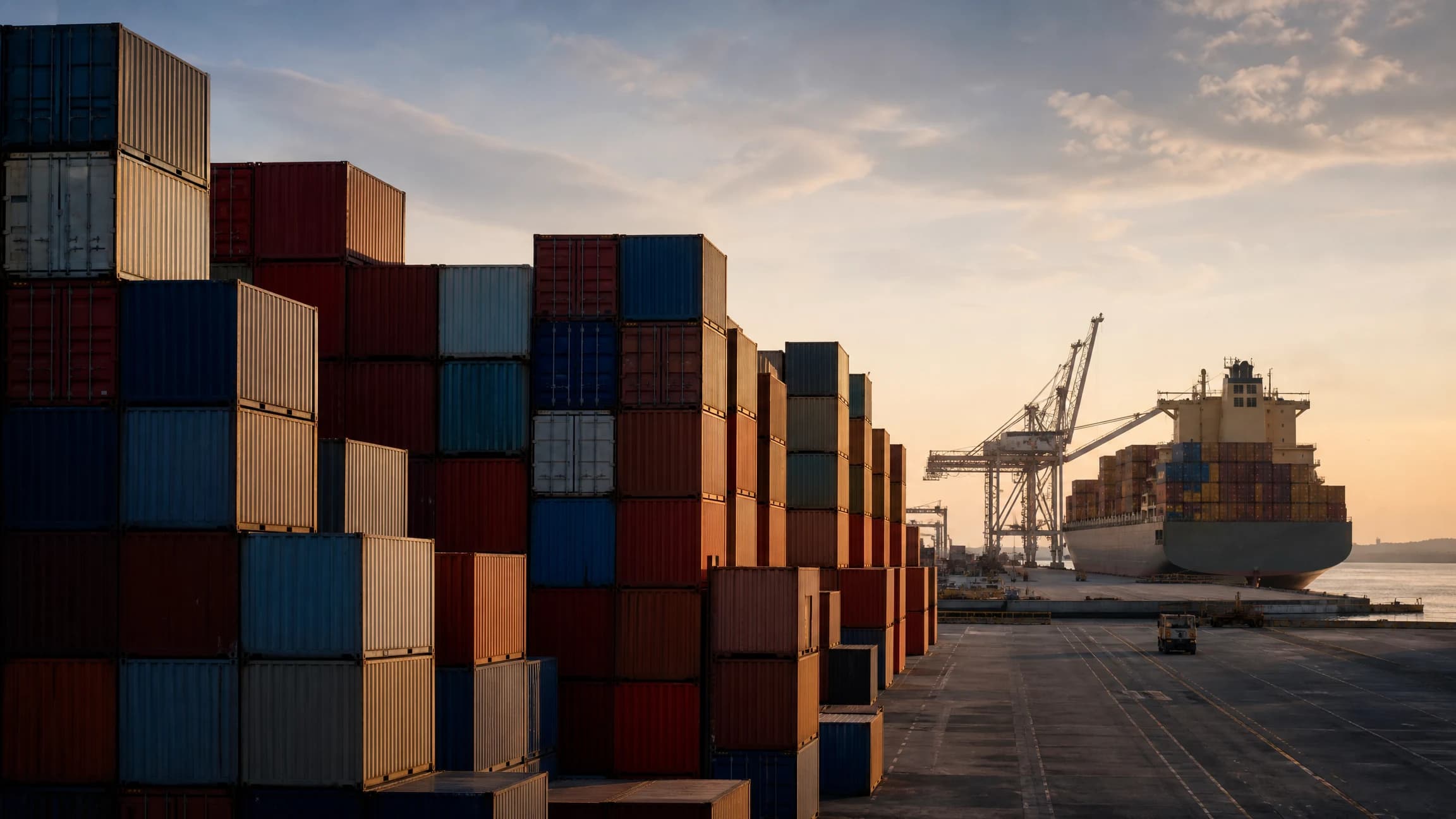
Two quotes for the same garment can differ by a dollar and mean exactly the same landed cost — because they are quoted on different shipping terms. Incoterms decide where the factory's responsibility ends and yours begins: who books freight, who insures the goods, who clears customs, and who pays the duty. Compare quotes without normalising the terms and you are comparing nothing.
Here is what each term actually covers, what it costs, and how to choose — including the honest case for and against the 'everything included' option.
The terms, from least to most factory responsibility
EXW — Ex Works
You collect the goods at the factory gate; everything after — export clearance included — is yours. It looks like the cheapest quote and is almost never the right choice for apparel buyers, because handling export formalities in the supplier's country is exactly the job you are least equipped to do from abroad.
FOB — Free On Board
The factory delivers goods loaded on the vessel at the port of origin (for Bangladesh, Chattogram), export-cleared. From that moment — freight, insurance, import clearance, duty, inland delivery — it is yours, usually via your freight forwarder. FOB is the global default for apparel sourcing for good reason: responsibilities split at a clean, verifiable point, and you control the expensive leg with your own forwarder relationships. One refinement: the ICC, which writes the rules, treats FOB as a port-to-port term and names FCA as the appropriate rule for goods moving in containers, which are normally handed over at a terminal rather than on board. Factories quote FOB regardless, so confirm in writing the point at which your forwarder takes charge of the container.
CIF / CFR — Cost, Insurance and Freight
The factory additionally books and pays ocean freight to your destination port (CIF adds marine insurance; CFR does not). Useful when you have no forwarder relationship — but note the fine print buyers miss: under CIF, risk still transfers at the origin port, even though the seller paid the freight. If the container goes over the side mid-ocean, it is your claim. Also, freight bought by the seller is freight marked up by the seller.
DDP — Delivered Duty Paid
The supplier delivers to your warehouse door with freight, insurance, customs clearance and import duty all handled and included in the price. One invoice, zero logistics on your side. The trade-offs: you cannot see the freight and duty components individually, you depend on the supplier's clearance competence in your country, and errors in duty payment can surface later with your name on the import record. With a supplier who runs DDP routinely through an established network — as we do — it is genuinely the simplest way for a small team to import; with an improvising supplier, it is where surprises live.
| Responsibility | EXW | FOB | CIF | DDP |
|---|---|---|---|---|
| Export clearance | Buyer | Seller | Seller | Seller |
| Ocean freight | Buyer | Buyer | Seller | Seller |
| Marine insurance | Buyer | Buyer | Seller | Seller |
| Risk transfers at | Factory gate | Vessel, origin port | Vessel, origin port | Your door |
| Import clearance & duty | Buyer | Buyer | Buyer | Seller |
| Inland delivery | Buyer | Buyer | Buyer | Seller |
What the choice costs
As rough orders of magnitude for a garment order from Bangladesh: sea freight adds something like $0.15–$0.50 per piece depending on container utilisation; insurance is small (roughly 0.3–0.5% of value); destination charges, clearance fees and inland haulage add more; and duty depends entirely on your market — zero into the EU and UK under Bangladesh's preferential access, and the normal tariff plus an extra 10% into the US since 24 July 2026 (26.5% on a cotton knit T-shirt). A DDP price bundles all of this plus a management margin. The point of comparing terms is not that one is cheaper — the same costs exist under every term — but who buys each component, and how visibly.
“Always compare quotes on the same term. A $4.60 DDP quote can be cheaper than a $3.90 FOB quote once freight, clearance and duty are added — and a seller quoting CIF controls a cost you cannot see.”
How to choose
- First order, no forwarder, small team — DDP from a supplier with a proven delivery network. Pay for the simplicity; it is worth it while you learn.
- Growing brand, regular shipments — FOB with your own forwarder. You gain rate control, visibility and consolidated shipments across suppliers.
- Retail and wholesale programmes at scale — FOB, almost always, with routed freight under your logistics contracts.
- Never EXW from Bangladesh unless you have in-country logistics capability — the savings are imaginary and the export-clearance burden is real.
One more practical note: whatever the term, confirm it in writing with the named place — 'FOB Chattogram, Incoterms 2020' — on the proforma invoice. The current rules are published by the International Chamber of Commerce, and the named-place detail prevents the most common disputes about where handover actually happens.
Frequently asked questions
What does FOB mean in clothing manufacturing?
Free On Board: the factory's price covers manufacturing, export clearance and loading the goods onto the vessel at the port of origin — for Bangladesh, that's Chattogram. From the moment the goods are on board, everything else becomes the buyer's responsibility: ocean freight, marine insurance, import clearance, duty and inland delivery to your warehouse, usually arranged through your own freight forwarder. FOB is the global default for apparel sourcing for good reason — it splits responsibilities at a clean, verifiable point that both sides can confirm, and it lets the buyer control the most expensive leg of the journey through their own forwarder relationships and rate negotiations, rather than paying whatever margin a factory builds into a bundled freight price.
Is DDP more expensive than FOB?
Not fundamentally — the same underlying costs exist under both terms: roughly $0.15–$0.50 per piece for sea freight depending on container utilisation, around 0.3–0.5% of value for insurance, plus destination charges, clearance fees, inland haulage and duty, which varies entirely by market. FOB lets you buy each of those components yourself, at your own negotiated rates; DDP bundles all of them into one price with a management margin added on top for the supplier handling it. In practice DDP usually comes out somewhat higher per piece, but it replaces a chain of separate invoices, customs filings and forwarder relationships with a single number and zero logistics on your side. For a small team without an existing forwarder, that trade is usually worth paying for; for a brand shipping regularly at volume, the margin adds up and FOB with your own forwarder becomes the better economics.
What is the difference between CIF and FOB?
Under CIF, the factory additionally books and pays ocean freight to your destination port, and adds marine insurance (CFR is the same without the insurance). That sounds like more is included, but the fine print is what buyers miss: risk still transfers at the origin port under CIF, exactly as it does under FOB, even though the seller paid for the shipping — so if the container is lost mid-ocean, the claim is yours to make, not theirs. And because the seller is buying the freight, it's freight priced with the seller's markup built in, which you can't see or negotiate. FOB leaves freight buying, and the cost visibility that comes with it, entirely with you and your own forwarder. CIF mainly earns its keep when you have no forwarder relationship of your own yet.
Who pays import duty under DDP?
The seller pays it directly and builds it into the all-in DDP price, so from your side it's a single invoice with no separate duty line. That doesn't mean it's irrelevant to you, though — you're still the beneficiary of the importer of record, and bundled duty is still your money, just paid on your behalf. It's worth knowing your product's actual duty rate regardless of who pays it: it can be zero entering the EU and UK under Bangladesh's preferential trade access, or 26.5% on a cotton knit T-shirt entering the US, where an extra 10% has applied to goods of Bangladesh since 24 July 2026, and that difference should show up in how DDP is priced against FOB for each destination. It's also worth knowing that duty errors made by the supplier's clearance agent can surface later with your company's name on the import record, which is why the supplier's clearance competence in your country matters as much as the price they quote.
Which Incoterm is best for a first order?
DDP, provided your supplier genuinely runs a delivered network rather than improvising one for your order — ask how many DDP shipments they handle routinely and to which countries, since a supplier without that experience is where duty and clearance surprises tend to show up later. Paying the DDP premium for that simplicity is a reasonable trade while you're still learning the logistics side of importing. If your supplier doesn't run DDP with confidence, the fallback is FOB with a freight forwarder recommendation from them or from your own network — you'll need to handle freight, insurance and customs clearance yourself, but at least at a clean, verifiable handover point. Avoid EXW from Bangladesh on a first order regardless: it leaves you responsible for export clearance in a country where you have no presence, which is the one part of the process you're least equipped to manage remotely.
Do Incoterms cover payment terms?
No — Incoterms allocate transport costs, risk and clearance duties only: who books freight, who insures the goods, where risk transfers from seller to buyer, and who handles export and import clearance. FOB, CIF and DDP all answer those logistics questions, and nothing in the term itself says anything about when or how you pay for the goods. Payment terms — a deposit against the order, a balance paid against shipping documents, or a letter of credit — are negotiated entirely separately, and can be combined with any of the shipping terms; a DDP order and an FOB order can run on identical payment schedules. It's worth confirming both the Incoterm and the payment structure explicitly and in writing on the proforma invoice, along with the named place, such as 'FOB Chattogram, Incoterms 2020' — vague documentation on either front is where disputes tend to start.
Sources
Belle Vouz ships FOB, CIF and worldwide DDP with full export documentation. Tell us your destination and volumes and we will quote the same order both ways — FOB and DDP — so you can see exactly what the convenience costs.
Where to next
- Choosing a clothing manufacturer in Bangladesh — the full guide
- Full package production, quoted FOB
- Landed cost calculator — FOB plus freight, duty and inspection
- What we manufacture — knit, woven, sweater and leather
- Sourcing by destination market — duty, labelling and lead times
- Get costing, MOQ and a lead-time — usually the same business day

Homaira Jashim
Director, Belle Vouz Ltd
Homaira Jashim is a director of Belle Vouz Ltd and a co-founder of Collective Studio Ltd, its group company in Narayanganj. She works with brands from first enquiry to repeat orders.
More about the teamFree tools for clothing brands
MOQ, pricing and AQL calculators, a GSM ⇄ oz converter, a fillable tech pack template and a manufacturing glossary — built by our group company, Collective Studio, free to use.