In short
Choose screen printing for bulk orders of bold, flat-colour designs, embroidery for durable premium logos and uniforms, direct-to-garment (DTG) printing for small batches with detailed or photographic artwork, and heat transfer for simple, low-cost, low-volume runs. Screen printing needs a separate screen for each colour, so its setup cost only pays back at volume.
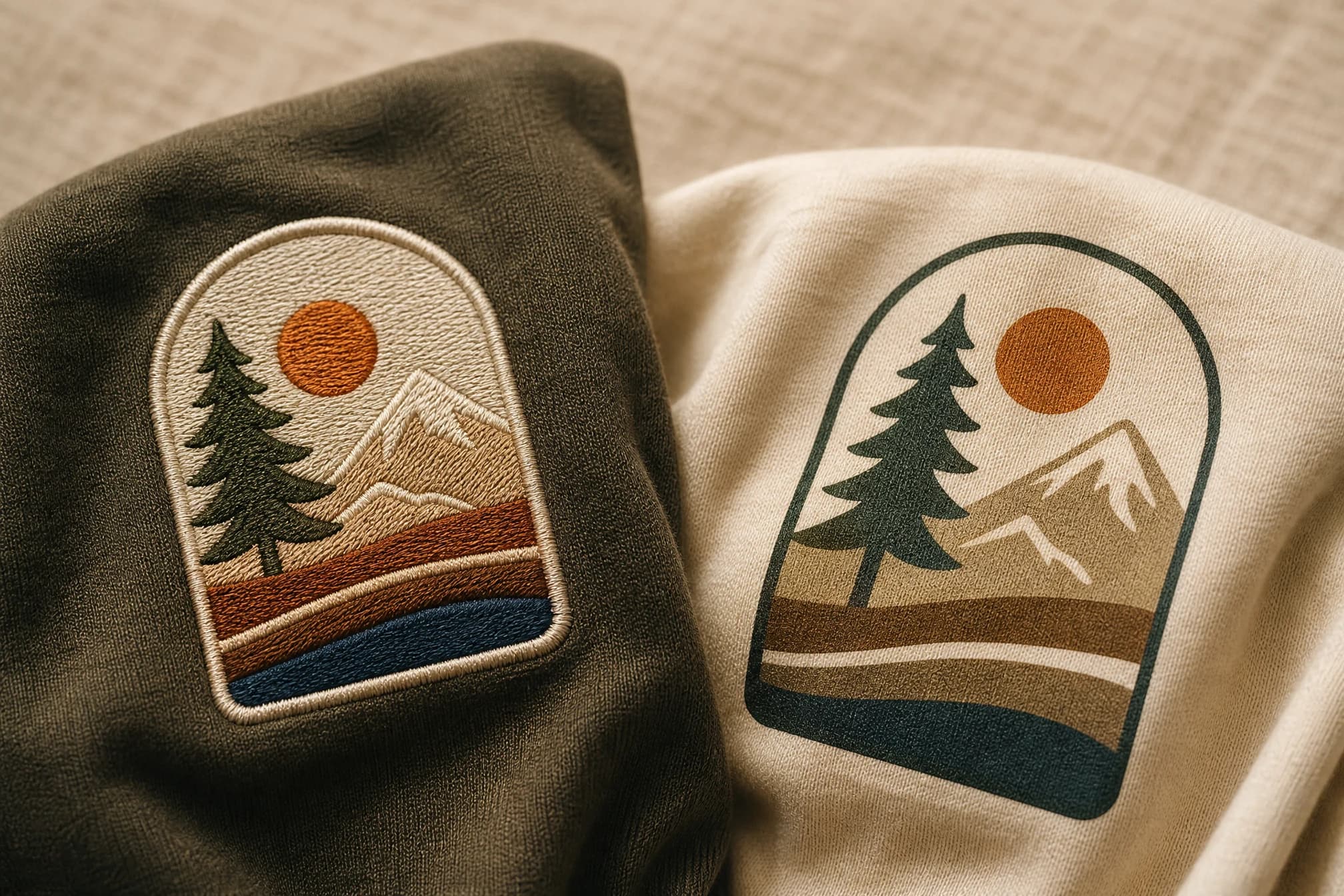
Four methods cover almost every branded garment decoration: screen printing, embroidery, direct-to-garment (DTG) printing, and heat transfer. Each has a genuinely different cost curve, durability profile and design ceiling — the right choice depends on your design's complexity, your fabric, and your order volume, not just which looks best in a mockup.
Screen printing — best for bulk, bold designs
Ink is pushed through a stencil screen onto the fabric, with a separate screen required for each colour. This makes screen printing extremely cost-effective at volume and produces bold, durable prints that hold up for years — but the per-colour setup cost makes it a poor fit for highly detailed, multi-colour or photographic designs, and uneconomical for very small runs.
Embroidery — durable, premium, dimensional
Thread is stitched directly into the fabric, producing a raised, three-dimensional finish that reads as more premium than a flat print and resists wear far better over the garment's life — the standard choice for logos, uniforms and polo-style branding. It's not suited to fine gradients or photographic detail, and stitch count (and therefore cost) scales with design complexity and size.
Direct-to-garment (DTG) — detail without setup cost
DTG works like an inkjet printer for fabric, applying water-based ink directly into the fibres. It handles fine detail and unlimited colours with no per-colour setup cost, making it well suited to small batches with complex, photographic or gradient designs — but it's slower per unit than screen printing, which makes it comparatively expensive at real bulk volume.
Heat transfer — fast and affordable at low volume
A design (vinyl or printed transfer) is bonded to the fabric using heat and pressure. It's cheaper than DTG and requires less setup than screen printing, making it a common choice for very low-cost, low-volume runs — the tradeoff is that the print sits on top of the fabric rather than in it, feels thicker, is less breathable, and can crack or peel with heavy repeated washing.
| Method | Best for | Weak point |
|---|---|---|
| Screen printing | Bulk orders, bold flat-colour designs | Per-colour setup cost, poor for fine detail |
| Embroidery | Logos, uniforms, premium durable branding | Not suited to gradients or photographic detail |
| DTG | Small batches, complex or photographic designs | Slower and costlier at real bulk volume |
| Heat transfer | Low-cost, low-volume, simple designs | Less breathable, can crack or peel over time |
“A screen-printed logo on 5,000 units and an embroidered logo on 50 units can both be the right decision — they're solving for different things entirely.”
Frequently asked questions
Which is more durable, screen printing or embroidery?
Both are highly durable when properly applied, but for different reasons. Screen printing pushes ink through a stencil onto the fabric, and once cured, that ink resists cracking over years of washing. Embroidery goes further: the thread is stitched directly into the fabric rather than sitting on the surface, so there's no ink layer that can eventually flake or fade, and the raised stitching holds up to wear even better than a printed surface. Heat transfer is the least durable of the common methods over repeated washing — the design is bonded on top of the fabric with heat and pressure rather than integrated into it, which is exactly what makes it prone to cracking or peeling with heavy use.
What is the best decoration method for small orders?
It depends on the design. For detailed, photographic or gradient artwork, DTG is the better fit — it works like an inkjet printer for fabric, applying water-based ink directly into the fibres with no per-colour setup cost, so unlimited colours cost the same as one. For simple, low-colour designs where price matters most, heat transfer is cheaper and needs less setup than DTG, making it the lowest-cost option at low volume. Both sidestep the per-colour setup charge that makes screen printing uneconomical below a certain quantity. The trade-off: heat transfer sits on top of the fabric rather than in it, so it's less breathable and can crack or peel with heavy repeated washing, while DTG is comparatively expensive if the order later scales into real bulk volume.
Can embroidery reproduce a photographic design?
No. Embroidery works by stitching thread directly into the fabric, which produces a raised, dimensional finish that's excellent for logos, text and other bold, well-defined shapes — and stitch count, and therefore cost, scales up with the complexity and size of the design. That construction simply can't render fine gradients, subtle shading or photographic detail the way an ink-based method can. DTG printing applies water-based ink directly into the fibres like an inkjet printer, handling unlimited colours and fine detail with no per-colour setup cost, which makes it the right choice for a photographic or gradient design. The trade-off is durability and finish: embroidery's stitched thread resists wear better over the life of the garment and reads as more premium than a flat printed surface.
Sources
Tell us your design, fabric and order size and we'll recommend the decoration method that actually fits — not just the one that looks best in a first mockup.
Homaira Jashim
Director, Belle Vouz Ltd
Homaira Jashim is a director of Belle Vouz Ltd and a co-founder of Collective Studio Ltd, its group company in Narayanganj. She works with brands from first enquiry to repeat orders.
More about the teamFree tools for clothing brands
MOQ, pricing and AQL calculators, a GSM ⇄ oz converter, a fillable tech pack template and a manufacturing glossary — built by our group company, Collective Studio, free to use.