In short
Where to make clothes depends on the product: Bangladesh suits cotton knits, wovens, sweaters and denim at volume, with the lowest labour cost and zero EU and UK duty; Vietnam suits technical outerwear and activewear; China suits complex, fast or small runs. In 2025 China exported about US$157 billion of clothing, Bangladesh US$38.8 billion and Vietnam US$37.5 billion (WTO).
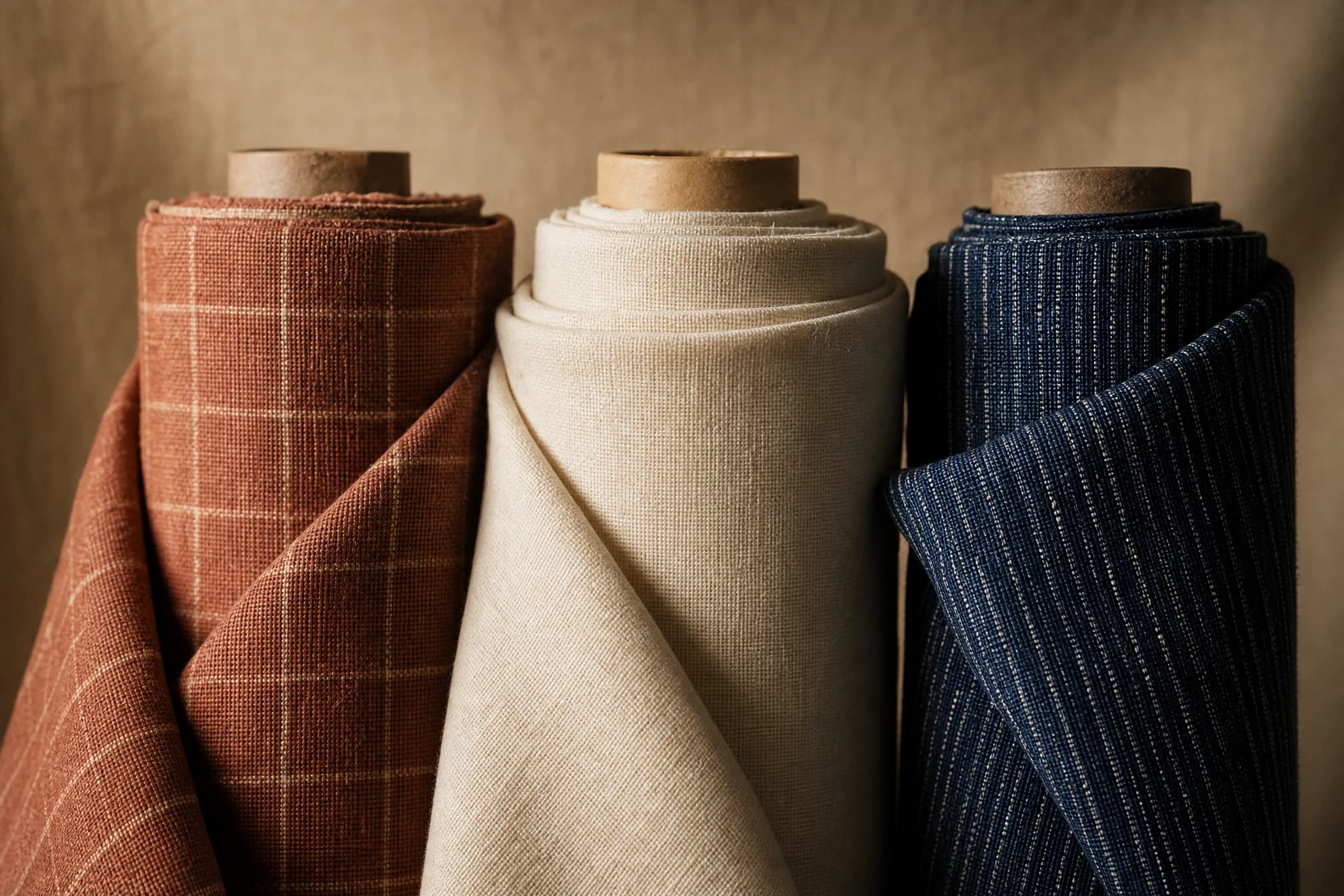
Ask ten sourcing managers where to make clothes and you will get one honest answer: it depends on the product. China, Vietnam and Bangladesh sit at the top of world apparel exports for different reasons, and the brands that source well treat them as three different tools rather than three prices for the same job.
This is the comparison we wish more buyers saw before their first order — costs, capabilities, trade access, lead times and risks, without pretending our own country wins every category. It does not. Here is where each one does.
The three in one view
| Bangladesh | Vietnam | China | |
|---|---|---|---|
| Clothing exports (2025, WTO) | ~$38.8B | ~$37.5B | ~$157B (world #1) |
| Labour cost | Lowest of the three | Roughly 1.5–2× Bangladesh | Roughly 3–4× Bangladesh |
| Sweet spot | Knits, wovens, sweaters, denim at volume | Outerwear, activewear, footwear, technical | Complexity, speed, small runs, full range |
| EU import duty | 0% (EBA duty-free) | 0% on most garment lines; 1.5% on some, incl. synthetic jackets, until end-2026 (EVFTA; fabric origin rules apply) | ~12% MFN |
| UK import duty | 0% (DCTS) | 0% on most garment lines; 1.5% on some until end-2026 (UKVFTA) | MFN rates |
| US import duty | Normal duty + 10% Section 301 | Normal duty + 12.5% Section 301 | Normal duty + 12.5%, plus earlier China-specific Section 301 measures |
| Typical lead time | 60–90 days | 50–80 days | 30–60 days |
| Raw material base | Strong in cotton knits; imports synthetics | Imports much fabric (often from China) | Deepest, most complete in the world |
China: the ceiling nobody else reaches
China remains the world's largest apparel exporter, and on capability it is not close: the deepest fabric and trim base, the most technical construction, the fastest sampling, and factories comfortable with small, complex, fast-turning orders no one else wants. If your product is a technical shell with taped seams and laser-cut ventilation, or a 300-piece run of something intricate on a three-week calendar, China is often the only sensible answer.
The costs are equally clear: labour rates three to four times Bangladesh's, US Section 301 tariff surcharges layered on top of normal duties, ~12% MFN duty into the EU, and a concentration risk that a decade of 'China plus one' strategies exists to manage. China is where you make what only China can make — and increasingly, where you develop products you then scale elsewhere.
Vietnam: the technical mid-point
Vietnam has become the world's number three, close behind Bangladesh, by being excellent at what sits between the giants: outerwear, activewear, footwear and technical sportswear, with productivity and infrastructure that justify wages meaningfully above Bangladesh's. Under the EU–Vietnam FTA most garment lines have entered the EU at zero duty since 1 January 2025 and the rest, synthetic jackets and dresses among them, pay 1.5% until the end of 2026, provided the fabric meets the agreement's origin rules, and major sportswear brands have anchored supply chains there for good reason.
Vietnam's structural constraint is fabric: a large share is imported, much of it from China, which stretches lead times for custom fabric programmes and complicates rules-of-origin math under its trade agreements. For performance product at serious volume, Vietnam is outstanding; for cotton-led basics, you are usually paying Vietnamese overheads for something Bangladesh does cheaper.
Bangladesh: the volume and duty engine
Bangladesh is the world's second-largest garment exporter — $38.70 billion in the fiscal year to June 2026 — built on cut-and-sew knits, wovens, sweaters and denim at volume, with the lowest labour costs of the three and a vertically integrated cotton-knit base where spinning, knitting, dyeing and sewing sit within hours of each other.
Its quiet superpower is trade access. Under the EU's Everything But Arms scheme, Bangladeshi garments enter the EU at zero duty, against roughly 12% MFN for Chinese goods — a structural cost advantage no negotiation at a Chinese factory can claw back. The UK's Developing Countries Trading Scheme gives the same zero-duty result, and Canada, Japan and Australia offer similar LDC preferences. Bangladesh is scheduled to graduate from LDC status on 24 November 2026, though its request to defer that by up to three years was still awaiting a UN General Assembly decision on 1 October 2026. Either way the EU keeps EBA benefits for three years after graduation, so at least until the end of 2029 — after which GSP+ or a bilateral arrangement is the industry's expectation, but 'verify at booking' is honest advice for orders landing beyond 2029.
Bangladesh has also quietly become the world leader in certified green manufacturing, with 291 LEED-certified garment factories by BGMEA's count on 1 October 2026 — more than any other country — a point that increasingly matters in European buyers' scorecards.
The honest weaknesses: synthetics and technical fabrics are thinner on the ground than in China or Vietnam, lead times run longer than China's, and the compliance picture — massively rebuilt since Rana Plaza through the Accord and now the RMG Sustainability Council — still demands that you choose audited factories deliberately rather than assume.
What about the US market?
None of the three enjoys preferential US access for apparel, and US tariff policy has been genuinely volatile. The 2025 country-specific 'reciprocal' rates ended after the Supreme Court ruled against them on 20 February 2026; a flat 10% interim surcharge followed for 150 days; and since 24 July 2026 the US has charged Section 301 tariffs on top of normal duty: 10% on goods from Bangladesh and 12.5% on goods from Vietnam and from China, which also remains subject to its own earlier Section 301 measures. On a cotton T-shirt with a 16.5% normal duty that means about 26.5% from Bangladesh and 29% from Vietnam. Two takeaways survive the churn: China carries the heaviest US tariff load of the three, and the gap between Bangladesh and Vietnam is small. For US-focused brands, the sourcing decision between Bangladesh and Vietnam is therefore mostly about product fit and unit cost, not duty.
How real brands split the map
- Cotton-led basics, fleece, denim, sweaters at volume — Bangladesh, for unit cost and EU/UK duty-free entry.
- Performance outerwear and activewear at scale — Vietnam, for technical capability with reasonable costs.
- Complex construction, technical fabrics, speed, small runs — China, and pay for what only China does.
- Small first runs of knitwear — a low-MOQ Bangladesh programme; our group company Collective Studio runs knitwear from 150 pieces, which is how several of our buyers tested ranges they later scaled with us.
“The question is not which country is best. It is which country is best at your product, for your market, at your volume — and the answer is allowed to be two of them.”
Frequently asked questions
Is Bangladesh cheaper than Vietnam for clothing manufacturing?
Generally, yes, on anything labour-led — Bangladeshi wages sit lowest among the major exporters, while Vietnam's run roughly 1.5–2 times higher. That gap is sharpest on cotton basics: fleece, jersey, terry, where Bangladesh's vertically integrated cotton-knit base pulls the cost down even further. Vietnam earns its premium back on technical product — outerwear, activewear, footwear, sportswear — where productivity and specialised infrastructure matter more than what the sewing line costs per hour. If you're weighing Bangladesh vs Vietnam apparel sourcing and your range is mostly cotton athleisure, Bangladesh usually wins; if it's technical performance gear, Vietnam's premium tends to be worth paying.
Why do brands still manufacture in China despite tariffs?
Because nobody else can match the capability. China has the deepest fabric and trim base on earth, the most technical construction skill, the fastest sampling turnaround, and factories that will genuinely take on a small, complicated, fast order — a technical shell with taped seams and laser-cut vents, say, or 300 pieces on a three-week clock — that Bangladesh or Vietnam would simply decline. Lead times of 30–60 days beat both. Against that: labour running three to four times Bangladesh's rate, Section 301 surcharges stacked on regular duty, and roughly 12% MFN into the EU. For plenty of products, that tariff bill still comes out cheaper than what you'd lose making do elsewhere.
What is Bangladesh's tariff advantage in the EU?
Zero duty into the EU under Everything But Arms, versus roughly 12% MFN for anything shipped out of China — a gap no amount of haggling at a Chinese factory closes. Vietnam is now close behind: under the EU–Vietnam FTA most garment lines have been at zero since 1 January 2025 and the rest pay 1.5% until the end of 2026, though only where the fabric meets the agreement's origin rules. The UK mirrors Bangladesh's advantage through its Developing Countries Trading Scheme, and Canada, Japan and Australia run comparable least-developed-country preferences. Bangladesh is scheduled to graduate from LDC status on 24 November 2026 (a deferral it has requested is before the UN General Assembly), and the EU keeps EBA benefits running for three years after graduation, at least until the end of 2029, so the duty-free window isn't closing anytime soon.
Which country is fastest?
China, typically 30–60 days from order to ship, mostly because its fabric and trim base is deep enough that almost nothing has to be imported before cutting starts. Vietnam runs 50–80 days, slower in part because a large share of its fabric comes from abroad, often from China itself, which tacks on a shipping leg before production even begins. Bangladesh sits at 60–90 days for custom programmes needing fresh fabric development — repeat orders on established fabric move considerably faster than that range suggests. When you're deciding where to manufacture clothing on a tight calendar, weigh lead time against everything else the country's strong at, not on its own.
Is Vietnam better than Bangladesh for activewear?
For technical performance gear at real scale, usually yes — Vietnam has built genuine specialisation in activewear, outerwear and footwear, backed by infrastructure solid enough that major sportswear brands have anchored supply chains there, and an EU–Vietnam FTA that already gives zero duty on most garment lines and 1.5% on the rest. For cotton-led athleisure — fleece, jersey, terry — Bangladesh typically wins on cost at equal quality, thanks to lower wages and a cotton-knit base that keeps fabric close to the sewing line. It isn't really a Vietnam vs China garment sourcing question here at all — the real dividing line is the fabric itself: synthetic and technical builds lean Vietnam, cotton-led builds lean Bangladesh.
Can I split production across countries?
Most brands that scale end up doing exactly that. Cotton basics, fleece, denim and sweaters go to Bangladesh for unit cost and duty-free EU and UK entry; performance outerwear and activewear go to Vietnam for technical capability; complex construction, technical fabric or fast small runs go to China, where you pay the premium for what only China does well. Some add a step before any of that: testing a new knitwear range through a low-MOQ Bangladesh programme before committing real volume anywhere. This kind of apparel sourcing country comparison plays out every season, not once — and the overhead of running several supplier relationships is real, so either you manage it or you find a partner who already does.
Sources
- 1.BGMEA — Export Performance (EPB data: $38.70B in FY2025-26)
- 2.WTO — World Trade Statistics (Table 22: top exporters of clothing, 2025)
- 3.Fibre2Fashion — Can Bangladesh hold its EU edge after LDC graduation?
- 4.The Daily Star — EU GSP+: the lifeline Bangladesh must win before 2029
- 5.FASH455 (Dr. Sheng Lu) — apparel trade and tariff analysis
- 6.Collective Studio — low-MOQ knitwear from Bangladesh
We are a Bangladesh buying house, so read our bias accordingly — and then send us the product you are unsure about. If it belongs in Vietnam or China, we will tell you so; the orders that belong here are the only ones we want.

Homaira Jashim
Director, Belle Vouz Ltd
Homaira Jashim is a director of Belle Vouz Ltd and a co-founder of Collective Studio Ltd, its group company in Narayanganj. She works with brands from first enquiry to repeat orders.
More about the teamFree tools for clothing brands
MOQ, pricing and AQL calculators, a GSM ⇄ oz converter, a fillable tech pack template and a manufacturing glossary — built by our group company, Collective Studio, free to use.