In short
Size grading scales an approved base-size pattern, usually a Medium, up and down by fixed increments to produce the full size range: typically 1 to 2 inches per size at chest, waist and hip and 0.5 to 1 inch in body length. Always check a full size set of samples before bulk production.
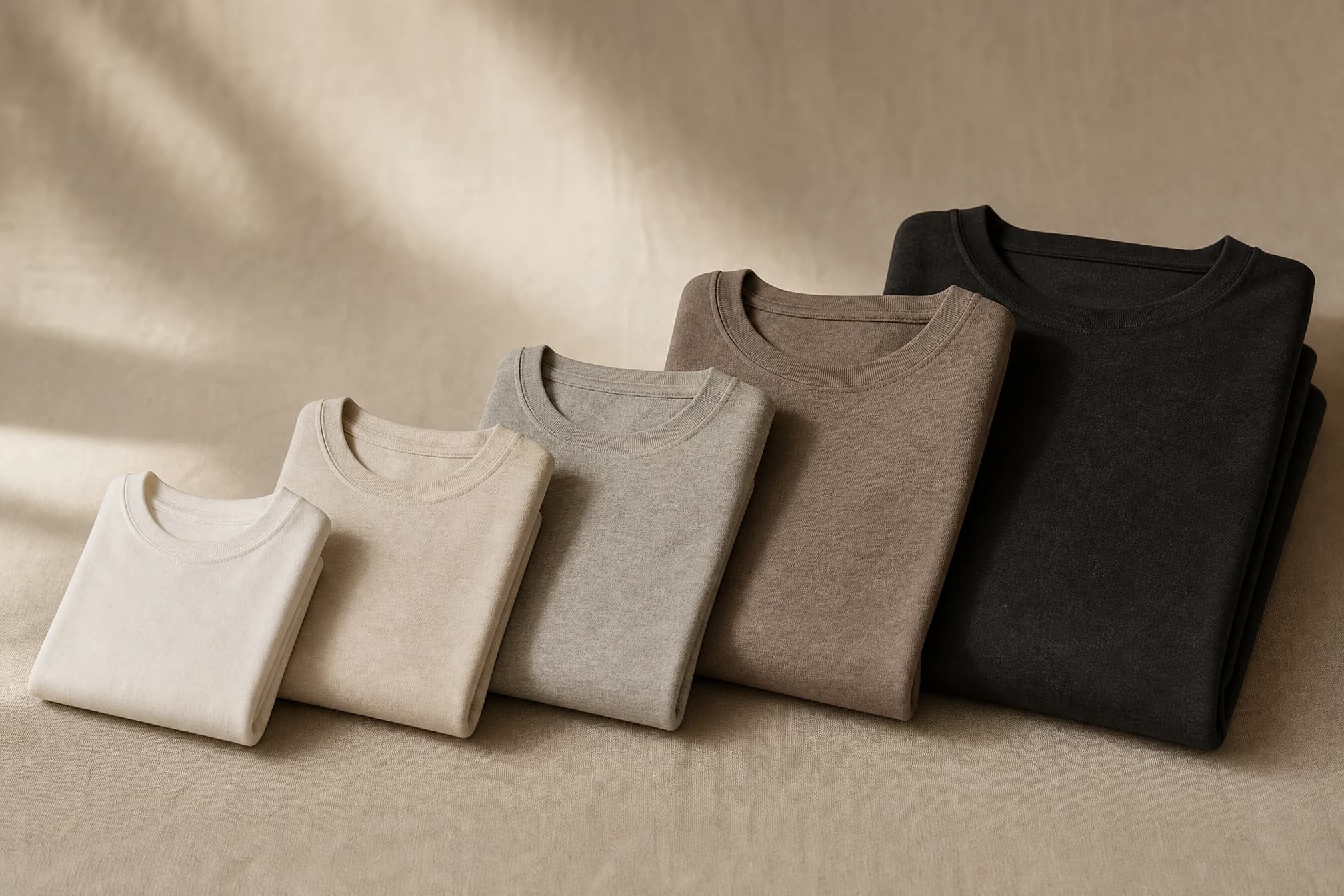
Nailing the fit on your sample size proves nothing about how the rest of your size range will fit — that's a separate discipline called grading, and it's where a surprising number of small brands lose customers to returns without ever identifying why.
What size grading actually is
Grading is the systematic process of proportionally increasing or decreasing a perfected base-size pattern to produce a full size range — XS through XXL, for example — using a defined set of measurement increments between each size. It is not the same task as fitting one sample; it's a separate, rules-based step applied after that sample is approved.
Choosing a base size
Most brands grade from a US size Medium as the base — for women's product, a size Medium; for men's, Medium or Large — chosen because it typically represents the average body dimensions of the target demographic and gives grading rules that scale sensibly in both directions from the middle of the range.
Typical grading increments
| Measurement | Typical increment per size |
|---|---|
| Chest/bust circumference | 1–2 inches |
| Waist/hip circumference | 1–2 inches |
| Body length | 0.5–1 inch |
| Sleeve length | 0.5–0.75 inch |
| Neck circumference | 0.25–0.5 inch |
For a basic T-shirt specifically, a common industry starting rule is roughly +1.5" to +2" at the chest per size, +1" body length, and +0.75" sleeve length — a useful reference point, not a fixed rule for every silhouette or fabric. A fitted knit and a structured woven jacket will carry different, non-interchangeable grading rules even at the same nominal size range.
“Grading errors don't show up on the size you fitted — they show up two sizes away, which is exactly why they're so easy to ship without noticing until returns start coming in.”
Building your own size chart
- Gather measurements from competitor brands whose fit your target customer already likes and trusts.
- Average the key measurements (bust, waist, hip, length) across that competitor set to establish an industry-realistic baseline.
- Adjust that baseline to your specific customer and silhouette — a size chart copied wholesale from a competitor rarely fits your product's actual cut and drape.
Verifying before bulk
Always request and check a full size set — physical samples across the entire range, not just the base size — before bulk production. A grading error compounds visibly across a size run, and it is dramatically cheaper to catch in a size-set review than after a full shipment has landed.
Frequently asked questions
What is size grading in clothing manufacturing?
The systematic process of proportionally scaling a perfected base-size pattern up and down to produce a full size range — XS through XXL, for example — using defined measurement increments between each size, such as roughly 1–2 inches at the chest and hip and 0.5–1 inch in body length per size step. It's a distinct, rules-based step that happens after a sample is approved, not the same task as fitting that one sample. Grading matters because errors don't show up on the size you actually fitted — they show up two sizes away, which is exactly why they're easy to ship without noticing until returns start coming in. A fitted knit and a structured woven garment need different, non-interchangeable grading rules even within the same nominal size range.
What base size should I grade from?
Most brands use a US size Medium as the base for women's product, Medium or Large for men's — chosen because it represents the average body dimensions of the target demographic and produces grading rules that scale sensibly in both directions from the middle of the range, rather than compounding errors outward from one extreme. If you're building your size chart from scratch, a practical starting point is to gather measurements from competitor brands whose fit your target customer already trusts, average the key measurements — bust, waist, hip, length — across that set to establish an industry-realistic baseline, then adjust it to your own silhouette and customer. A size chart copied wholesale from a competitor rarely fits your product's actual cut and drape, even when the base size itself is the right choice.
How do I check that grading is correct before bulk production?
Request a full size set — physical samples across your entire size range, not just the base size — before committing to bulk production. This is the standard way to catch a grading error while it's still cheap to fix, because a grading mistake compounds visibly across a size run: it typically doesn't show up on the size you originally fitted, but two sizes away, which makes it easy to miss without checking the extremes directly. Generic grading increments (roughly 1–2 inches at the chest and hip per size, for example) are a useful reference point, but a fitted knit and a structured woven garment carry different, non-interchangeable grading rules even at the same nominal size, so a size-set review is what actually confirms the rules you're using are correct for that specific fabric and silhouette.
Sources
We build and verify a full size set for every style before bulk — send us your base sample and target range and we'll confirm grading before a single bulk piece is cut.

Homaira Jashim
Director, Belle Vouz Ltd
Homaira Jashim is a director of Belle Vouz Ltd and a co-founder of Collective Studio Ltd, its group company in Narayanganj. She works with brands from first enquiry to repeat orders.
More about the teamFree tools for clothing brands
MOQ, pricing and AQL calculators, a GSM ⇄ oz converter, a fillable tech pack template and a manufacturing glossary — built by our group company, Collective Studio, free to use.