In short
Global fibre production reached 132 million tonnes in 2024, and most of it was not sustainable: synthetics made up about 69%, recycled polyester only about 12% of polyester, almost all from plastic bottles, and under 1% of fibre came from recycled textiles. About 34% of cotton was grown under a certified programme, according to Textile Exchange.
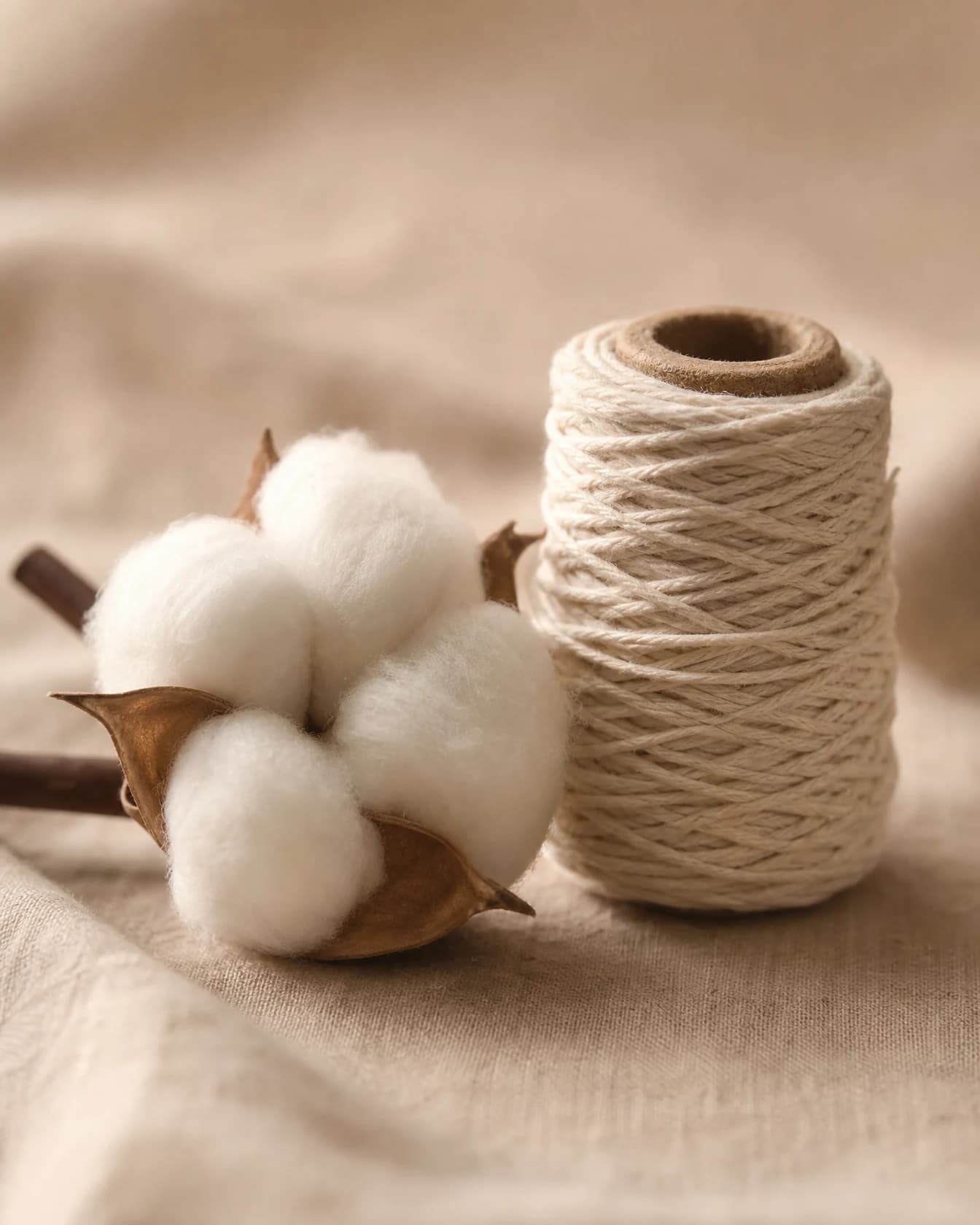
Every responsible collection starts with a fibre choice, so it's worth knowing what the whole industry is actually doing. Textile Exchange's Materials Market Report — the most-cited annual dataset on global fibre production — gives a sobering but useful picture for 2024. Here are the numbers that matter, and what they mean when you're specifying materials.
Update, October 2026: Textile Exchange's 2026 report, published on 22 September 2026, shows the same pattern a year on. Fibre production rose again to 139 million tonnes in 2025; polyester alone held at 59% of all fibre; recycled polyester grew to 9.7 million tonnes, 97% of it from plastic bottles, which is still only about 12% of all polyester; cotton from certified programmes rose to 37% of virgin cotton; and textile-to-textile recycled fibre was still under 1% of the market.
Polyester still dominates
Synthetic fibres — led by polyester — made up roughly 69% of all fibre produced in 2024. Despite years of sustainability commitments, the industry's default material is still a fossil-based one, and total volumes keep rising. That's the backdrop against which every 'sustainable' claim has to be read.
Cotton, and the steady rise of certified cotton
Cotton accounted for around 24.5 million tonnes in 2024 — roughly 19% of the global fibre mix. The encouraging trend is certification: about 34% of cotton was grown under a certified or 'preferred' programme in 2024, a share that has climbed steadily as brands commit to verified sourcing. Organic cotton is a subset of that, backed by chain-of-custody standards like GOTS.
Recycled polyester: real, but mostly from bottles
Recycled polyester is the headline sustainable synthetic, but the detail matters. It sits at around 12% of the polyester market — roughly 9.3 million tonnes in 2024 — and the overwhelming majority of it is made from recycled PET drink bottles, not from old textiles. True textile-to-textile recycling is still under 1% of the total fibre market. Recycled content is a genuine improvement, but it isn't yet the closed loop the marketing often implies.
What this means for a responsible collection
The takeaway isn't cynicism — it's specificity. 'Sustainable' is only meaningful when it names a fibre and a standard: GOTS-certified organic cotton, a recycled-content claim with a transaction certificate, OEKO-TEX tested for chemistry. Vague claims don't survive due diligence; certified ones do.
This is exactly why an organic claim on a small run needs the same paperwork as a large one: ask the factory sewing it for its GOTS licence number and check it in the GOTS public database, so the claim is one you can actually back. Across the Belle Vouz group we develop organic, recycled and conventional fibres to spec, and match the certification to the claim you want to make.
Frequently asked questions
What percentage of clothing is actually made from sustainable materials?
Less than the marketing suggests, honestly. Synthetic fibres — led by polyester — made up roughly 69% of all fibre produced globally in 2024, and total fibre production hit a then-record 132 million tonnes, up from about 125 million tonnes in 2023, according to Textile Exchange's Materials Market Report 2025 (it rose again to 139 million tonnes in 2025). Despite years of sustainability commitments across the industry, the default material is still fossil-based, and total volumes keep climbing rather than shrinking. Within that picture, about 34% of cotton grown in 2024 was under a certified or 'preferred' programme — a genuinely encouraging and steadily climbing share — but that's a minority of a minority: cotton itself is only around 19% of the total global fibre mix. The honest takeaway is that certified, verifiable sustainable fibre is real and growing, but it's still nowhere close to the industry norm.
Is recycled polyester actually sustainable?
It's a genuine improvement, but the detail matters more than the marketing usually lets on. Recycled polyester sits at around 12% of the total polyester market — roughly 9.3 million tonnes in 2024 — and the overwhelming majority of that is made from recycled PET drink bottles, not from old textiles being recycled back into new ones. True textile-to-textile recycling, where an old garment becomes fibre for a new garment, is still under 1% of the entire global fibre market. So recycled polyester genuinely reduces reliance on new fossil-based material, and that's a real, measurable benefit — but it isn't yet the closed loop that 'recycled' sometimes implies in marketing copy, and a buyer specifying it should know exactly which kind of recycled content they're actually getting.
What does GOTS certification actually verify?
GOTS — the Global Organic Textile Standard — is a processing standard for textiles made with certified organic fibre: it sets environmental and social criteria for each certified processing, manufacturing and trading stage after the farm, and tracks the material between them with scope and transaction certificates, rather than just certifying the raw fibre at one point in the supply chain. That distinction matters because 'organic cotton' on its own, without a chain-of-custody standard attached, is one of the easiest sustainability claims to make and one of the hardest for a buyer to actually verify. GOTS certification is what lets a brand say 'organic cotton' and have that claim survive real due diligence, since it tracks the material through spinning, dyeing, and manufacturing rather than trusting a single unverified assertion. The same applies to small runs: ask the factory sewing the order for its GOTS licence number and check it in the GOTS public database, so the sustainability claim is one you can genuinely back up.
Why is total fibre production still rising if sustainability is improving?
Because certification growth and total production growth are two different trends happening at once, and conflating them is exactly the kind of vague claim that doesn't survive scrutiny. Global fibre production hit a record 132 million tonnes in 2024, up from about 125 million tonnes the year before — total volume climbing even as the certified or 'preferred' share of cotton specifically rose to about 34%. Rising global demand for clothing is simply outpacing the rate at which the industry shifts toward verified sustainable materials, which is why 'sustainable' is only a meaningful word when it names a specific fibre and a specific standard — GOTS-certified organic cotton, a recycled-content claim backed by a transaction certificate, OEKO-TEX tested chemistry — rather than being used as a general description of a growing but still-minority segment of total production.
Sources
Where to next
- Choosing a clothing manufacturer in Bangladesh — the full guide
- Five ways to manufacture with us — FOB, CMT, private label, OEM, low-MOQ
- Our certifications — who holds which, and how to verify them
- What we manufacture — knit, woven, sweater and leather
- Sourcing for EU brands — duty, labelling, lead times
- Get costing, MOQ and a lead-time — usually the same business day

Homaira Jashim
Director, Belle Vouz Ltd
Homaira Jashim is a director of Belle Vouz Ltd and a co-founder of Collective Studio Ltd, its group company in Narayanganj. She works with brands from first enquiry to repeat orders.
More about the teamFree tools for clothing brands
MOQ, pricing and AQL calculators, a GSM ⇄ oz converter, a fillable tech pack template and a manufacturing glossary — built by our group company, Collective Studio, free to use.