In short
Bangladesh is the world's second-largest clothing exporter after China, shipping US$38.82 billion of garments in 2025, 6.76% of world clothing exports on WTO figures and about US$1.3 billion ahead of third-placed Vietnam. In the fiscal year to June 2026 it exported US$38.70 billion of garments, 80.6% of the country's goods exports.
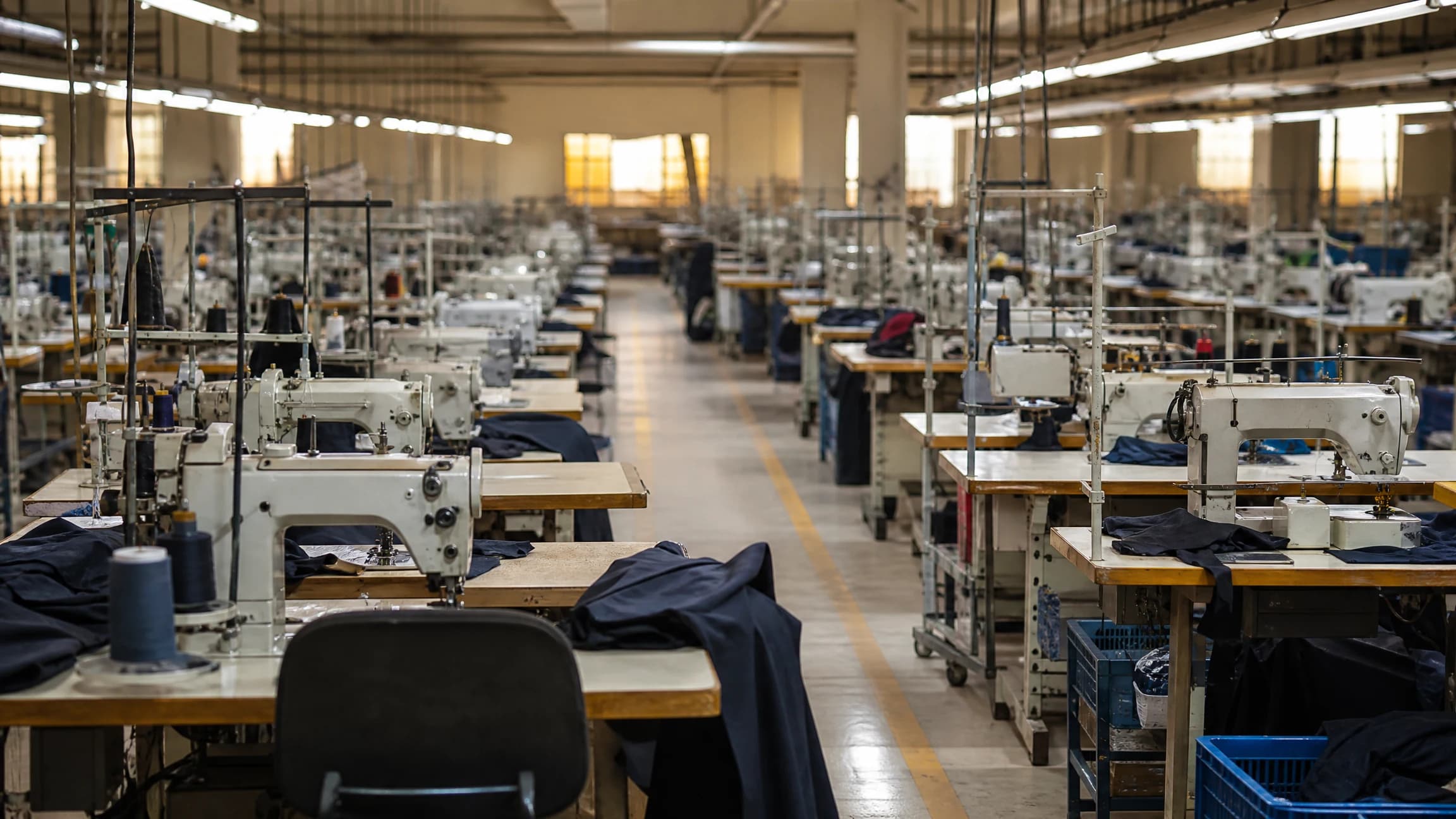
When a brand decides where to make its clothing, Bangladesh is almost always on the shortlist — and the numbers explain why. Behind the headlines about price sits a genuinely enormous, increasingly compliant manufacturing base. Here is what the data actually shows, and what it means if you're sourcing here.
The second-largest apparel exporter on earth
Bangladesh is the world's second-biggest exporter of ready-made garments, behind only China. In the 2025 calendar year the country shipped roughly US$38.82 billion of garments — about 6.8% of world clothing exports, according to the World Trade Organization, and in line with the Export Promotion Bureau figures published by the Bangladesh Garment Manufacturers and Exporters Association (BGMEA). In the fiscal year to June 2026 the total was US$38.70 billion, 1.6% below the year before. Vietnam — the next-largest single-country exporter — is now close behind at around US$37.51 billion, or 6.5%.
An industry that is, in effect, the economy
Ready-made garments account for the overwhelming majority of what Bangladesh sells to the world — just over 80% of the country's total merchandise export earnings (80.6% in the fiscal year to June 2026). That concentration matters to a buyer: it means the entire national infrastructure, from ports and banking to skills training and trade policy, is oriented around getting apparel made and shipped. Manufacturing here is not a side industry; it's the main event.
A workforce of millions
The sector employs around four million people on the industry's own estimate (BRAC University's Mapped in Bangladesh census counted about 2.8 million in 2022) across several thousand export-oriented factories, the majority of them women. For decades it has been one of the largest sources of formal female employment in the country — a fact that has reshaped both the economy and the pipeline of skilled operators, pattern-makers and merchandisers that a modern order depends on.
Safer and greener than its reputation
The 2013 Rana Plaza collapse was a turning point. In the decade since, factory safety was overhauled through binding programmes on building, fire and electrical safety, and the compliance bar rose sharply. Bangladesh is now home to a large and growing number of LEED-certified 'green' garment factories — more than any other country, according to BGMEA. The old picture of an unregulated race to the bottom is well out of date for the export-grade, audited factories international brands actually work with.
What the numbers mean for your brand
Scale gives you capacity and competitive pricing; a deep bench of compliant factories and experienced merchandising gives you a partner who has already made the mistakes so you don't have to. The practical implication is that the deciding factor is rarely whether Bangladesh can make your product well — it's finding the right partner to manage it. That is the role a buying house plays.
Belle Vouz has manufactured and sourced private-label garments from Narayanganj since 2016, across BSCI-, WRAP- and OEKO-TEX-certified partner factories. If you're weighing Bangladesh for your next programme, send us the brief and we'll show you what the data looks like as a real quote.
Frequently asked questions
How big is Bangladesh's garment export industry?
Genuinely enormous — Bangladesh is the world's second-largest exporter of ready-made garments, behind only China. In the 2025 calendar year the country shipped roughly $38.82 billion of garments, about 6.8% of world clothing exports on World Trade Organization figures, and $38.70 billion in the fiscal year to June 2026. Vietnam, the next-largest single-country competitor, has closed most of the gap: it shipped around $37.51 billion in 2025, or 6.5% of the world total, after growing more than 10% in a year when Bangladesh grew less than 1%. That export volume isn't spread across a handful of mega-factories either; it comes from several thousand export-oriented factories, which is exactly the kind of deep, distributed capacity that lets Bangladesh absorb large, complex orders without straining any single supplier.
What percentage of Bangladesh's exports are garments?
Just over 80% of the country's total merchandise export earnings — 80.6% in the fiscal year to June 2026 — an extraordinary concentration that most buyers underestimate until they see the number written out. Ready-made garments aren't one export category among several for Bangladesh; they're essentially the export economy itself. That concentration is actually a practical advantage for a sourcing buyer, not just a statistic: it means the entire national infrastructure — ports, banking systems, vocational training pipelines, trade policy negotiation — is oriented specifically around getting apparel made and shipped efficiently, rather than garment manufacturing competing for national attention and investment against several other export industries. Manufacturing here isn't a side business; it's the main event, and that shows up in how mature the supporting infrastructure around a factory actually is.
Is Bangladesh's garment industry safe to source from after Rana Plaza?
Yes, and the transformation since 2013 is one of the most significant compliance shifts in global apparel manufacturing, not a marketing claim. The Rana Plaza collapse was a genuine turning point: in the decade since, factory safety was overhauled through binding programmes covering building integrity, fire safety and electrical safety, and the compliance bar across the export sector rose sharply as a direct result. Bangladesh is now home to more LEED-certified 'green' garment factories than any other country in the world, according to BGMEA — a credential that reflects real facility investment, not a certificate bought for a press release. The old picture of an unregulated, unsafe industry is well out of date for the export-grade, internationally audited factories that international brands actually work with today, including the BSCI-, WRAP- and OEKO-TEX-certified partners Belle Vouz sources through.
How many people work in Bangladesh's garment industry?
Between about three and four million, depending on who is counting: the industry's own estimate is around four million, while BRAC University's Mapped in Bangladesh census counted 2.78 million in export-oriented factories in 2022. Women make up the majority of that workforce. For decades this sector has been one of the largest sources of formal female employment in the entire country, which has reshaped both the national economy and the specific skills pipeline a modern order actually depends on — experienced operators, pattern-makers and merchandisers who've spent years inside export-grade production rather than learning on the job with your bulk order. That workforce depth is exactly what gives Bangladesh its practical edge over smaller sourcing countries: when a factory needs to scale a line or add a shift to hit a deadline, there's a genuinely deep bench of trained labour to draw from, not a hard capacity ceiling that turns a normal production hiccup into a missed ship date.
Sources
- 1.BGMEA — Export Performance (official industry statistics)
- 2.Economics Observatory — What's happening in Bangladesh's garment industry?
- 3.World Trade Organization — World Trade Statistics (Table 22: top exporters of clothing, 2025)
- 4.Mapped in Bangladesh — BRAC University census of export-oriented garment factories
Where to next
- Choosing a clothing manufacturer in Bangladesh — the full guide
- Five ways to manufacture with us — FOB, CMT, private label, OEM, low-MOQ
- What we manufacture — knit, woven, sweater and leather
- Sourcing by destination market — duty, labelling and lead times
- Get costing, MOQ and a lead-time — usually the same business day
Homaira Jashim
Director, Belle Vouz Ltd
Homaira Jashim is a director of Belle Vouz Ltd and a co-founder of Collective Studio Ltd, its group company in Narayanganj. She works with brands from first enquiry to repeat orders.
More about the teamFree tools for clothing brands
MOQ, pricing and AQL calculators, a GSM ⇄ oz converter, a fillable tech pack template and a manufacturing glossary — built by our group company, Collective Studio, free to use.